

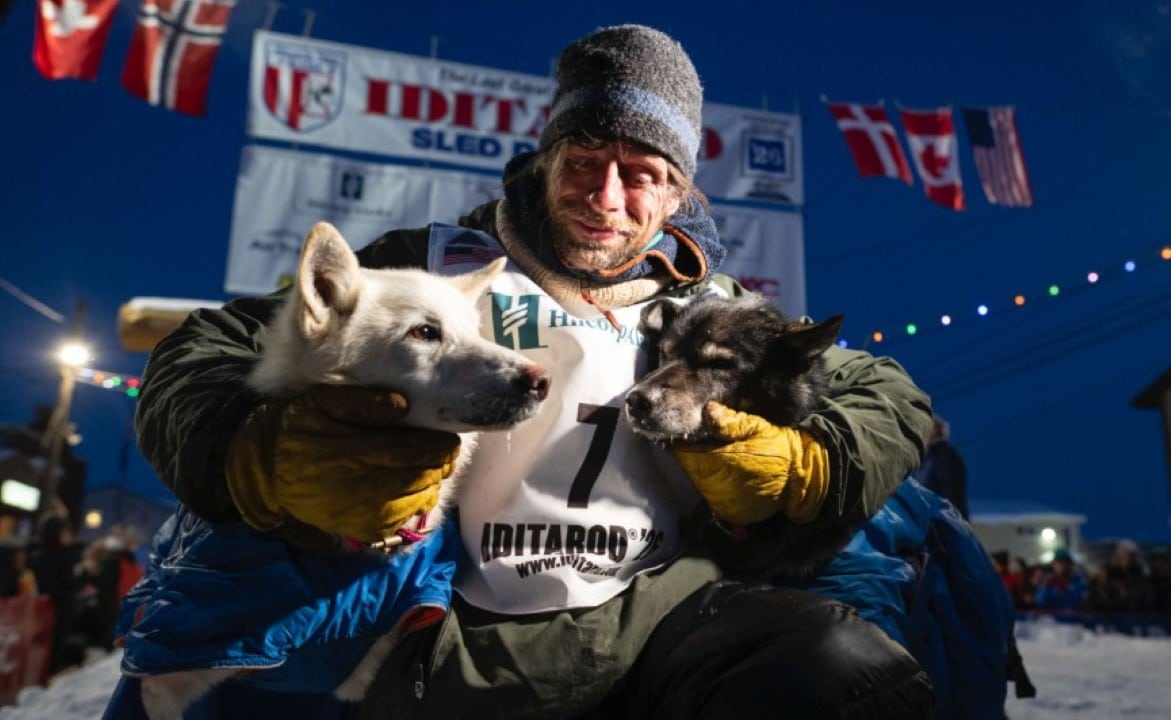
Jessie Holmes, former reality TV star and renowned musher, scored her second consecutive victory in the challenging Iditarod, the famous dog sled race that spans approximately 1,000 miles across the Alasca. The feat places him in a select group of competitors who have managed to repeat the feat in the history of the race.
On Tuesday night, Holmes led his dedicated team of dogs to the finish line in the picturesque town of Nome, a coastal community located in Mar of Bering. The crowd in attendance erupted into enthusiastic applause as he raised his clenched fists, sharing the victory with his 12 loyal dogs.
After the exhausting journey, the dogs, heroes of the race, were rewarded with juicy steaks, a well-deserved recognition for their superhuman effort. Jessie Holmes, visibly moved and proud, gave some interviews accompanied by his lead dogs, Polar and Zeus, highlighting the bravery and importance of each one in the achievement.
Winning the second championship at Alasca
Holmes made a point of praising the contribution of his animals, especially the dogs who led the team for most of the journey. “Zeus led every race except one. Eu just wanted to let someone else have fun. And Polar deserves that more than anyone,” he declared, expressing deep gratitude. “He leads by example, showing everyone the way with his determination.”
The race officially began on March 8 in Willow, one day after the ceremonial start that traditionally takes place in Anchorage, the largest city in Alasca. The route posed severe challenges, taking the dog teams and their handlers across two imposing mountain ranges, along the frozen Yukon River and over the treacherous and unpredictable ice of the Mar of Bering, testing the endurance limits of all participants.
Details of the grueling 1,600km journey
A Iditarod Trail Sled Dog Race, em seus 54 anos de história, viu poucos competidores alcançarem o bicampeonato consecutivo. Jessie Holmes, who was once a member of the cast of National Geographic’s reality show “Life Below Zero”, now joins legends such as Susan Butcher (1986-87) and Esse feito sublinha a consistência e a maestria de Holmes na condução de trenós em condições extremas.
The route is known worldwide for its brutality and the need for perfect synchronization between musher and dogs. Temperatures can drop drastically, and navigating through icy landscapes requires experience and resilience. Holmes’s ability to manage his team while maintaining the dogs’ health and morale was crucial to his superior performance and securing victory.
Preparation for a race of this size is intense and lasts for months, involving rigorous animal training, logistical planning and a deep connection between the handler and each member of the canine team. Knowledge of the terrain and a strategy to save energy are key elements that distinguish winners from other competitors in this epic race.
The fundamental role of leader dogs Zeus and Polar
The specific mention of Zeus and Polar by Holmes highlights the importance of lead dogs in the success of a team in Iditarod. Esses animals not only dictate the pace, but also guide the sled through blizzards and near-zero visibility conditions, depending on their instinct and training to stay the course. The trust between musher and lead dogs is an unbreakable bond, forged through years of working together and overcoming adversity.
Zeus and Polar’s leadership is not limited to just physical direction; They are also responsible for maintaining the pack’s spirit, encouraging other dogs and responding to the handler’s subtle commands. Essa dynamics are vital for team cohesion, especially in the more arduous and desolate sections of the Alasca, where solidarity between animals can be the difference between success and abandonment of the race.
Pressure and rewards: the importance of the achievement for Holmes
Before Iditarod’s start, Holmes had expressed to Associated Press the magnitude of this year’s race for his career. “It’s difficult to take on this responsibility because you have to live with this pressure every day,” he said. Ele also revealed the emotional weight of the competition: “And if I don’t make it, it will completely destroy me.” The victory, therefore, represents not only a sporting triumph, but also a personal overcoming.
The musher will pocket around $80,000 for this year’s victory, significantly more than the $57,000 he took home the previous year. The increase in prize money was driven by financial support from Norwegian billionaire Kjell Rokke, who participated in a newly created non-competitive amateur category, attracting more attention and resources to the competition.
Rokke reached Nome on Monday, benefiting from rules that allowed external support from a former Iditarod champion, more flexible rest periods and the change of dogs along the route. Essa new modality not only diversified the race, but also contributed to the appreciation of prizes, directly benefiting professional competitors like Holmes.
Jessie Holmes’s trajectory on Iditarod and reality show
Jessie Holmes’s first participation in Iditarod occurred in 2018, when he achieved a respectable seventh place, which earned him the rookie of the year award. Desde then, he competed nine times, securing seven top ten placements. Nas In the last five editions of the race, Holmes has consistently been among the top five, demonstrating continuous evolution and increasing dominance of the sport.
His notoriety increased significantly due to his eight-year participation in the program “Life Below Zero”. The reality show, shown on National Geographic, portrayed the difficulties and challenges faced by people who choose to live in rural and remote areas of Alasca, far from modern civilization. Holmes’s experience on the show provided a platform for him to share his life and passion for dogs and the wild.
Holmes knew how to capitalize on the income obtained from the program to improve his structure as a musher. Ele invested the money in purchasing better quality dogs and equipment, essential to compete at a high level in Iditarod. Além disso, conseguiu adquirir um terreno estrategicamente localizado próximo ao Parque Nacional e Reserva de Denali. Carpinteiro by profession, he built his own house in the middle of nature, where his closest neighbor is approximately 48 kilometers away, underlining his authentic lifestyle and his deep connection with the wild environment.
PETA controversies and criticism of the sled dog race
Iditarod Trail Sled Dog Race, despite its prestige and tradition, is often the target of criticism from animal rights organizations, such as Pessoas by Tratamento Ético of Animais (PETA). PETA argues that more than 150 dogs have died in the history of the Iditarod, and has called for sponsors to direct their resources toward protecting animals rather than supporting a race that, in its view, subjects dogs to unnecessary danger and suffering.
The Iditarod organization, in turn, has never publicly disclosed the total number of dogs that have died over the years. However, in a statement released on Tuesday, it reported the death of a 4-year-old dog named Charly, from sled driver Mille Porsild’s team, during this year’s race. A necropsy will be performed to determine the exact cause of death, a standard procedure in such cases.
Funding and community support drive the event
Billionaire Kjell Rokke, who currently resides in Suíça, demonstrated his commitment to Iditarod by donating $100,000 in additional prizes to competitors and an additional $170,000 to Alasca’s native villages that serve as checkpoints along the route. Essas donations are vital to the sustainability of the race and to supporting local communities, who play a crucial role in logistics and hosting mushers and their teams.
Another participant in the “expedition” category, Canadian businessman Steve Curtis, pledged a $50,000 donation to support youth sports programs in these same villages. Embora Curtis was unable to complete the race, your gesture of solidarity reinforces the positive impact that the event can have on local communities, promoting sport and youth development.
This year’s race featured thirty-four bobsled competitors, equaling the inaugural 1973 race for the second fewest participants in the competition’s history. The reduction in the number of competitors is attributed, in part, to the retirement of many veterans and the high cost of necessary supplies, such as specialized dog food, which have kept the number of participants relatively low this decade.



