

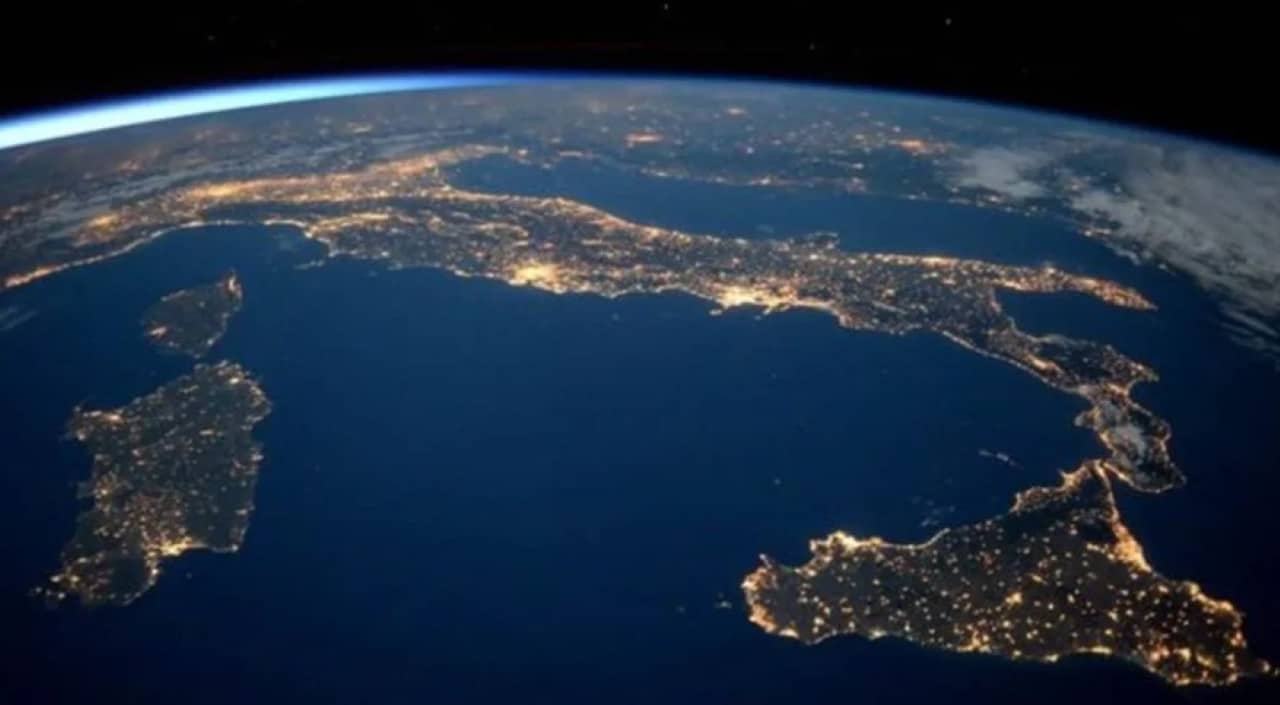
The Earth’s atmosphere contains a surprisingly small volume of water compared to the global hydrological cycle. If all this water, in the form of vapor, clouds and humidity, fell at once onto the planet’s surface, it would form a uniform layer of just 2.5 centimeters of rain. Esse volume totals around 12,900 km³, which represents a minimum fraction of the total water existing in Terra. Apesar of the reduced quantity, this atmospheric reservoir is constantly renewed and plays a fundamental role in climate regulation.
The water cycle moves more than 500 thousand km³ annually through evaporation and precipitation. Essa intense circulation results in the recycling of atmospheric contents almost 40 times a year. Moléculas of water remains in the atmosphere for an average of 9 to 10 days before returning to the surface as rain, snow or hail. Most evaporation occurs over the oceans, which also receive the largest share of precipitation, but winds transport moisture to the continents.
The thin layer that drives global climate
Esse small atmospheric volume reveals a paradox of the Earth system. Water in the atmosphere acts as a driver of atmospheric circulation by absorbing latent heat during evaporation and releasing it in condensation. This process influences the formation of storms and the transport of heat from tropical regions to higher latitudes. Sem this dynamic, the thermal differences between the equator and poles would be more extreme.
Atmospheric content is mainly concentrated in the troposphere, the lowest layer of the atmosphere. Distribution varies depending on local temperature and humidity. Regiões tropical areas have greater amounts of vapor, while polar and desert areas record minimum values. Essa variability contributes to distinct weather patterns in different parts of the planet.
Comparison with other water reservoirs
The oceans store most of the Earth’s water, equivalent to a layer of about 2.8 km if distributed evenly. Geleiras, lakes and rivers on continents represent volumes much higher than atmospheric volumes. The atmosphere holds just 0.001% of the global total water, but its constant mobility ensures continuous distribution to rivers, vegetation and aquifers.
- Oceans contain around 97% of the planet’s total water.
- Fresh water in glaciers and groundwater exceeds the atmospheric volume by thousands of times.
- Global average annual precipitation reaches approximately 990 mm, with large regional variations.
The role of humidity in climate balance
Atmospheric water regulates the energy balance of Terra. Evaporation cools the surface, while condensation warms the upper atmosphere. Esse exchange maintains thermal balance and sustains life outside the oceans. Modelos global climate studies confirm that small changes in this reservoir can influence precipitation patterns.
Moisture transport by winds connects oceans and continents. Rios and vegetation depend on this constant transfer to maintain ecosystems. The rapid dynamics of the hydrological cycle ensures that the small atmospheric stock is sufficient to meet varied water demands.
Evaporation and precipitation dynamics
Global daily evaporation reaches significant volumes, with a large contribution from the oceans. Precipitation returns water to the surface, fueling surface runoff and soil infiltration. Esse continuous flow maintains perennial rivers and recharges underground reservoirs in several regions.
The short residence time of vapor in the atmosphere explains the accelerated renewal. Eventos Intense meteorological conditions can concentrate precipitation in specific areas, while dry periods reflect low local humidity. The interaction between temperature and humidity determines the intensity of these processes.
Importance for terrestrial life
Atmospheric circulation distributes freshwater essential for agriculture, water supply and ecosystems. Florestas tropical and temperate zones depend on this transported moisture. Maintaining the cycle guarantees the sustainability of water resources on a planetary scale.
The atmosphere processes volumes equivalent to multiple annual layers of precipitation. Essa efficiency allows modest amounts to sustain biodiversity and human activities. Alterações in the cycle can modify rainfall patterns and water availability.
The volume of water in the atmosphere highlights the complexity of the Earth’s climate system. Apesar small, the reservoir drives processes that regulate temperature and precipitation across the planet. Constant renewal ensures the balanced functioning of the global hydrological cycle.



