

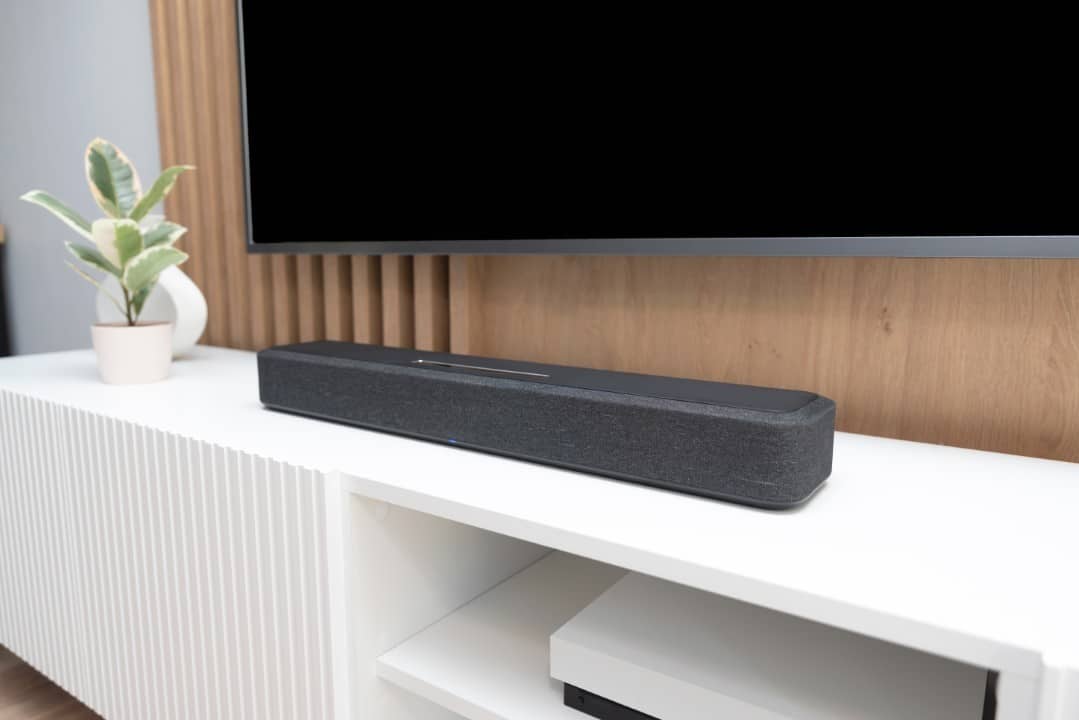
Buying new audio equipment for the living room often comes with the expectation of a home cinema experience. Muitos consumers, however, connect the device to the television and keep the factory settings intact, which often limits the device’s potential. Manufacturers often ship products with automatic functions activated, designed to impress in the first few minutes of use, but which end up damaging sound fidelity in the long term.
Sound engineering professionals recommend an immediate review of the configuration menus immediately after physically installing the device. The deactivation of artificial filters and the manual calibration of the channels guarantee a reproduction much closer to that idealized by film directors and music producers. Essas simple modifications are suitable for any model available on the market, from entry-level options to very high fidelity systems.

The main points of attention involve the management of bass frequencies, the treatment of voices and the decoding of the original signal. Correct application of these guidelines eliminates frequent problems such as inaudible speech during action scenes or excessive vibrations that distort the soundtrack, ensuring that the hardware investment delivers the performance promised by the technical specifications.
Disabling virtual spatiality effects
Three-dimensional sound simulation technologies use psychoacoustics principles to create the illusion that there are speakers positioned behind or to the sides of the listener. Although the promise of total immersion is a strong selling point, the continuous application of these algorithms results in a drastic change in the original content mix. In music tracks, for example, traditional stereo separation loses its naturalness, creating a confusing and artificial soundstage that fatigues hearing after short periods of time.
Standard technical guidance states that these spatial processing modes should remain turned off during everyday television use, such as when watching news or talk shows. The activation of virtual spatiality must occur selectively, restricted to specific video game sessions or action films that benefit from an artificial expansion of the sound field. Dessa way, the user preserves the integrity of the audio most of the time and uses the resource only when it truly adds value to the audiovisual experience.
Voice and dialogue volume management
Modern audiovisual productions often feature a wide dynamic range, which makes whispers very quiet and explosions extremely loud. Para To overcome the difficulty of hearing speech, brands implement dialogue amplifiers that highlight the middle frequencies of the human voice.
The indiscriminate use of this vocal enhancement tool completely unbalances the harmony of the soundtrack, overshadowing subtle sound effects and background musical instruments. On more basic devices, aggressive processing can generate shrillness and harshness in the actors’ voices.
The most effective alternative is to adjust the equalizer manually, slightly raising the midrange, or use the accessibility options on the streaming platforms themselves. Manter hardware dialog highlighting turned off prevents processing conflicts with the television.
Bass Frequency Calibration and Positioning
The independent bass modules come off the assembly lines with generic equalization, designed to demonstrate raw power from the first listen. Essa factory calibration rarely suits the specific acoustics of the end consumer’s living room.
The physical location of the bass speaker dictates the behavior of low-frequency waves in the room. Instalar equipment in the corners of the room amplifies the sound naturally due to reflections on the walls, which requires an immediate reduction in the channel volume level to avoid booms.
The fine-tuning process requires patience and the use of film scenes already known to the user as reference material. The central goal is to have the bass complement the action on screen, providing weight and impact, without covering up the details of the mid and treble frequencies.
Reducing the bass channel gain by a few decibels is often the first step in cleaning up the overall sonic presentation. A controlled and accurate bass response conveys much more realism than a constant, uncontrolled vibration that makes furniture shake.
Port configuration and signal passage
Communication between the screen and the audio system requires attention to data transmission protocols to avoid unnecessary signal compression. Muitas Televisions come configured to convert any incoming audio format to a basic stereo signal before sending it to the soundbar, wasting the external device’s decoding capabilities.
Accessing the television menu and changing the audio output to pass-through mode ensures that complex tracks reach the destination equipment intact. Using the correct HDMI port, preferably one labeled with enhanced audio feedback technology, ensures the necessary bandwidth for lossless high-resolution formats.
Leveling and dynamics control
The night compression or automatic volume leveling functions act as limiters, cutting sound peaks and raising silent sections. Esse mechanism helps not to disturb neighbors during the early hours of the morning, but destroys the artistic intention of the work by removing the emotional impact of volume transitions.
Permanently disabling any type of dynamic compression reveals the true scale of cinematic productions. The spectator begins to experience the tension of absolute silence followed by the full force of an action scene, exactly as occurs in commercial cinemas.
Advanced adjustments and acoustic correction
Equipment belonging to higher categories offers sophisticated room correction tools, which use built-in microphones or cell phone applications to measure the acoustic response of the room. Running this calibration software emits a series of test tones that sweep across all audible frequencies, allowing the internal processor to identify standing waves, phase cancellations, and excessive reflections caused by glass windows or cold floors. Based on this data, the system applies precise parametric equalization, adjusting the time delay of each individual speaker so that the sound reaches the viewer’s ears in a perfectly synchronized way. Taking full advantage of these measurement technologies radically transforms audio clarity, correcting physical deficiencies in the room that would be impossible to resolve simply by moving furniture or adding rugs and curtains.
System maintenance and updates
Periodically checking for new firmware versions ensures that the equipment operates with the latest and most efficient decoding algorithms. Technology companies frequently release software packages that fix lip-sync glitches, add support for new spatial audio formats, and refine communication with different brands of televisions, extending system life and stability.



