

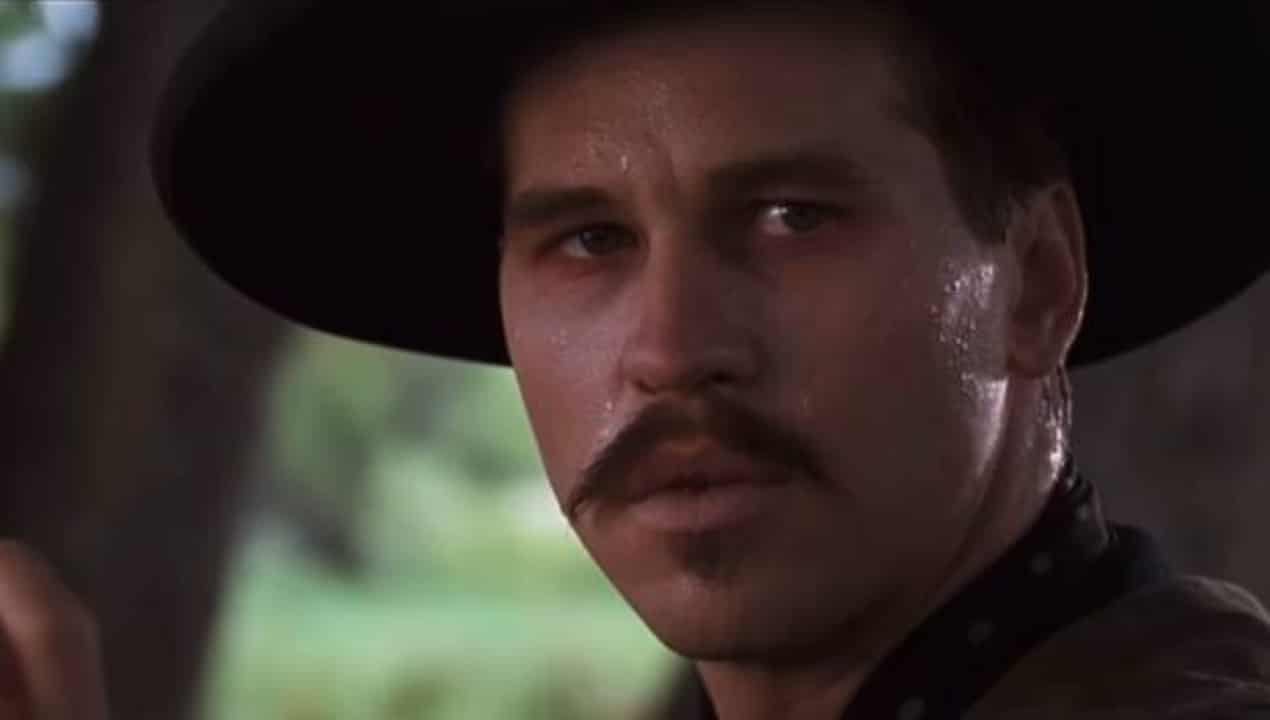
Actor Val Kilmer, recognized worldwide for iconic roles in cinema, returns to the screen in an independent production entitled As deep as the grave. The announcement comes almost a year after his death, which occurred in April 2025 due to complications from pneumonia, marking a new chapter in the integration between technology and art. The work uses state-of-the-art generative artificial intelligence tools to recreate the image and voice of the artist, who did not film his scenes in person.
The decision to continue with the project using digital technology was made after the actor was unable to attend the set during the pre-production period. Kilmer, who had faced health challenges since being diagnosed with throat cancer in 2015, had originally been cast in the lead role. Diante of the artist’s death, the production team opted for technological innovation to maintain the essence of the original project conceived by the director.
- Technology allowed the recreation of the actor’s physiognomy at different stages of life.
- The Kilmer family estate provided archival materials to ensure visual accuracy.
- The actor’s voice, affected by a previous tracheostomy, was digitally synthesized.
- The actor’s daughter, Mercedes Kilmer, expressed public support for the use of her father’s image.
The production sought innovative ways to maintain the schedule and artistic vision without the need to cast a new professional for the role. Segundo those responsible for the film, the cost of reshoots and the lack of budget for a new production from scratch made artificial intelligence the most viable and respectful solution to the initial desire to have Kilmer in the cast.
Technological integration and family support in the development of the priest character
The role played by Val Kilmer in the film is that of priest Fintan, a spiritual leader who mixes Catholicism with Estados Unidos’s southwestern Native American traditions. The character was written specifically with the actor’s characteristics in mind, drawing on his personal connection to the region and his own cultural heritage. Director Coerte Voorhees highlighted that recreating the actor was a way of honoring the commitment that Kilmer had with the script before his health condition worsened.
To achieve the necessary level of realism, the developers used images of a young Kilmer and records of his final years, creating a visual bridge between the past and the present. Esse process of facial rejuvenation and reconstruction allowed the character to navigate different chronological moments within the film’s narrative. Technical precision was closely monitored by consultants to prevent the final result from appearing artificial or mischaracterized.
Mercedes Kilmer reinforced that her father was always an enthusiast of new technologies and saw digital progress as a tool for narrative expansion. Ela stated that the actor viewed innovations with optimism, believing that technology could offer new possibilities for storytellers in the future. The family’s support was essential for image rights to be released and the technical process to begin ethically.
Process of recreating the voice and overcoming the actor’s physical limitations in cinema
One of the biggest challenges of the production was the reconstruction of Val Kilmer’s voice, which had been severely altered due to medical procedures carried out during his cancer treatment. The artificial intelligence was programmed to reflect the real condition the actor faced, creating a direct connection between the performer’s life and the characteristics of the fictional character. Father Fintan, in the plot, also faces similar health problems, which brought an additional layer of authenticity to the digital performance.
Audio technology allowed the team to capture nuances of Kilmer’s speech that had been lost over time, using databases of previous films and personal recordings. Esse sound restoration work is considered one of the most complex today, requiring months of processing so that the intonation and rhythm are natural. The end result promises to deliver a performance that respects the actor’s medical history without compromising the clarity of the dialogue.
The use of body doubles was also necessary to serve as a basis for superimposing the digital image of Kilmer during movement sequences. Esses professionals physically acted on set, while facial mapping software replaced their features with those of the veteran actor in real time in post-production. Essa technique ensures that interactions with other actors on set feel physical and organic, while maintaining correct depth of field and lighting in each scene.
Impact of digital innovation on the entertainment industry and independent productions
The use of artificial intelligence in As deep as the grave sparks a relevant debate about the future of independent productions that operate with restricted budgets. Director Voorhees explained that the choice was not just aesthetic, but a financial necessity given the impossibility of re-recording large parts of the work with a new cast. Para small films, access to these digital tools can mean the difference between a project being canceled and its successful completion.
The film industry has seen an increase in the use of generative tools, but the case of Kilmer stands out for the direct involvement and approval of his heirs. Ethics in using images of deceased people is a central topic in discussions between actors and producers’ unions in Hollywood. However, in this specific case, the alignment between the actor’s will in life and technological execution appears to have mitigated potential ethical or legal conflicts.
- The use of AI reduces logistics costs in cases of unforeseen events with the main cast.
- New rendering platforms enable professional results in smaller studios.
- The preservation of artistic legacies takes on a new dimension with digital immortality.
- The independent film market is leading the way in experimenting with these emerging technologies.
Development of the narrative and setting in the southwest of the Estados Unidos
The plot of As deep as the grave focuses deeply on the culture of the American Southwest, a place for which Val Kilmer had great affection and where he lived for many years. The choice of a character who moves between formal religion and native spirituality reflects personal interests that the actor often explored in his private life. Essa intimate connection between the performer and the role is one of the pillars that sustains the relevance of the production even after his departure.
The arid landscapes and mystical atmosphere of the region serve as a backdrop for a story that deals with life, death and legacy, themes that have become inevitably linked to the reality of Kilmer. The film’s photography uses natural lighting to highlight the textures of the desert, complementing the computer-generated performance. The director’s objective was to create a work that not only used technology for convenience, but that made it an integral part of the film’s message.
Technical perspectives on using archival footage and new captures
The visual effects technical team worked exhaustively to integrate the archival footage so that there was no disparity in quality with the scenes recorded in 4K and 8K. The use of neural networks allowed old frames, often in low resolution, to be scaled and detailed to match modern cinema standards. Este process involved analyzing thousands of landmarks on Kilmer’s faces from different decades of his film career.
In addition to the visual part, the actor’s body behavior was studied by machine learning algorithms to replicate his characteristic gestures and mannerisms. Isso includes the way he tilted his head or his subtle facial expressions that made him famous in films like Top Gun and The Doors. The commitment to detail was what convinced the family that the project would be a worthy and faithful representation of the actor’s public image.
Expectation of release and reception from moviegoers
The film As deep as the grave does not yet have a definitive release date on Brazilian commercial circuits, but it is expected to tour international festivals before reaching streaming platforms. Public interest is driven by both technological curiosity and nostalgia for the work of Kilmer, who has always maintained a loyal and engaged fan base. Specialized critics are closely watching how the audience will react to the first posthumous performance entirely built using generative artificial intelligence.
The initial reception among professionals in the sector is one of caution mixed with admiration for the creative possibilities that open up. Muitos argue that, if executed well, technology can allow great artists to continue contributing to culture even after physical limitations. The feature film promises to be a technical and emotional milestone, serving as a final tribute to the talent of one of the most versatile actors of his generation.
The production reinforces that all release times and deadlines will follow the local calendars of regional distributors, respecting the exhibition windows of each country. Enquanto this, the debate on digital cinema advances, with the case of Val Kilmer serving as a practical example of how innovation can be used to overcome biological and financial obstacles. Independent cinema, once again, positions itself as the testing ground for the trends that are expected to shape the global industry in the coming years.



