
Delhi government starts sale of affordable apartments in Narela with prices starting from 900 thousand rupees

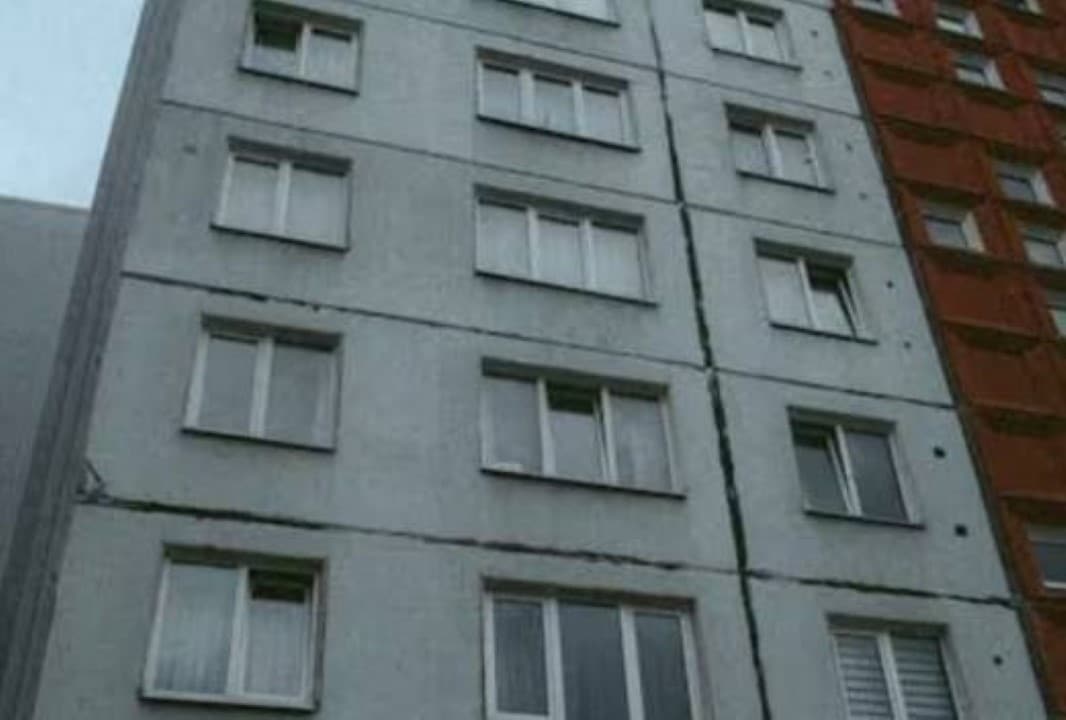
Autoridade of Desenvolvimento of Delhi (DDA) has started the housing allocation process through the Nagrik Awaas Yojana scheme. The housing project concentrates its offerings in the Narela region, providing units facing Seção Economicamente Mais Fraca (EWS). The program aims to facilitate access to home ownership for low-income families residing in the Indian capital and seeking property regularization through government channels.
Properties have a subsidy applied directly to the final value of the property. Após the application of a discount set at twenty-five percent, the housing units will be sold for an initial price of nine hundred thousand rupees. The amount represents a substantial reduction compared to prices charged by the private real estate market in the metropolitan region, allowing the inclusion of a larger portion of society in the housing credit system.
The membership procedure takes place completely digitally through the government authority’s official platform. Interested parties must pay a reservation fee set at fifty thousand rupees to secure the desired unit. The allocation system works on a first-come, first-served basis, prioritizing citizens who complete registration and initial payment more quickly on the service portal.
The housing program guidelines establish specific criteria for candidate participation during the screening phase:
– The maximum permissible annual family income for EWS category applicants is 1,000,000 rupees.
– The candidate cannot own land or residential property in their name within the territory of Delhi that exceeds the dimensions stipulated in the notice.
– Presentation of PAN card and valid identification documents is mandatory during the online registration phase.
Apartment structure and location in Narela
The housing units designated for the EWS category are strategically distributed in specific sectors of the urban planning of Narela. Residential blocks are predominantly concentrated in sectors G7 and G8, with a special focus on the so-called Pockets 6 and 7. Essa spatial organization was designed to create self-sufficient micro-neighborhoods, equipped with basic infrastructure to meet the daily needs of future residents.
The architectural design of the houses follows a standardized pattern to optimize space and reduce construction costs. The constructed area of each apartment varies between thirty-four point seventy-six and thirty-five point zero eight square meters. The internal layout was designed to accommodate small families, offering essential rooms that guarantee the functionality of the domestic environment.
The total volume of properties made available by the government agency reflects the magnitude of the demand for popular housing in the metropolis. The scheme covers a total of ninety-six thousand housing units ready for immediate occupation. The delivery of the keys takes place immediately after the conclusion of the bureaucratic procedures and the initial financial obligations by the buyer.
Financial requirements for acquiring units
Eligibility for the housing program requires rigorous proof of the family’s financial situation. The annual income ceiling set at 1,000,000 rupees serves as a screening mechanism to ensure that government subsidies reach the portion of the population that actually needs state support. The program’s auditors cross-check tax data to validate the information declared by registrants when submitting the electronic form. Transparency in the selection process aims to avoid fraud and ensure the equitable distribution of public resources invested in the local real estate sector.
The property restriction policy acts as a second fundamental filter in the candidate qualification process. The regulation strictly prohibits the participation of individuals who already hold property rights over properties or urban lots in the capital that exceed the size limits defined by local legislation. Essa preventive measure prevents real estate speculation and the accumulation of goods subsidized by private investors. Providing the permanent tax identification number is the main tool used by authorities to track the asset history of each applicant before final approval of the purchase and sale contract.
Road connectivity and expansion of public transport
The appreciation of the Narela region is directly linked to recent investments in road infrastructure. The housing hub benefits from its strategic proximity to Rodovia Nacional 44, one of the most important traffic arteries in the country. Essa expressway facilitates the daily commute of workers towards the commercial and industrial centers of the metropolis.
The development of Rota from Extensão Urbana II adds a new layer of mobility for local residents. The new highway creates an express corridor that connects Narela to crucial points in the city, including Aeroporto Internacional Indira Gandhi. The distance to the air terminal varies between forty-two and forty-eight kilometers, a route considerably optimized by the new runways.
Rail mass transit represents the central pillar of mobility planning for the district’s new population. The approval of Fase 4 of the metro system includes the creation of the Rithala-Narela-Kundli corridor. The engineering project envisages the construction of a railway line twenty-six point five kilometers long.
The new metro route will have twenty-one stations distributed along its route. The system will operate in synergy with the existing lines Vermelha and Verde, allowing quick transfers to other areas of the city. Modal integration will drastically reduce travel times for passengers who depend on public transport.
Reservation process and rules for staying at the property
The financial flow to guarantee the property requires attention to the deadlines and values stipulated in the call notice. Além of the initial payment of fifty thousand rupees for booking the EWS unit, the system charges a non-refundable registration fee of two thousand and five hundred rupees. Após confirmation of payment and allocation of the apartment, the buyer is subject to a contractual sale blocking clause. The regulation imposes a grace period of five years, during which the owner is legally prevented from transferring, selling or renting the property to third parties. The temporal restriction is intended to ensure that the houses are used exclusively for primary housing purposes by the benefiting families, curbing the practice of acquisition for quick profit in the secondary market. Monitoring of this rule is done through periodic inspections and document audits conducted by housing department agents.
Integration of different income groups in the project
The urban planning of Narela is not restricted to the low-income population, adopting a mixed occupation model. The housing scheme also includes units intended for Grupos of Baixa Renda (LIG), Grupos of Média Renda (MIG) and Grupos of Alta Renda (HIG). The diversification of the socioeconomic profile of residents contributes to the commercial sustainability of the region.
The twenty-five percent discount applies to all property categories offered in the current sales cycle. The price reduction strategy aims to accelerate the occupancy of buildings that remained vacant in previous phases of the program. The increase in population density attracts investment from the private sector, such as supermarkets, pharmacies and service providers.
Operating procedures on the official portal
Checking apartment availability takes place in real time via the user control panel on the development authority website. Interested parties must create access credentials, fill out digital forms accurately and attach scanned copies of the required documents. The platform issues instant electronic receipts after bank clearing of fees, ensuring transparency and legal security of the entire real estate transaction.



