

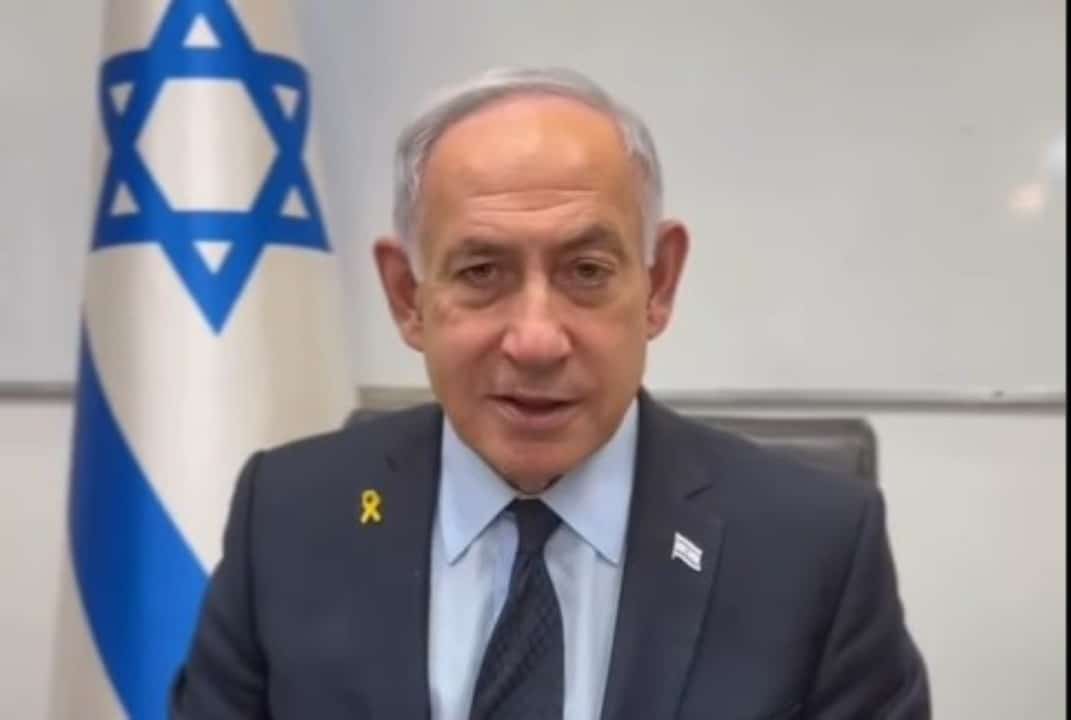
Guarda Revolucionária Islâmica of Irã released an official statement claiming responsibility for a military offensive aimed at the central office of the Israeli Prime Minister, Benjamin Netanyahu. The operation, classified by Iranian forces as a surprise tactical move carried out on March 2, raises questions about the security of high-level government installations in Jerusalém. Até at the present time, the Forças of Defesa of The absence of independent verification creates a vacuum of accurate information about the physical integrity of the mentioned authorities and about the real extent of the structural damage in the region highlighted by the Iranian military command.
Iranian government military communications strategy
The announcement made by the military forces of Teerã included direct mentions not only of the Israeli head of state, but also of the commander of Força Aérea of Israel, suggesting coordinated action against the country’s defense and administration leadership. The narrative constructed by Guarda Revolucionária Islâmica points to a state of uncertainty regarding the fate of Benjamin Netanyahu shortly after the supposed attack. Especialistas in military intelligence note that the disclosure of operations of this magnitude, without the immediate presentation of visual or telemetric evidence, is part of a psychological warfare doctrine widely used in Oriente Médio. The main objective of these statements is usually to demonstrate infiltration capabilities and military reach, seeking to intimidate the opposing high command and project strength towards the international community and its own regional allies.

The lack of validation by neutral intelligence agencies or commercial monitoring satellites keeps the claim in the realm of strategic speculation. Historicamente, Guarda Revolucionária Islâmica uses state communications channels and affiliated media networks to disseminate information about retaliatory operations or preemptive strikes. Quando the target involves central political figures from rival nations, caution in data analysis becomes a priority for Western governments and crisis monitoring organizations. The tactic of announcing attacks against state leaders serves to test the speed and format of the target country’s diplomatic and military response, in addition to mobilizing internal public opinion in times of high geopolitical tension.
Strategic silence of defense forces
The stance adopted by the government of Israel in the face of Iranian statements follows a known pattern of tactical ambiguity in unconfirmed crisis situations. Official silence prevents the adversary from obtaining valuable information about the success or failure of its intelligence and attack operations. Essa The absence of a direct response also prevents the validation of the enemy narrative in international forums.
By not issuing statements about the alleged offensive against Benjamin Netanyahu’s office, the Israeli authorities transfer the burden of proof to Guarda Revolucionária Islâmica. The security apparatus of Israel, renowned for its advanced interception and anti-aircraft defense systems, rarely fails to report actual incursions that significantly affect its territory. The lack of warning sirens or atypical military movements reported by civilians on the aforementioned date adds a layer of doubt about the veracity of the attack.
The Israeli military command focuses its efforts on maintaining operational normality and the continuity of government activities. The strategy of publicly ignoring Iranian allegations aims to deflate the psychological weight intended by Teerã, demonstrating that the administrative leadership remains unshakable and focused on its national security guidelines.
Escalation of hostilities in Oriente Médio
Tensions between the two military powers of Oriente Médio are at a level of maximum alert, characterized by indirect confrontations and mutual sabotage operations. Historical rivalry has gone beyond the boundaries of diplomatic rhetoric and often manifests itself in parallel theaters of operations. The allegation of a direct attack on the center of Israeli political power represents an attempt to raise the level of bilateral confrontation.
The use of cyber forces, allied militias and long-range drones has become the hallmark of this regional clash. Guarda Revolucionária Islâmica finances and trains several armed groups along Israel’s borders, creating a ring of constant military pressure. The statement about the Prime Minister’s office could be interpreted as a signal that Teerã is willing to change the unwritten rules of engagement.
The global intelligence community monitors the transition from proxy attacks to direct state-to-state threats. The possibility of a real offensive against high-level government installations would require a military response of unprecedented proportions, drastically altering the balance of power in the region. The fine line between narrative warfare and direct armed conflict becomes increasingly fragile.
The dynamics of continuous threats force neighboring nations to reinforce their own border security and air defense protocols. The fear that a miscalculation or a false flag operation could trigger a large-scale regional conflict is the subject of discussions in the security councils of the main global powers.
International monitoring and diplomacy
The absence of an official position from Israel creates an information vacuum that worries foreign offices around the world, requiring a redoubled effort from foreign intelligence agencies to verify the veracity of Iranian allegations. Potências with strategic interests in Oriente Médio monitor troop movements, military communications activity and satellite images of the region of The stability of the Israeli government is a central factor in maintaining trade routes, energy security and diplomatic agreements in force in the area. Qualquer indication of vulnerability at the top of the state could precipitate chain reactions in financial markets and global stock exchanges.
Diplomats and special envoys reiterate the urgent need for containment, warning that the spread of unverified information about attacks on heads of state has the potential to generate disproportionate military reactions. Conflict mediation becomes extremely complex when the parties involved operate based on unilateral statements and implicit denials. Organismos international organizations seek to establish emergency communication channels to prevent information warfare from becoming a pretext for preventive bombings. The continuous surveillance of peacekeepers and military observers in the region is intensified with each new statement issued by Guarda Revolucionária Islâmica.
Psychological warfare and state propaganda
The use of alarmist statements about successful military operations against targets of extremely high strategic value constitutes a classic tool of state propaganda, designed to strengthen internal cohesion and project an image of invulnerability before the local population. In the case of the allegations involving the Prime Minister’s office of Israel, Guarda Revolucionária Islâmica seeks to demonstrate that its intelligence and execution capabilities surpass the most advanced technological defenses in the world, even without providing material evidence of the feat. Esse type of narrative is often directed at the Iranian domestic audience and allied paramilitary groups spread across Oriente Médio, serving as a motivation and recruitment mechanism. By stating that the fate of central figures like Benjamin Netanyahu and the commander of Força Aérea remains uncertain, Teerã attempts to sow doubt and insecurity in the opposing society, exploiting the natural anxiety generated by prolonged conflicts. The effectiveness of this strategy, however, comes up against the resilience of democratic institutions and the ability of the international press and intelligence agencies to cross-reference data and deny unfounded claims. The constant repetition of unrealized threats could, in the long term, erode the credibility of the Iranian military among its own supporters, turning propaganda into a sign of operational weakness rather than tactical strength.
Implications for law enforcement security
The disclosure of alleged attacks on government offices forces an immediate review of protection protocols for high-ranking authorities. Security teams responsible for the physical integrity of the prime minister and military commanders intensify counterintelligence measures and change travel routines. The mere mention of a surprise operation requires air defense and cyber protection systems to operate at maximum capacity to neutralize any residual threat.
Direct confrontation dynamics
The evolution of hostilities indicates a dangerous change in the military doctrine applied in the region, with the gradual abandonment of plausible deniability in favor of open claims of attacks. Guarda Revolucionária Islâmica’s stance of publicly assuming its intention to reach Israeli political leadership eliminates the space for behind-the-scenes negotiations.
The confrontation takes on the shape of an existential clash, where the demonstration of force overrides traditional diplomacy. The absence of independent confirmations does not diminish the gravity of the rhetoric used, which in itself acts as a catalyst for increasing the defense budget and mobilizing reservists in both countries.
Continuous border surveillance
The permanent state of alert directly affects civil life and the economy of the nations involved in this spiral of tensions. The need to maintain anti-aircraft defense systems in absolute readiness generates extremely high operational costs and demands impeccable logistics from the armed forces.
The uncertainty generated by unverified military communications keeps the region on a constant threshold of readiness. The international community remains attentive, aware that global stability directly depends on the ability of these actors to contain their actions within the limits of strategic deterrence, preventing the war of narratives from spilling over into an irreversible armed conflict.



