

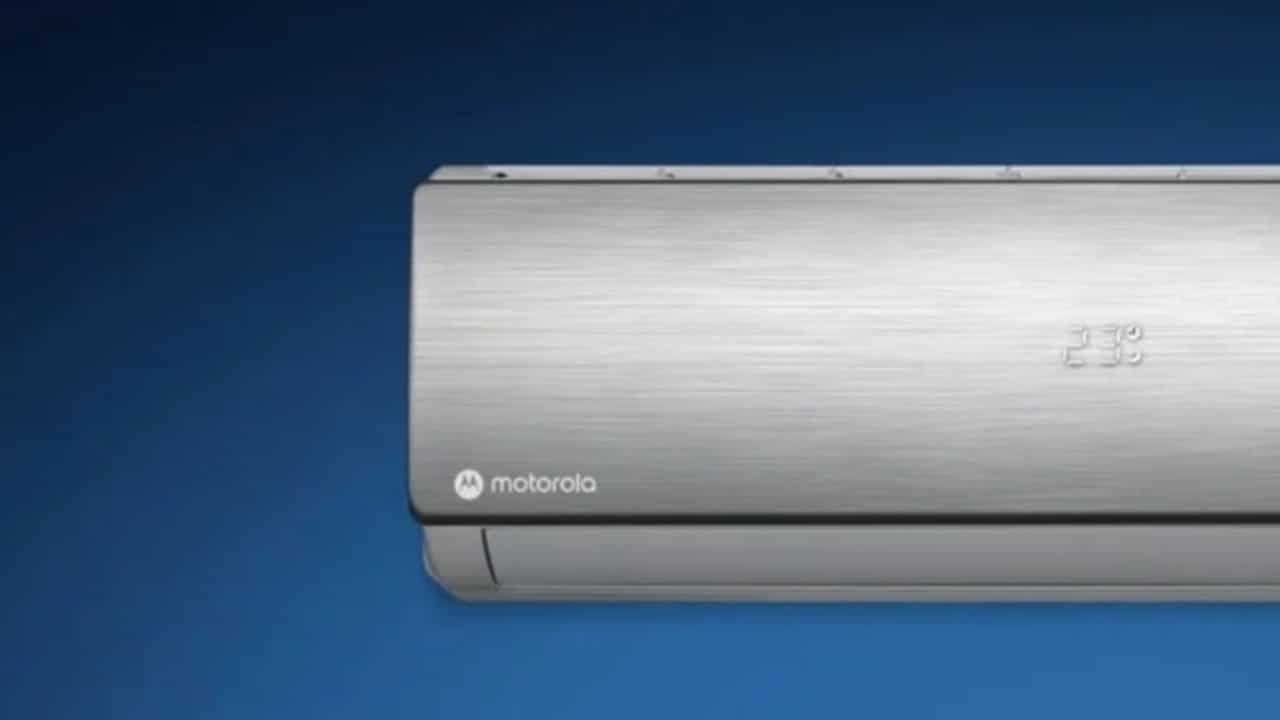
Electronics manufacturer Motorola has announced the expansion of its home product portfolio with the launch of a new series of smart air conditioners. The strategic move initially occurs in the Indian market, where the company seeks to consolidate its presence in the connected home segment. The new equipment combines air conditioning technology with advanced internet of things features.
Modern consumers increasingly demand appliances that offer convenience and energy efficiency. Atendendo to this demand, recently launched devices allow complete management of home temperature through mobile applications. Integration with voice assistants also makes users’ routines easier, eliminating the need for traditional remote controls.
The development of this line focuses on two main needs of today’s buyers: reducing electricity consumption and improving indoor air quality. The company designed the devices to work within a unified digital ecosystem, where the user can monitor energy expenditure and program cooling routines remotely.
Expansion strategy in the home appliance market
New products are sold exclusively through partnerships with large e-commerce platforms at Ásia. Direct sales to the end consumer eliminate physical intermediaries and allow the brand to offer integrated service packages, including equipment installation. Esta market approach demonstrates the manufacturer’s intention to compete directly with traditional brands in the white goods sector, using its expertise in connectivity as its main competitive differentiator.
The models presented have cooling capabilities that adapt to the size of the rooms, ensuring that performance is optimized for different home profiles. The inverter motor located on the outside of the equipment prioritizes durability and silence, fundamental characteristics for regions that face severe and prolonged heat waves. The engineering behind the devices was designed to withstand continuous use during the hottest months of the year, without compromising the integrity of the internal components.
Minimalist design and integration with modern environments
The aesthetics of the new air conditioners were designed to convey elegance and discretion. The internal unit features a matte finish and smooth lines, moving away from the industrial look common in older equipment. One of the visual highlights is the smooth front panel, which hides a digital temperature and operating mode display, only becoming visible when the device is turned on.
Cooling performance in extreme conditions
The cooling technological core is based on a dual rotary inverter compressor. Este system adjusts the engine speed continuously to maintain the desired temperature, avoiding energy peaks caused by the constant switching on and off of traditional compressors. The efficiency of the mechanism ensures that the room remains cool even when the outside temperature reaches the 55 degree mark Celsius.
The five-in-one convertible cooling functionality is another key technical differentiator. The user can change the refrigeration capacity of the device according to the needs of the moment, reducing the power on milder days or when there are few people in the room. Esta flexibility of use extends the useful life of the equipment and results in substantial savings on the electricity bill over the months.
To guarantee maximum durability and efficiency in heat exchange, the manufacturer chose to use coils made entirely of copper. The material is superior to aluminum in terms of thermal conduction and corrosion resistance, essential characteristics for high-value household appliances. The ventilation system also has oscillation in four directions, distributing cold air evenly throughout the space.
Advanced air purification and quality system
Concern for users’ respiratory health guided the development of a high-performance filtration system. The equipment acts simultaneously as an air conditioner and an air purifier, integrating layers of protection that include HEPA filters and silver ions. Esta combination is capable of capturing microscopic particles that circulate in the indoor environment, promoting a safer space for people with allergies or respiratory problems.
The purification mechanism can retain PM2.5 particles, which are common in urban areas with high levels of vehicular and industrial pollution. The physical barrier created by filters prevents dust, pollen and other allergens from spreading freely throughout the house. Air quality maintenance occurs continuously while the device is in operation, without the need to activate specific commands.
The integrated self-cleaning technology facilitates the maintenance of the internal unit and prevents the accumulation of dirt on the fins. The process works by freezing the moisture present inside the evaporator and then quickly thawing it to wash away accumulated residue. Esta automatic function prevents the formation of mold and bacteria, which often cause bad odors in conventional air conditioning units.
In addition to keeping the air clean, the self-cleaning system protects biological and structural components against premature degradation. The constant elimination of residual moisture prevents the proliferation of harmful microorganisms inside the machine. The durability of the filters is also extended thanks to this technology, reducing the frequency of technical maintenance and the need to replace parts in the short term.
Smart connectivity and voice command control
The device’s intelligence is managed by a network card compatible with 2.4 GHz and 5 GHz Wi-Fi frequencies, ensuring a stable connection to your home router. Através from the proprietary app, owners have access to a complete control panel on their smartphones. You can schedule operating times, monitor estimated energy consumption, and perform remote diagnostics to identify potential operating failures before they become serious problems.
Integration with virtual assistance platforms, such as Google Assistente and Amazon Alexa, allows equipment to be operated completely hands-free. The system also has geolocation functionality, which identifies when the user’s smartphone is approaching the home. Based on this information, the air conditioning turns on automatically, preparing the environment and ensuring a pleasant temperature at the exact moment of arrival.
Available Capacities and Price Positioning
The line of air conditioners reaches the Asian market with three capacity options, aiming to suit different sizes of residential and commercial environments. Consumers can choose between 12,000 BTU, 18,000 BTU and 24,000 BTU models depending on the area they want to cool. Initial marketing takes place on partner digital platforms, facilitating access to the product in different regions of the country.
The entry-level model has a suggested price that, in direct conversion, is equivalent to approximately 1,650 reais. Para attract buyers, the launch offers include free installation of the equipment, eliminating additional costs that usually make the purchase of split-type appliances more expensive. The aggressive pricing strategy seeks to capture a significant share of a highly competitive and constantly growing sector.
The advancement of connected homes on the global stage
The transition to fully automated homes has accelerated the development of household appliances that go beyond their primary functions. The incorporation of smart sensors and communication modules into everyday devices reflects a profound change in consumer behavior, which now seeks to centralize commands on a single mobile device. Fabricantes technology companies, which previously focused exclusively on smartphones and computers, are diversifying their portfolios to encompass the entire domestic ecosystem. The standardization of wireless communication protocols allows different brands to talk to each other, creating a unified home management network. The focus on energy efficiency, driven by machine learning algorithms, optimizes the use of resources and reduces the environmental impact of electrical consumption. The continuous evolution of artificial intelligence systems delivers increasingly autonomous devices, capable of anticipating users’ needs based on historical usage patterns and weather conditions in real time.



