
Probe data reveals that storms on Mars generate the phenomenon of zodiacal light in the night sky

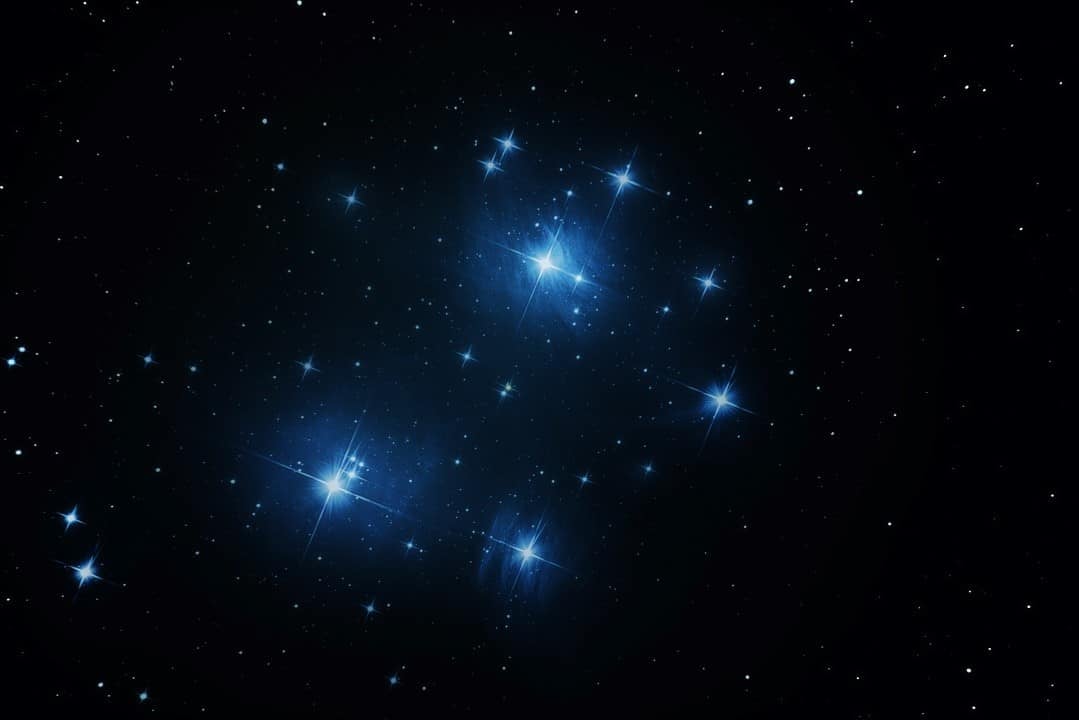
Zodiacal light consists of a diffuse, triangular-shaped glow visible in the night sky, generated by the reflection of sunlight from dust particles suspended in space. The astronomical event gains greater prominence during the spring equinox, shortly after the end of evening twilight. Recent Pesquisas point out that most of this particulate material originates directly from the planet Marte, contradicting previous theories that credited the phenomenon exclusively to comet fragments and asteroid collisions.
Confirmation of this origin occurred through data collected by the space probe Juno, managed by the North American space agency. Durante its navigation route, the equipment crossed a region with high particle density located exactly between the orbit of Terra and the main asteroid belt, recording crucial information about the composition of the interplanetary environment.
Astronomical surveys establish specific parameters about the nature of this celestial event:
– The particles have microscopic dimensions, with a diameter similar to grains of smoke.
– The material is densely concentrated along the ecliptic plane of the solar system.
– Viewing requires total absence of light pollution and clean atmospheric conditions.
The phenomenon manifests itself towards the west during spring, following the exact point where Sol sets on the horizon. Durante autumn, the visual dynamics reverse, and the brightness starts to be detected towards the east, preceding the rise of Sol. The inclination of the Earth’s axis in relation to the orbital plane during the equinoxes positions the dust band almost perpendicular to the horizon, optimizing naked-eye observation from the surface of our planet.
Space mission trajectory and material detection
The Juno probe was launched into space in 2011 with the primary objective of studying the composition and gravity of the gas giant Júpiter. During the long cruise through deep space, the spacecraft’s large solar panels unintentionally functioned as giant interplanetary dust impact detectors.
Each collision of a microscopic particle against the probe’s metallic structure generated a small cloud of plasma, which was immediately registered by the onboard magnetic sensors. The systematic mapping of these collisions allowed scientists to trace the exact distribution of dust in the space between Terra and Marte.
Atmospheric dynamics of the red planet
The Martian surface is widely known for its intense sandstorms that, at certain times of the year, cover the entire globe of the planet. The mechanical force of these extreme weather events lifts massive amounts of particulate matter into the highest, thinnest layers of the local atmosphere.
Due to the reduced gravity of Marte, which corresponds to just a fraction of Earth’s gravitational force, a significant part of this dust is able to definitively escape into outer space. Once free of the planet’s pull, the particles enter orbit around Sol, continually feeding the vast disk of material that generates zodiacal light.
Requirements for proper astronomical observation
Viewing the triangular glow requires very rigorous atmospheric and geographical conditions from observers. The spring equinox period offers the best window of opportunity, especially when the event coincides with the new moon phase, completely eliminating the light reflected by Terra’s natural satellite.
Observers must seek remote locations, located dozens of kilometers from large urban centers, to avoid glare caused by artificial lighting on public roads and homes. Regiões High-altitude or desert areas often have the cleanest, driest, most stable atmosphere for conducting this type of visual activity.
Successful photographic records of the event are often documented at sites that have international dark sky certification. Exemplos Notorious observation points include the arid expanses of the desert of Al Qua’a, located in the Emirados Árabes Unidos, and the vast plains of the Parque Nacional of
Optical mechanisms of light dispersion
The fundamental physical principle behind the phenomenon is based on the scattering of solar radiation by microscopic particles suspended in the vacuum of space. Quando the photons emitted by Sol reach this immense cloud of dust, the light is reflected in different directions, but with substantially greater intensity in the frontal angles.
This preferential scattering of light creates the optical illusion of a luminous cone or pyramid rising vertically from the Earth’s horizon. The base of the triangle has greater luminosity because it is aligned with the region of highest dust density and physically closest to the apparent position of the newly placed Sol.
Researchers linked to Observatório Lowell detail in their catalogs that the structure of the glow is extremely tenuous and delicate. Zodiacal light does not emit any type of radiation of its own, depending entirely on the lighting geometry of the solar system to become detectable by advanced optical instruments or the dark-adapted human eye.
Interstellar dust remains distributed across the ecliptic plane continuously throughout all months of the year, without interruption. However, it is only the specific orbital geometry of the equinox months that projects this band of material at a favorable vertical angle against the dark background of the night sky, removing it from the band of atmospheric haze close to the ground.
Technical procedures for photographic capture
Visual documentation of zodiacal light requires photographic equipment capable of operating efficiently in extremely low-light conditions. The use of a sturdy and heavy tripod is strictly mandatory to ensure absolute stability of the camera throughout the entire shooting process. Optimal hardware configurations involve the use of wide-angle lenses with the largest diaphragm opening possible, allowing maximum photons to enter the digital sensor. The exposure time must be carefully adjusted between ten and thirty seconds, depending on the focal length of the chosen lens, to capture the diffuse glow without the natural rotation of the Terra causing excessive dragging of the stars in the final image.
Photographers specializing in astrophotography strongly recommend including elements of the Earth’s relief in the composition of the frame to provide geometric proportion and scale to the celestial phenomenon. Silhuetas Well-defined mountains, isolated trees or rock formations help highlight the pyramidal shape of the light against the deep starry background. Durante the field capture session, it is strictly necessary to avoid using white light flashlights, vehicle headlights or cell phone screens, as any nearby light source instantly destroys the chemical adaptation of the eyes to darkness and negatively interferes with the sensitive capture of photographic equipment.
Technical differentiation from other celestial events
Correct identification of zodiacal light requires prior astronomical knowledge to avoid frequent confusion with other luminous phenomena present in the night sky. The most common mistake among amateur observers is to confuse the interplanetary dust cone with the spiral arm of Via Láctea, which also appears as an extensive whitish band crossing the firmament. Contudo, Além Furthermore, the phenomenon generated by Martian dust differs fundamentally from the remaining astronomical twilight, as its maximum visibility occurs exactly after the total end of direct sunlight in the upper Earth’s atmosphere. Outra important technical distinction must be made in relation to polar auroras, which are generated by the violent interaction of charged particles from the solar wind with the magnetic field of Terra and present vibrant colors and rapid wave movements, characteristics totally absent in the static, pale and monochromatic glow of the illuminated dust. The use of updated celestial charts and navigation instruments helps in the exact location of the ecliptic line, scientifically confirming whether the observed light spot actually corresponds to the orbital plane of the planets in the solar system.
Continuous mapping of the inner solar system
International space agencies maintain uninterrupted monitoring of the distribution of particulate matter in the inner region of the planetary system. The systematic compilation of data from several interplanetary missions allows the constant refinement of mathematical models that describe the orbital dynamics of dust from the surface of Marte to the vicinity of Terra.
Maria Clara é colaboradora da redação do Mix Vale, portal de notícias com cobertura de Brasil e mundo. Produz conteúdo nas editorias de economia e benefícios, com foco em informação de serviço para o leitor brasileiro. Escreve para o portal desde 2016: Formação: Atriz.



