
Global automakers reveal new generation of electric SUVs focused on luxury and high performance By Carolina Costa
6 min read
 |
The global automotive industry is going through a phase of profound transformation with the introduction of fully electric-powered sports utility vehicles. Fabricantes from different continents accelerate the development of vehicles that combine the category’s traditional space and robustness with zero-emission propulsion systems. Essa movement meets a growing demand for sustainable alternatives that do not compromise performance on highways or urban roads.
The development of new platforms dedicated exclusively to electric models allows automakers to explore new designs and optimize interior space. The absence of bulky combustion engines frees up space in the cabin, while the placement of batteries in the floor reduces the center of gravity. Essas structural changes result in more stable handling, an essential characteristic for large vehicles that are often used by families on long trips.
In addition to mechanical engineering, the integration of driving assistance technologies and state-of-the-art infotainment systems has become a standard in this new segment. Consumers are looking not just for an environmentally friendly means of transportation, but for a connected environment that offers active safety and superior comfort during their daily commutes.
Historical evolution and adaptation of automakers to the new scenario
The transition from traditional SUVs to electric format represents a milestone in the history of global automotive engineering. Durante decades, these vehicles were associated with high levels of fuel consumption and considerable emissions of polluting gases, which generated criticism from environmental organizations. Atualmente, the adoption of high energy density batteries and efficient electric motors reversed this image, transforming SUVs into technological showcases for brands. Massive investment in research and development has enabled the creation of modular architectures that serve as the basis for multiple models, reducing long-term production costs and allowing unprecedented scalability in the industry.
The paradigm shift also reflects a rigorous adaptation to increasingly restrictive environmental legislation in crucial markets such as Europa, Ásia and América of Norte. Manufacturers have had to completely restructure their assembly lines and supply chains to ensure access to essential components such as lithium and semiconductors. Esse joint effort between engineering, design and logistics now culminates in a crop of launches that range from compact options aimed at urban traffic to extremely luxurious models designed for demanding customers who seek exclusivity and extreme performance without compromising the environment.
Bentley redefines the concept of sophistication in a compact format
The Bentley Urban SUV appears as a watershed for the traditional British manufacturer, marking its definitive entry into the world of fully electric vehicles. With dimensions reaching approximately 5.1 meters in length, the model is strategically positioned below the renowned Bentayga, offering a slightly more compact option, but without losing the essence of the brand. The design, described as purposeful, incorporates elegant aesthetic elements that draw direct inspiration from the acclaimed EXP15 concept, ensuring a striking visual presence on the streets. In terms of performance, the Bentley engineering spared no effort, equipping the utility with a mechanical package capable of generating approximately 1,000 hp. Essa colossal force aims to provide the fastest acceleration ever recorded in the automaker’s history, redefining the limits of what a vehicle of this size can achieve. The interior of the cabin maintains the rigorous standard of craftsmanship and absolute comfort found in the Flying Spur sedan, while the driving dynamics and agility in corners have been calibrated to reflect the refined sportiness of the Continental GT, creating an unparalleled user experience in the luxury segment.
Fiat bets on nostalgia and versatility with new utility vehicle
Italian automaker Fiat is preparing a major offensive in the family segment with the unveiling of the GigaPanda, scheduled for Salão of Paris. The sports utility vehicle adopts a robust and chunky visual language, which recalls iconic stylistic elements from the brand’s models launched during the 1980s, offering flexible configurations of five or seven seats to suit different family sizes.
Built on the Smart Car architecture, the same one used by the Citroën C3 and the Grande Panda, the model stands out for its plurality of engine options. The catalog will include pure gasoline versions, hybrid variants and an all-electric configuration capable of delivering a range of around 400 km on a single charge. Market positioning focuses on accessibility, aiming to compete aggressively with established rivals such as Nissan Qashqai.
Off-road capability gains silent propulsion
The second generation of the Jeep Renegade represents a significant evolution for the compact model, introducing a purely electric powertrain option for the first time. The North American manufacturer focused on preserving the vehicle’s characteristic visual identity, maintaining the iconic seven-slot front grille that defines the brand’s DNA.
To ensure durability on trails and rough terrain, the exterior design continues to employ robust plastics in the wheel arches and bumpers. Essa additional protection ensures that the vehicle maintains its adventurous vocation, even adopting a propulsion system focused on urban energy efficiency.
At the same time, British engineering presents the Land Rover Defender Sport, a reduced-dimension version of the classic utility vehicle, which hits the market exclusively with an electric engine. The use of the advanced EMA platform was essential to maximize the approach and departure angles, vital characteristics for overcoming severe obstacles.
The prototypes that are currently undergoing rigorous tests reveal a boxy body shape, which favors internal space and visibility. One of the aesthetic highlights of the new model is the adoption of a full-width light bar at the front, giving a futuristic appearance that contrasts with the straight and traditional lines of the body.
High performance and extreme sportiness in the family segment
McLaren breaks paradigms by developing its first sports utility vehicle, known internally by the codename P47. The vehicle adopts a sophisticated plug-in hybrid configuration, combining electric motors with a powerful 4.0-liter twin-turbo V8 engine, ensuring performance worthy of the race track.
Designed with a four-door body and capacity for four occupants, the British model enters into direct competition with heavyweights in the ultra-luxury market. The strategy aims to attract customers who would traditionally opt for equivalent Ferrari, Aston Martin and Lamborghini models, offering typical McLaren driving dynamics in a practical format.
At the same level of excellence, the Porsche Cayenne Electric raises the autonomy standard with a 113 kWh battery, allowing a range of more than 640 km. The impressive Turbo version pumps out up to 1,140 horsepower and a massive 1,500 Nm torque, catapulting the vehicle from 0 to 100 km/h in a mere 2.5 seconds, as well as offering a towing capacity of up to 3,500 kg.
Ultra-fast charging technology and practical innovations
The Mercedes GLC Electric incorporates an 800-volt electrical architecture, technology that allows for significantly reduced charging times at high-power stations. The German utility vehicle has up to 653 km of autonomy and inherits the sophisticated air suspension system of the luxurious S-Class, while the front design features an illuminated grille made up of 942 pixels, complemented by an interior dominated by large digital screens.
On the other side of the Atlântico, the North American manufacturer
Affordable options and focus on advanced security
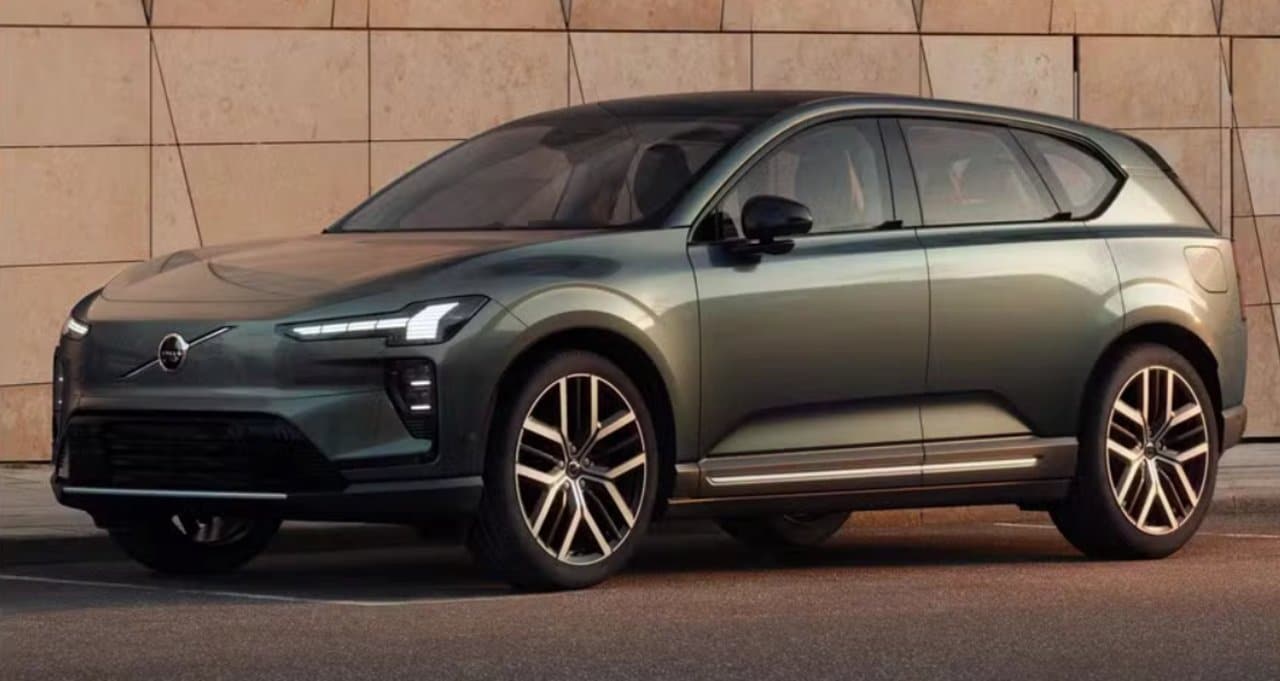
The European market receives the Skoda Epiq with the promise of a more rustic Modern Solid design, using the MEB+ platform to guarantee a generous 475-liter trunk, a range of up to 430 km and a competitive starting price in the £25,000 range. Simultaneamente, Volvo presents the EX60 as the zero-emission alternative to the popular XC60, using the new SPA3 architecture that supports an extraordinary range of up to 810 km in the top-of-the-line version, as well as a 370 kW charging system capable of adding 337 km of range in just 10 minutes, all integrated into a minimalist interior equipped with native Google technology.
Infrastructure and the future of utility mobility
The viability of all these major launches is intrinsically linked to the continued expansion of public and private charging infrastructure. Governos and energy companies work together to install ultra-fast chargers along major highways, eliminating range anxiety that has historically turned consumers away from electric vehicles.
The diversity of models presented by automakers proves that electrification is no longer a niche market but has become the general rule in the automotive industry. With options ranging from compact utility vehicles aimed at daily use to high-performance and extreme luxury machines, the SUV segment is consolidating itself as the main driver of technological innovation for sustainable mobility in the coming years.











