

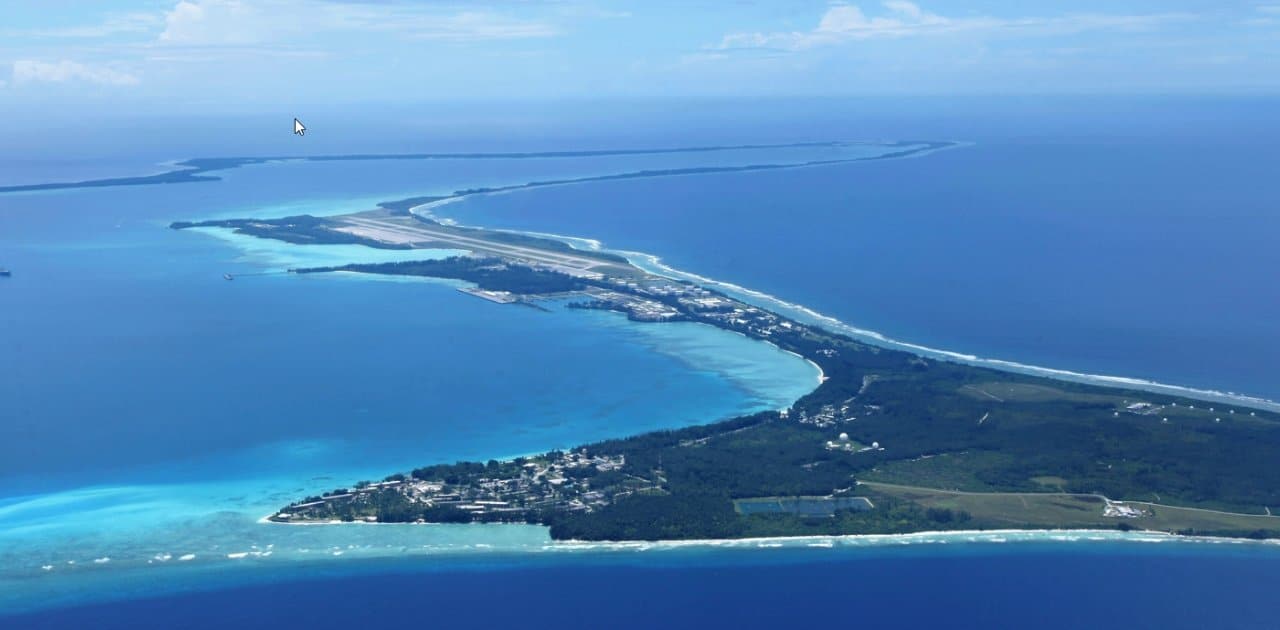
The international geopolitical scenario registers a new military escalation after the firing of intermediate-range ballistic missiles by the Iranian government against the joint military installation of the Estados Unidos and the Reino Unido, located on the island of Diego Garcia, in the Oceano Índico. The offensive, which did not result in human casualties or significant structural damage due to technical failures and interceptions, marks an operational shift in Teerã’s force projection. The episode demonstrates that the country’s ballistic arsenal has a range of action greater than the limits previously declared by local authorities, altering the security calculations of Western powers operating in the region. The absence of immediate pronouncements from Casa Branca and Ministério from the British Defesa maintains the high level of alert in naval fleets positioned in international waters close to Golfo Pérsico.
One of the artifacts fired presented structural failure during the flight path over the ocean, falling before reaching the programmed coordinates. Simultaneamente, American radar systems detected the approach of a second projectile, which led to the firing of an SM-3 interceptor from a warship strategically positioned on the approach path of the hostile weaponry.
Confirming the effectiveness of this defensive maneuver still requires technical assessments by coalition forces, which collect telemetry data to understand the exact trajectory of the attack. The event takes place in a window of intense operational activity, characterized by tactical movements that include:
– Reposicionamento of naval patrol fleets in Mar Arábico.
– Elevação of the readiness level at allied air bases on the Asian continent.
– Continuous Monitoramento via satellite from known Iranian launch silos.
Ballistic range and the strategic relevance of the military installation
The Diego Garcia military base functions as a fundamental logistical pillar for the joint air and naval operations of Washington and Londres, located approximately 4,000 kilometers from Iranian territory. The attempt to reach this specific target reveals that the military engineering of Teerã has surpassed the barrier of 2,000 kilometers of maximum range, a limit that had been publicly assured by the minister of Relações Exteriores, Abbas Araghchi, in recent statements. Essa discrepância entre o discurso diplomático e a capacidade bélica real força uma revisão imediata dos protocolos de defesa antiaérea nas bases aliadas espalhadas pelo continente asiático e arredores, exigindo novos investimentos em radares de detecção precoce.
The island’s isolated geography has historically provided a natural layer of protection against direct offensives, allowing the safe stationing of long-range bombers and advanced reconnaissance aircraft without the need for dense missile shields. The fact that Iranian radars are able to lock on coordinates at this latitude indicates a technological leap in the navigation system of its missiles, possibly using new satellite guidance systems. Especialistas in international security point out that the demonstration of force, even without reaching the ground, fulfills the objective of sending a clear message about the vulnerability of infrastructures previously considered unattainable by conventional weapons operated from the Oriente Médio.
Coordinated offensives and defense responses in Península Arábica
The attack on the base at Oceano Índico is part of a chain of military events that swept through Oriente Médio in the last few hours, demonstrating synchrony in offensive actions. In direct response to Iranian movements, the Forças of Defesa of
At the same time, the airspace of Península Arábica recorded an atypical volume of hostile incursions, forcing the activation of alarms in several capitals. Baterias anti-aircraft weapons from Arábia Saudita intercepted and neutralized more than two dozen unmanned aerial vehicles of Iranian origin that were flying over the country’s eastern province, a region that concentrates most of the Saudi oil extraction and refining infrastructure.
The Kuwait government also raised the readiness level of its armed forces, activating air defense protocols after detecting anomalies in border radars. Kuwaiti authorities reported tracking mixed threats, consisting of kamikaze drones and cruise missiles, highlighting an airspace saturation tactic designed to deplete the ammunition reserves of Western defense systems installed in the region.
Economic effects and pressure on the civil aviation market
War instability is immediately reflected in stock exchanges and commodity markets, severely affecting the global supply chain. The civil aviation sector emerges as one of the most affected by the escalation of tensions, facing an abrupt rise in operating costs resulting from the increase in the price of aviation kerosene on international markets.
United Airlines announced an immediate restructuring of its road network, confirming a 5% cut in all scheduled flights for the next two quarters. The drastic measure aims to mitigate the losses caused by the volatility of the energy market, which reacts nervously to any threat of interruption in the flow of oil exports from the Golfo Pérsico.
In an internal communication addressed to shareholders and directors, the company’s CEO, Scott Kirby, outlined a rigorous financial outlook for the next few months of operation. The executive warned that internal projections work with the hypothesis of a barrel of oil reaching the US$175 mark, establishing a floor of US$100 by the end of next year, which makes low-profit routes unfeasible.
If this estimate comes to fruition, United Airlines projects an increase of US$ 11 billion in its annual expenses just on fueling its aircraft. Esse amount exceeds the net profit margin recorded by the company in its periods of greatest commercial expansion, forcing the entire sector to pass on costs to the end consumer through increased ticket prices.
Power transitions and the new political scenario in Teerã
The increase in external military aggressiveness coincides with a period of profound restructuring in the high spheres of Iranian power, generating uncertainty about the chain of command. The country’s capital was recently the stage for the funeral ceremonies of the intelligence minister, Esmail Khatib, whose assassination created a gap in the Estado’s security apparatus and accelerated changes in the leadership of the armed forces.
The ascension of Ayatollah Mojtaba Khamenei to the position of supreme leader consolidates a new ideological and military guideline in the country, focusing on tightening foreign relations. Analistas point out that the demonstration of ballistic force serves as an instrument of internal legitimization for the new leadership, seeking to unify political factions through the projection of power against historical adversaries and foreign bases.
Diplomatic movements and international monitoring
While military radars continue to operate at maximum capacity, diplomatic channels attempt to establish emergency lines of communication to avoid open warfare. The presence of Donald Trump at his residence in Mar-a-Lago during the unfolding of the crisis indicates the maintenance of high-level political articulations in the
The international community, through monitoring agencies and security councils, evaluates the remains of intercepted weapons to determine the origin of the technological components used. The discovery of foreign-made parts in Iranian missiles could trigger a new round of economic sanctions against suppliers who evade current arms embargoes.
Reorganization of maritime routes and energy security
The constant threat of air attacks has forced the world’s largest shipping companies to redesign their trade routes, avoiding transit through the Estreito of Ormuz and the Mar Vermelho. Essa logistical changes add weeks to the travel time of cargo ships and oil tankers, making sea freight more expensive and putting pressure on inflation in economies dependent on imports of manufactured goods and energy. The Arábia Saudita, aware of its position as a priority target for the militias supported by the Teerã, has intensified naval patrolling and deepened intelligence cooperation with Western fleets to ensure the safe flow of its hydrocarbon production. Protecting these waterways has become the top tactical priority of coalition forces, which employ destroyers and nuclear submarines to create an invisible shield around merchant convoys, trying to maintain the minimum stability necessary for the functioning of the global economy in the face of imminent hostility.
Damage assessment and readiness of defense systems
Despite the absence of fatalities in the recent shootings against Israel and Diego Garcia, the continuous activation of warning sirens keeps civilian populations and military personnel in a state of permanent tension. The proven effectiveness of anti-missile shields has prevented structural damage so far, but the saturation tactic employed by attackers requires constant resupply of expensive Western interceptors, driving defense spending to record levels in the region.



