
Manufacturer updates Wink Mark 3 electric microcar with 11.5 kWh battery for US roads By Carolina Costa
6 min read
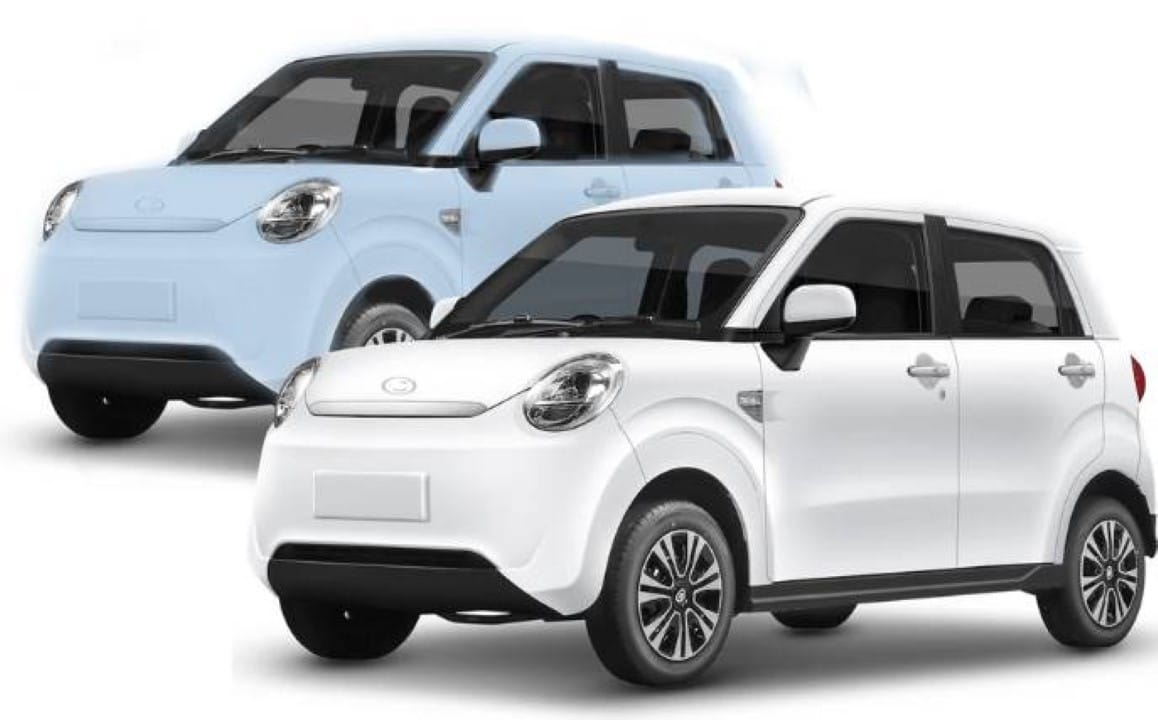 |
Wink Motors officially introduced technical and structural updates to the Mark 3 model, a small electric vehicle developed specifically for urban traffic. The car falls into the low-speed vehicle (LSV) category and strictly meets federal traffic requirements of Estados Unidos. Homologation allows the car to legally circulate on public roads that have a speed limit of up to 56 km/h, covering the legislation of 49 American states. The manufacturer’s central proposal is to offer a viable and safe alternative for routine short trips.
The vehicle’s mechanical and electronic configuration restricts the maximum speed to 40 km/h, a mandatory requirement of the American federal government for the classification of low-speed vehicles. Essa electronic limitation ensures that the car remains within the legal parameters of the LSV category, avoiding the need to comply with more complex regulations required for conventional passenger cars. The engineering design focuses on maximizing efficiency within this specific speed range.
The development of the project prioritized the creation of a car that moves away from the concept of modified golf carts, approaching the dynamics and structure of a traditional passenger car. The automaker has implemented design and engineering solutions that aim to facilitate the vehicle’s integration into the normal flow of urban traffic, respecting the category’s speed limitations.
Technical specifications and reinforced structure for daily traffic
The model adopts a hatchback body style with five doors, making it easier to board and disembark passengers in narrow spaces. The vehicle’s architecture uses a unibody structure made of reinforced steel, a feature that provides greater torsional rigidity to the chassis. Essa choice of material and assembly method provides a solid foundation for the cabin, differentiating the car from other models in the same category that use simple tubular chassis.
The internal space was sized to accommodate four adults with ergonomics suitable for urban journeys. The distribution of seats and the design of the front panel seek to optimize the useful area of the cabin, ensuring that occupants have sufficient leg and head space. The arrangement of internal elements follows traditional automotive industry standards.
The suspension and steering system were calibrated to deal with common urban asphalt irregularities, such as potholes and ditches. The mechanical adjustment aims to maintain directional stability even at the maximum permitted speed of 40 km/h, avoiding unwanted body oscillations during evasive maneuvers or sharp curves.
Protection systems and compliance with American federal standards
The list of automobile safety equipment includes more than 30 items that exceed the minimum requirements established by American regulatory agencies for the LSV category. Todos the seats are equipped with three-point seat belts, equipped with inertial coils that automatically adjust the tension according to the passenger’s movement.
The braking system uses a double hydraulic circuit, designed to ensure efficient stopping power and redundancy in the event of a failure in one of the lines. The rear signal features a raised brake light, improving visibility of the intention to stop for drivers of larger vehicles traveling directly behind.
To assist with parking maneuvers, the vehicle has a reversing camera integrated into the central panel, providing real-time images of the rear area. The protection package also includes specific safety locks for children on the rear doors, preventing accidental openings while the car is in motion.
Electronic sensors emit audible and visual alerts on the instrument panel if any door remains open or poorly closed before the vehicle begins to move. Esses indicators operate continuously to monitor the status of access to the passenger compartment throughout the entire journey.
Energy performance and battery charging alternatives
The electric propulsion system is powered by a set of lithium iron phosphate batteries with a storage capacity of 11.5 kWh. Essa battery chemistry is known in the industry to offer greater thermal stability and an extended cycle life compared to traditional lithium-ion cells. In ideal temperature and terrain conditions, the set provides enough energy to reach up to 137 kilometers of autonomy on a single full charge.
The energy replacement process can be carried out through a standard residential socket or through level 2 chargers, commonly found in public stations and condominiums. Como optional equipment, the manufacturer provides a solar panel installed on the roof of the vehicle. Este component works as a complementary recharging system, capturing solar energy during the day to gradually recharge the battery, which is useful for recovering part of the energy spent on short journeys under direct sunlight.
Commercial positioning and customer support infrastructure
The car is sold in the American market with a suggested price of US$19,995. Este final value already includes the incidence of import tariffs that reach 145% on certain components. The pricing strategy seeks to position the model competitively against other imported low-speed vehicles, which often suffer full transfers of high customs fees to the end consumer.
Vehicle maintenance and repair are supported by an accredited network that encompasses more than 10,000 independent mechanics distributed throughout the United States. The supply of spare parts operates under an express logistics system, with deliveries made the next day, aiming to minimize the time the car is immobilized in workshops for routine repairs.
Interior comfort and connectivity features for occupants
The cabin received updates focused on users’ daily convenience, incorporating a complete climate control system with air conditioning and heating, allowing the vehicle to be used in different seasons and adverse weather conditions. The windows and door locks operate via electrical controls, centralized on the driver’s door to facilitate access control. The central panel houses an infotainment system that concentrates battery status information, real-time consumption and navigation data. The multimedia center has Bluetooth connectivity, enabling the pairing of smartphones to play audio and answer phone calls without the need for the driver to take their hands off the steering wheel. The rear trunk has electronic locking integrated into the central security system, offering a protected compartment for transporting grocery shopping, backpacks or small parcels.
Driving dynamics and space utilization in the urban environment
The vehicle’s glass area was designed to maximize the driver’s panoramic visibility, reducing blind spots in the side and rear pillars. Essa architectural feature facilitates the perception of pedestrians, cyclists and other vehicles at busy intersections and during marking maneuvers on narrow roads.
Driving controls, including pedals, steering wheel and signal stalks, follow the standardized layout of the global automotive industry. Essa ergonomic familiarity reduces the learning curve for drivers accustomed to combustion cars who are migrating to the electric microcar segment.
The ratio of the wheelbase to the overall length of the vehicle results in a reduced turning circle. Essa suspension geometry allows the car to make U-turns on narrow streets and park in spaces that would be inaccessible for sedans or conventional sports utility vehicles.
Expanding access through test drives and remote demonstrations
The manufacturer has established physical points for in-person test drives at partner dealerships located in the Nordeste region of Estados Unidos and in the state of Flórida. Para To serve consumers in other regions, the company implemented a system of virtual demonstrations carried out through video calls, where technical consultants present vehicle details in real time and clarify operational doubts.
Suitability of the hatchback format for short commute demands
The shape of the body favors the verticalization of the internal space, ensuring comfort for the occupants’ heads without the need to lengthen the chassis. The rear doors have an optimized opening angle to facilitate the installation of child seats, meeting the needs of families who use the vehicle for daily school transport.
The model’s immediate availability on the market facilitates the transition for fleets and private users in cities that begin to implement restriction zones for heavy or fossil fuel-powered vehicles. The project complies with local traffic regulations without giving up the functionality required for the daily mobility routine in urban centers.











