

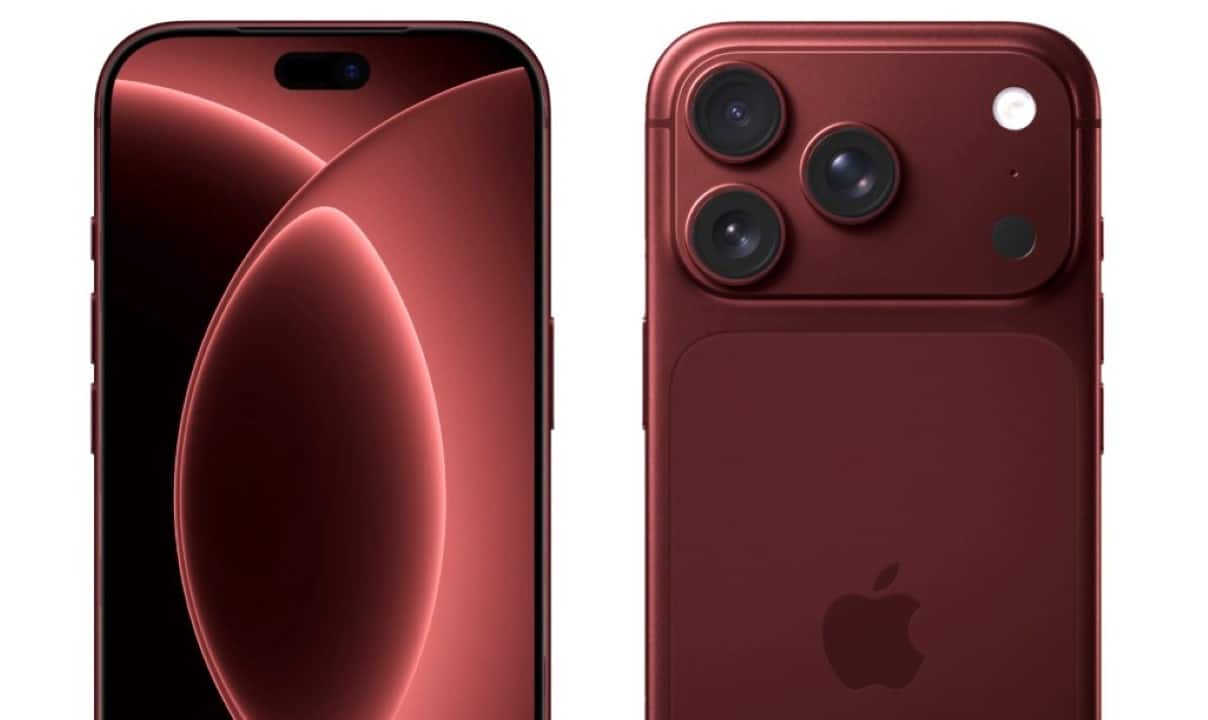
The mobile technology industry is in the final phase of developing the new generation of high-end devices from the North American manufacturer, which is expected to arrive on the global market in September. The design of the new smartphone establishes a profound reformulation in its physical structure and the arrangement of internal components. Engenheiros and designers worked together to conduct rigorous durability tests to validate the new materials used in the chassis construction.
The most substantial aesthetic change to the device is directly linked to the implementation of a completely redesigned glass rear panel, whose main purpose is to demonstrate the internal organization of the hardware. Este visual engineering concept requires an unprecedented level of finishing of internal parts, which are no longer hidden elements and become part of the product’s visual identity. The manufacturing process had to be severely adapted to ensure that the assembly meets the quality standards required for this category of premium equipment.
The production lines at Ásia have already received the first fully functional prototypes to carry out checks in extreme scenarios of daily use. Commercial expectations surrounding the launch are moving the entire supply chain, which adapts its manufacturing capacity to the start of mass production. The high-end models will maintain the screen dimensions already consolidated among the most demanding consumers, guaranteeing traditional ergonomics combined with visual innovations.
Structural redesign optimizes space and reduces display edges
The standard version of the professional line will be equipped with a 6.3-inch display, a dimension designed to offer continuous handling comfort. Já the larger variant will feature a 6.9-inch screen, specifically aimed at immersive media consumption and increasing mobile productivity. The development of the hardware was entirely aimed at optimizing the internal space, aiming to accommodate higher capacity batteries without causing any harm to the final thickness of the device.
The removal of components considered obsolete by engineering allowed for a strategic rearrangement of the printed circuit boards. The thermodynamics teams also needed to introduce new heat dissipation solutions to sustain the system’s operational stability. Recent advances in OLED panel manufacturing technologies have enabled a drastic reduction in the edges around the screen, achieving a narrowing of up to 35% in direct comparison with the brand’s previous generation of smartphones.
The thinning of the margins maximizes the useful viewing area without the need to expand the external physical dimensions of the device. The integration of brightness and proximity sensors below the screen was a fundamental step towards achieving this clean aesthetic result. The upper section of the display, responsible for housing the three-dimensional facial recognition system and the front camera, also underwent a complex process of miniaturization of its optical components.
The repositioning of the lenses and infrared emitters resulted in a significantly more discreet cutout in the glass, freeing up a larger area for displaying system status icons and application notifications. The panel’s adaptive refresh rate has been improved at the hardware level to ensure smoother graphical transitions while simultaneously increasing power efficiency when viewing static content.
Transparent back panel exposes manufacturer’s precision engineering
The use of a translucent glass plate on the back represents a radical change in the company’s industrial design philosophy. The transparent surface reveals the updated circuit board, whose microchips and capacitors have been positioned in a symmetrical and aesthetically pleasing manner. The flat cables and internal connectors received a special coating in dark tones, creating a sophisticated visual contrast against the lighter metallic parts.
The industrial aesthetic of the device is enhanced by the display of the circular wireless charging module and magnetic accessory attachment rings. The finishing of the internal metal parts went through industrial polishing and anodizing processes, ensuring an impeccable appearance even in areas that, until then, remained hidden from the user’s eyes. Toda the organization of the elements was coldly calculated to convey an immediate sensation of high technology and assembly precision.
To ensure the desired level of transparency without compromising structural resistance against falls, the manufacturer developed a new type of tempered glass that undergoes state-of-the-art chemical treatment. The material offers very high resistance to scratches and direct impacts, preserving optical clarity over years of use. A military-grade oleophobic treatment has been applied to both the outer and inner sides of the glass, preventing the build-up of residue or assembly marks during the chassis closure at the factory.
The group of industrial designers needed to completely rethink the electromagnetic shielding of processors and RAM memory modules. The traditional dull, unfinished metal covers have been replaced by protective shields with a brushed texture and high-precision laser-engraved logos. Essa meticulous attention to detail transforms the interior of the smartphone into a true showcase of the company’s technological and manufacturing capabilities.
Expanded power capacity eliminates physical carrier tray
Within the scope of the project, priority attention was devoted to autonomy for daily use, which resulted in the inclusion of a battery with a capacity greater than 5000 mAh. Testes laboratory internals indicate that the new energy density of lithium-ion cells allows it to reach up to 5200 mAh in the 6.9-inch model. The increase in nominal capacity aims to support the high peak consumption of new processors and screens with extreme levels of external brightness.
The increase in physical space dedicated to the energy accumulator was only made possible thanks to the definitive elimination of the tray for physical SIM cards in all global markets. The exclusive transition to eSIM technology frees up precious internal volume, which was immediately occupied by the new power elements. The motherboard architecture has been redesigned, acquiring an L-shape to perfectly contour and accommodate the expanded battery module.
The power management system uses predictive algorithms to optimize milliamp draw during intensive tasks and minimize drain during periods of user inactivity. The fast charging speed has also been increased, now supporting greater power both through the lower connection port and through the magnetic chargers attached to the rear. Battery longevity is guaranteed by new chemical conservation protocols for cells during recharge cycles.
Optical system advances with variable aperture and new front sensors
The rear photographic set of the larger model now has a variable aperture mechanism on the main lens, giving photographers physical control over the depth of field and the entry of light into the sensor. A miniature mechanical system physically regulates the camera’s diaphragm, providing smooth, imperceptible transitions between different aperture values during cinematic video recording. Optical image stabilization has been improved with the introduction of new high-precision gyroscopes, which compensate for sudden movements more effectively.
The state-of-the-art image sensor captures an expanded dynamic range, preserving fine details in both deep shadow areas and high-light regions. The telephoto lens maintains optical zoom support for long distances, but now uses an updated prism design to improve sharpness at the edges of photographs and reduce chromatic aberrations.
The front camera has received its first major hardware upgrade in several generations, adopting a new 24-megapixel sensor accompanied by a six-element lens array. The increased resolution guarantees captures richer in details and substantially improves the quality of video calls in low-light environments. Image signal processing via hardware works to reduce digital noise and improve the reproduction of skin tones in real time.
The front autofocus system has been recalibrated to perform faster and more accurate tracking of multiple faces simultaneously. The front lenses have received a special anti-reflective coating, designed to minimize visual artifacts and unwanted reflections caused by direct light sources pointed at the screen.
Local processing optimizes artificial intelligence and satellite connectivity
The device’s computational core is powered by a processor manufactured using state-of-the-art lithography, oriented to extract maximum performance per watt consumed. The chip architecture includes a significantly expanded neural processor designed specifically to run complex language models and artificial intelligence algorithms natively on the device. Random access memory has been expanded to 12 GB, providing the bandwidth needed to keep multiple heavy applications running in the background and processing local data without relying on cloud servers.
This approach focused on local processing ensures an extra layer of privacy for user data and drastically reduces latency in recognizing voice commands and generating text. The internal cooling system employs a high-efficiency graphene vapor chamber, responsible for distributing the heat generated by the processor throughout the metallic structure of the chassis. Improved thermal dissipation prevents chip speed reduction during prolonged graphics-intensive gaming sessions or when recording ultra-high-resolution videos.
The smartphone’s connectivity infrastructure encompasses new generation modems that support wider frequency bands for ultra-high-speed cellular networks. The satellite communication system has overcome the barrier of emergency notifications, now allowing the exchange of conventional text messages and making voice calls in remote areas lacking coverage from traditional telephone towers. The updated design of the antennas distributed around the edges of the device guarantees more stable signal reception, even in urban environments with a high density of electromagnetic interference.
The supply chain works at an accelerated pace to guarantee the volume of units required for the global launch. The manufacturer focuses its efforts on distribution logistics to meet the high initial demand projected for the main consumer markets. Acordos with suppliers of critical components were agreed in advance to avoid bottlenecks on the assembly line, while the new transparent design positions itself as the main market argument to attract mobile technology enthusiasts.



