

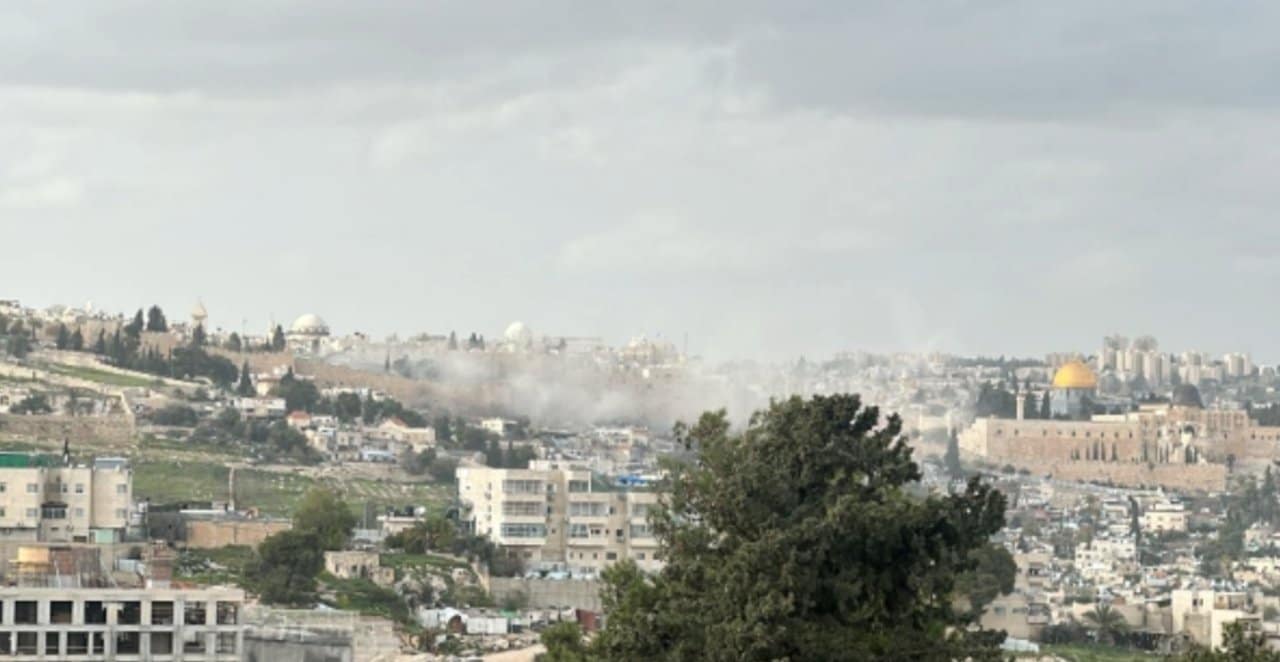
The government of Irã confirmed on March 21, 2026 the launch of missiles against the city of Dimona, in the territory of Israel, where the country’s main nuclear installation operates. The military offensive was declared by Teerã as a direct retaliation for the recent bombing that hit the Natanz underground complex, a strategic hub for Iranian uranium enrichment. The incident marks an unprecedented escalation in hostilities between the two regional powers.
Israel has historically adopted a stance of ambiguity regarding its arsenal, without officially confirming or denying the possession of atomic warheads. The Dimona plant, located in the Neguev desert, formally operates as a research and energy generation center. However, global intelligence reports and independent inspections point to the site as the central base for the development of Israeli nuclear weapons for decades.
A direct attack on infrastructure of this nature raises the global alert level due to the risk of radioactive contamination and a conflict of unprecedented proportions. The international community follows the movement of troops and the exchange of hostilities that threaten the stability of the entire Oriente Médio, with immediate repercussions on diplomacy and the world economy.
Structural damage and military justifications
Confirmation of the Iranian attack came shortly after Israeli emergency services reported dozens of injuries in the Dimona region, most of them hit by shrapnel resulting from explosions and the destruction of urban infrastructure. Autoridades local security personnel reported that a commercial building and surrounding areas suffered a direct hit from a projectile fired by Irã. Imagens broadcast by local broadcasters showed destroyed facades and craters on public roads, highlighting the piercing capacity of the weapons used and the partial failure of the aerial interception systems in fully protecting the plant’s perimeter.
The justification for Teerã is based on the previous attack on the Natanz complex, located in the central region of Irã, which the local government immediately assigned to intelligence and military forces from The Iranian atomic energy organization publicly stated that the underground structure withstood the impact without recording any leakage of radioactive materials, which averted an immediate environmental disaster. The violation of airspace and the damage to uranium enrichment centrifuges, however, served as the definitive trigger for the current military response against the Neguev desert, changing the dynamics of deterrence between the countries.
Alerts from regulatory agencies and diplomatic positioning
The escalation of hostilities prompted immediate responses from major monitoring organizations and global powers, with the director of Agência Internacional of Energia Atômica (IAEA), Rafael Grossi, issuing a statement demanding absolute restraint to avoid a nuclear accident of catastrophic proportions that would affect multiple nations. Rússia, which maintains close diplomatic and commercial ties with the Iranian government, called the initial bombing of Natanz an irresponsible action that poses real risks of catastrophe across the region. On the other hand, Western nations reiterated their suspicions that the Irã program has military purposes, using this argument to justify the preventive operations carried out at the end of February by American and Israeli forces. Diplomatic polarization makes it difficult to create negotiation corridors, while the risk of a military miscalculation near active reactors keeps foreign naval fleets in a state of maximum readiness in Mar Mediterrâneo and Golfo Pérsico.
Immediate repercussions on the global energy market
The military escalation caused an immediate shock to stock exchanges and the commodities market. The barrel of oil Brent, an international reference, registered an increase of more than 50% in the last month, surpassing the 105 dollar mark due to uncertainty about production.
Investors’ main concern is the safety of navigation on the Estreito of Ormuz, a vital sea route connecting the Golfo Pérsico to the Golfo of Cerca of one-fifth of all oil and liquefied natural gas consumed in the world passes through this strategic channel daily.
Faced with supply instability, Comissão Europeia issued an urgent directive for the bloc’s countries to accelerate the storage of natural gas. The target has been adjusted to ensure 80% of reserve capacity before winter, mitigating dependence on affected routes, while countries such as Emirados Árabes Unidos, Reino Unido, França and
Tactical operations and base dismantling
The Estados Unidos armed forces intensified their presence in the region with attacks targeting Iranian infrastructure. The American military command confirmed the destruction of an underground bunker on the coast of Irã, used to store heavy weapons.
Admiral Brad Cooper, head of the American military command (Centcom), explained that the installation housed anti-ship cruise missiles and mobile launchers. The operation aimed to neutralize threats to oil tanker traffic and restore freedom of navigation.
In parallel, Exército of Israel conducted air operations directly into the Iranian capital during the night. The main target was the Malek-Ashtar university center, located in Teerã, which suffered severe structural damage.
Israeli intelligence justified the incursion by stating that the academic complex functions as an operational front. Segundo the military, the site is used for the development of advanced components for nuclear weapons, integrating the country’s military network.
Transition of power in the Iranian top echelon
The war scenario coincides with a profound political restructuring in Irã, triggered by the death of supreme leader Ali Khamenei. The death of the highest authority paved the way for the appointment of his son, Mojtaba Khamenei, as direct successor in command of the Islamic republic.
The transition is marked by uncertainty, as Mojtaba has not made public appearances since his appointment. His absence from the Eid al-Fitr prayer, a central event in the Islamic calendar in Teerã, raised questions about the stability of the new command and its ability to manage the ongoing military crisis.
Involvement of neighboring nations in the clash
The exchange of attacks went beyond the borders of the countries directly involved, reaching Golfo monarchies. Os Emirados Árabes Unidos reported interceptions of Iranian air strikes on their territory, configuring a geographic expansion of the armed conflict.
The offensive occurred after Irã threatened retaliation if there were military movements on the islands of Abu Musa and Tumb Mayor. Control of these strategic islands in Estreito of Ormuz is disputed between Teerã and Abu Dhabi, making the area a new vector of regional tension.
Declarations on continuity of operations
The government of Israel made it clear that there is no forecast for a ceasefire in the short term and that the intensity of operations will increase. The minister of Defesa, Israel Katz, has publicly stated that the Forças of
Strategic projections and military reach
International security experts assess that the Irã arsenal still has ample tactical response capacity. Neil Quilliam, geopolitical analyst at Chatham House, projects that the intensity of the fighting will continue for the next four to six weeks, requiring the resilience of anti-aircraft defenses.
The Iranian willingness to test the limits of its forces was evidenced in an attempted attack against the Diego Garcia base, in Oceano Índico. Although the attack against the British-American installation, located 4 thousand kilometers away, failed, the action demonstrated the ballistic reach of Teerã and its intention to reach distant Western targets.



