Paulo Bracks opens up on intense football pressure, revealing personal struggles and mental toll in 2025 Por Luís Pereira
5 min de leitura
|
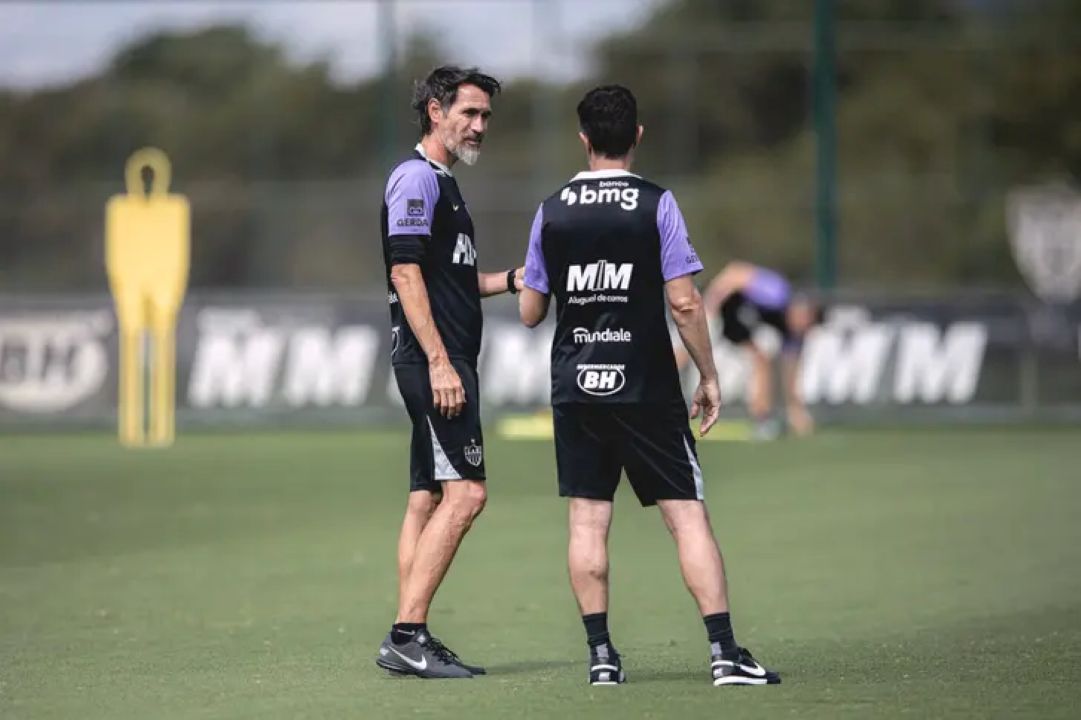
In a candid reflection that resonates deeply within the sport in 2025, Atlético-MG executive director Paulo Bracks recently detailed the profound impact of unrelenting pressure in Brazilian football. His powerful testimony underscored the mental and emotional toll exacted by the constant demands, revealing moments of extreme personal vulnerability.
Bracks emphasized that while public scrutiny is an inherent part of high-profile roles, the current environment often crosses into excessive and damaging territory. He articulated the anguish experienced by professionals who, despite dedication, are frequently subjected to harsh, depersonalized criticism.
The director’s insights spotlight an ongoing, critical discussion around mental health in elite sports, illustrating how individuals in positions of power, as well as players, grapple daily with public perception and intense professional demands.
The invisible toll of football’s relentless pressure
Bracks shared a deeply personal struggle, confessing, “I’ve cried too much, I’ve cried in hiding too much. We cry out of anguish, out of anger, out of a desire to vent, because we are ridiculed as if we were deliberately trying to harm someone, to diminish someone’s life.” He adamantly stated that such malicious intent is absent from their work, extending this sentiment to players who also suffer immensely.
This admission sheds light on the often-hidden emotional battles fought by those in the public eye, revealing a side of professional football rarely discussed with such raw honesty. It emphasizes that beneath the strategic decisions and public appearances, human beings are contending with significant psychological burdens.
Navigating the public arena: A director’s burden
Acknowledging the inherent responsibilities, Bracks stated his understanding that his role at Atlético-MG comes with an inescapable wave of expectations. “I believe no football director in Brazil is unanimous,” he observed, accepting that donning the Atlético jersey as an executive means embracing pressure, demands, criticism, and even verbal aggression.
He detailed his approach to managing this constant bombardment, stressing the importance of not allowing external comments to impede performance. Bracks attempts to process feedback through a filter, focusing on the constructive elements while trying to deflect the daily negativity that “doesn’t do anyone any good.”
The executive further explained his efforts to shield himself, including avoiding social media, a common strategy for public figures in the digital age. However, he admitted that complete insulation is impossible, with unsolicited comments sometimes reaching him even within his private residence in Belo Horizonte, highlighting the pervasive nature of public opinion.
Strategies for mental resilience in professional sports
Bracks highlighted the difficulty of maintaining mental fortitude in such a demanding environment, noting that he processes criticism in silence. He stressed that this level of resilience is not common, and many colleagues in the football industry have found themselves unable to continue working in the sport due to the psychological strain.
He articulated the challenge of this constant emotional management, stating, “You have to have this resilience; not everyone can endure it.” This sentiment underlines the high attrition rate in professional football management and playing careers, where mental exhaustion can be as debilitating as physical injury.
A stark reality: Mental health crisis in the sport
The director presented compelling examples to illustrate the widespread mental health crisis impacting football professionals. He cited Philippe Coutinho’s return to Vasco, where the player reportedly forewent significant financial gains for a dream return, only to leave again due to mental exhaustion. Bracks also recalled former Fluminense coach Renato Gaúcho’s frequent discussions about the mental aspect of the game and the immense pressure on coaches and executives, even after significant achievements. These instances, occurring in past seasons, serve as powerful reminders of the persistent nature of mental health challenges that continue to plague the sport in 2025, demonstrating that even celebrated figures are vulnerable to burnout and intense scrutiny.
Beyond the pitch: Society’s role in the toxic environment
Bracks extended his critique beyond the immediate football ecosystem, pointing to the role of certain opinion leaders in exacerbating the hostile atmosphere. He argued that some amplify anger and hatred from fan bases, creating a “somber scenario” where “criticism engages much more than praise.”
He noted the paradoxical phenomenon where even positive comments now attract negativity. Recognizing his own position, Bracks concluded, “My role is a glass house position,” signifying his constant exposure to public view and judgment.
The executive recounted instances of disrespect and expressed concern that the boundaries of constructive criticism have been severely overstepped. This culture, he believes, is a symptom of immediacy and the idea that people are disposable, contributing to a pervasive “hatred that harms football.”
Bracks questioned the long-term viability of football coexisting harmoniously with such an environment. He asserted that the current situation transcends mere sports critique, reflecting a broader societal illness, stating, “Society is sick, and football is the catharsis of it.” He concluded that while constructive criticism is always welcome, there is currently an excessive and toxic level of negativity.
Demanding respect: The call for human dignity
Highlighting a lack of respect, Bracks referenced the treatment of Filipe Luís as an example of behavior he had never witnessed in football. He emphasized that this instance should serve as a cautionary tale for all, reinforcing the fundamental need for human dignity.
He declared that treating people correctly, both as human beings and professionals, is the absolute minimum standard that must be demanded in the sport.