
Aprilia consolidates leadership in MotoGP; Marc Márquez surprises and Ducati faces challenges By Thiago Lemos
5 min read
 |
The current MotoGP season has been marked by a significant upheaval in the competitive landscape, with the Aprilia emerging as a dominant force and the previously unshakable Ducati facing a series of challenges. Amid this shift in power, Marc Márquez’s remarkable performance has captured attention, demonstrating an impressive resurgence that adds an extra layer of unpredictability to the championship. Este rearrangement of forces suggests one of the most exciting and competitive seasons in recent years, with each race presenting new developments.
The rise of the Aprilia is not just a surprise, but the result of consistent development work and impeccable performance by its pilots. The Italian team has displayed remarkable consistency, with its RS-GP motorcycles showing an exceptional balance between speed and maneuverability, adapting well to different types of circuits. The victories and podiums achieved in the last stages solidify its position as the main candidate for the title, something unthinkable just a few seasons ago.
Aprilia’s unexpected rise on the world stage
Aprilia, which for many years appeared as an intermediate team, managed to reverse this image with a robust technical project and a cohesive team strategy. Seus drivers have made the most of the potential of the RS-GP, delivering results that exceed initial expectations. The engineering behind the bike demonstrates significant advancement, especially in terms of aerodynamics and power delivery, allowing the team to challenge established powerhouses.
This evolution is not limited to just the machine. The synergy between the engineers, pit crew and drivers has been a crucial factor. The ability to quickly adapt to track conditions and make strategic decisions during races has placed Aprilia in an advantageous position, frequently overcoming opponents with more resources and experience in cutting-edge competitions.
Ducati amid turbulence and results below expectations
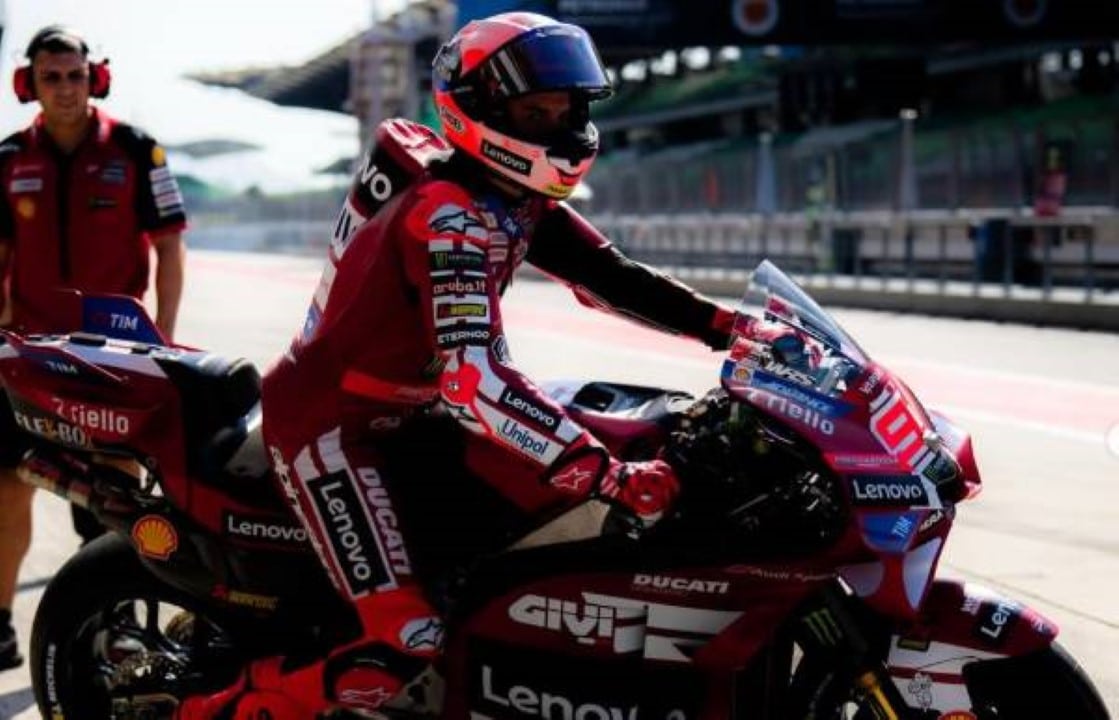
In contrast to the brilliance of Aprilia, Ducati, which dominated recent seasons with its Desmosedici, is experiencing a period of turbulence. Apesar Despite still having talented riders and a competitive bike, the team has faced difficulties in maintaining the consistency and hegemony that characterized it. Falhas unexpected events, strategic errors and intense pressure from competitors have contributed to performance below expectations.
Ducati’s problems appear to be multifaceted, ranging from tire management in certain conditions to internal pressure within the team, which appears to affect drivers’ performance. MotoGP’s high level of competitiveness does not forgive mistakes, and the lack of a sequence of positive results has raised questions about the team’s ability to react and maintain its leadership position. The complexity of managing multiple riders in satellite teams, all with the same bike, may also be generating an internal dispute that, instead of boosting, ends up diluting the focus on the championship’s greater objectives.
The resurgence of Marc Márquez and its impact on competition
In the midst of this fierce dispute between manufacturers, Marc Márquez emerges as one of the great protagonists of the season. Após years of challenges, including serious injuries and a difficult adaptation to new motorcycles, the six-time world champion has demonstrated impressive form. Sua ability to get the most out of his equipment, combined with his aggressiveness and intelligence on the track, placed him back among the main competitors.
Márquez is not only scoring consistently, but he is also vying for podiums and victories, challenging younger and more established drivers. Seu return to the top is not only a story of personal overcoming, but also a factor that affects the dynamics of the championship. The presence of a competitor of his caliber raises the level of competition, forcing other drivers and teams to surpass themselves even further. Ele has shown a remarkable ability to adapt and learn, using the experience accumulated throughout his career to overcome technical and tactical obstacles.
Your performance has a considerable psychological effect on your rivals. Conhecido due to his ability in decisive races, the simple presence of Márquez in the top positions is enough to generate additional pressure on the other competitors. Este impact goes beyond the score, influencing the strategies and mentality of the entire grid.
Technical analysis: what drives Aprilia and stops Ducati
Technical analysis reveals that the Aprilia invested heavily in crucial areas, such as aerodynamics and chassis, resulting in a more balanced and predictable bike. The RS-GP has demonstrated excellent cornering ability and superior traction, allowing drivers to maintain a higher speed on winding sections. Essa feature is vital on many circuits on the MotoGP calendar, where agility is as important as raw power.
On the other hand, the Ducati, although it still has one of the fastest bikes on straights, seems to be facing difficulties in finding the ideal setting for the new generations of tires and the particularities of some circuits. The Desmosedici, which was once the gold standard in terms of overall performance, now appears to have some weaknesses that are being exploited by the competition. The complexity of your engine and the fine-tuning required to optimize performance in all conditions may be becoming a challenge.
Strategic moves and the future of teams
Current performances will certainly influence the teams’ strategic decisions for the remainder of the season and for the coming years. Aprilia, now in the spotlight, can attract more talent and investment, solidifying its prominent position. Já to Ducati will need to reassess their priorities and perhaps implement significant changes to regain dominance. The driver market will also be heated, with speculation about possible transfers and team restructuring in search of the best alignment for the future.
The competition in MotoGP is relentless, and each team is constantly looking for the smallest advantage that can be exploited. The need for continuous innovation, combined with talent and resource management, is a constant challenge. The current results serve as a reminder that stagnation, even if momentary, can be costly in a sport where evolution is constant.
Challenges in maintaining consistency at high performance
Maintaining a high level of performance and consistency throughout a season as demanding as MotoGP is one of the biggest challenges for any team and rider. The margins between victory and defeat are tiny, and factors such as weather conditions, tire wear, small riding errors or bike adjustments can drastically alter the results. The pressure is constant, and the ability to deal with it, maintaining focus and determination, is what separates champions from the rest.











