

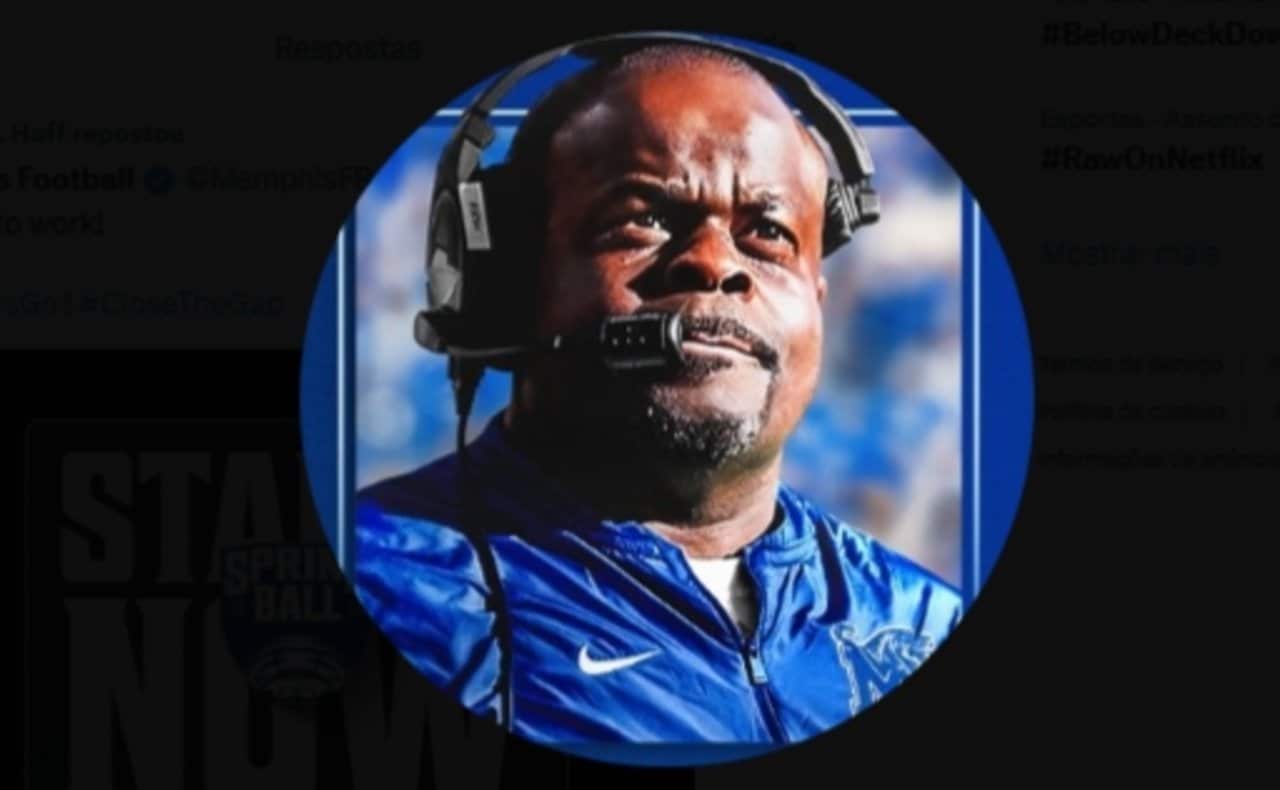
The arrival of coach Charles Huff at the helm of Memphis Tigers marks the beginning of a profound restructuring of the American football team’s operations. The transition involves the implementation of a new work culture, focused on strict discipline and optimizing athletes’ time on and off the field. The university’s athletic department relies on the coach’s previous experience to raise the program’s competitive level in the conference. The changes are already visible in the first training sessions, where intensity and demand for technical excellence dictated the rhythm of daily activities.
Implementation of new training schedules and routines
The players’ daily schedule has undergone significant adjustments since the presentation of the new coaching staff. Video sessions and position meetings have been relocated to the morning to maximize tactical absorption before ball activities on the pitch. Essa change seeks to align the peak mental concentration of student-athletes with the theoretical requirements of the new playbook.
Punctuality has become a non-negotiable pillar in managing the current squad, establishing a rigorous professional standard. Atletas and staff members operate under a system of mutual responsibility, ensuring that daily planning is carried out without delays or distractions that compromise collective performance.
Restructuring of the university recruitment department
Recruiting new talent received immediate attention from the new sports leadership, with a reformulation of the observation guidelines. The main focus was on evaluating high school students who demonstrate both elite athletic ability and an academic profile compatible with the institution’s requirements.
The transfer portal also figures as a central tool in the strategy for assembling and strengthening the squad. The observation team actively maps players with previous experience in the first division who are looking for new opportunities to play a leading role, aiming to fill immediate gaps in the squad.
Official campus tours have been completely redesigned to offer an immersive and engaging experience for prospects. The commission’s objective is to demonstrate the cutting-edge infrastructure and professional development project offered by the sports program, highlighting the modernized facilities.
Modifications to the offensive and defensive tactical system
Within the four lines, the playing philosophy underwent a structural change to adapt to modern trends in college sports. The attack now operates at a fast pace, seeking to destabilize the opponent’s defenses through the rapid execution of plays and limiting the opponent’s substitution time.
The distribution of passes and the ground game receive equal weight in the new scheme, creating a multidimensional attack. The coaching staff requires that quarterbacks have the autonomy to change calls at the line of scrimmage based on a prior reading of the defensive formation presented.
In the defensive sector, aggressiveness and constant pressure on the passer became the main characteristics of the new alignment. Coordinators implemented varied blitz packages and multiple fronts to force execution errors and quickly regain possession in favorable field positions.
Training in basic fundamentals, such as correct positioning for tackling and discipline in zone coverage, takes up a large part of the practice sessions. The commission understands that the perfect execution of fundamental movements is what sustains complex tactical systems during high-pressure moments in official games.
Training of technical staff and delegation of functions
The assembly of the new technical committee prioritized the hiring of coordinators with a proven track record of developing athletes in specific positions. Cada assistant received autonomy to manage his group of players, as long as the methodologies applied are in strict accordance with the global vision established by the head coach.
The analytical approach gained space in planning meetings, with the incorporation of experts in advanced statistics. Esses professionals provide detailed reports on opponents’ tendencies and the efficiency of their own plays, supporting tactical decisions with concrete data instead of intuition, which optimizes clock management and choices on crucial downs.
Adequacy of physical preparation and conditioning
The strength and conditioning department was completely reformulated to meet the physical demands of the new game model imposed by the coaching staff. Gym training now simulates the specific movements and biomechanical demands of each position, abandoning generic weight lifting in favor of exercises focused on muscle explosion, joint mobility and injury prevention. Sports nutrition has also been more tightly integrated into the daily routine, with individualized eating plans and controlled supplementation to ensure athletes maintain ideal body composition throughout the grueling competitive season.
Workload monitoring through wearable technology allows the coaching staff to adjust the intensity and volume of training in real time. Dispositivos GPS tracking provides accurate data on the maximum speed reached, the total distance traveled and the heart rate response of each player, avoiding excessive wear and tear and the risk of stress injuries. Essa scientific, metrics-based approach aims to keep the squad in peak physical shape for the conference’s decisive clashes, drastically reducing the time needed for muscle recovery between weekly matches.
Travel logistics and concentration for matches
The operational preparation for games played away from home underwent a thorough review, changing everything from the strategic choice of hotels to the menu offered during air and land travel. The new management has established strict protocols for delegation travel, ensuring that the concentration environment is completely free from external interference and focused exclusively on the opponent of the week. The logistical itinerary is planned months in advance, optimizing flight times and bus routes to minimize the impact of time differences and the physical strain on a cast made up of more than a hundred people. Durante During hotel stays, living spaces are adapted and equipped for last-minute video study sessions and tactical meetings divided by sector. Athletes’ safety and privacy are prioritized at all times, creating a bubble of isolation that promotes mental focus and psychological preparation. Além In addition, the warm-up routine in opposing stadiums has been rigorously standardized, establishing a timed sequence of exercises that helps players familiarize themselves with the type of pitch, lighting and local weather conditions well before kick-off, ensuring that the team enters the field at maximum level of alertness.
Integration with the community and local fans
Engaging with the fan base has become an administrative priority to strengthen support in the stands during home games. Eventos open to the public, sports clinics for young people and outreach campaigns with the local community seek to create a strong and lasting identity between the city and the American football program.



