
Analysis of interstellar comet 3I/Atlas reveals ice and organic compounds from the early galaxy

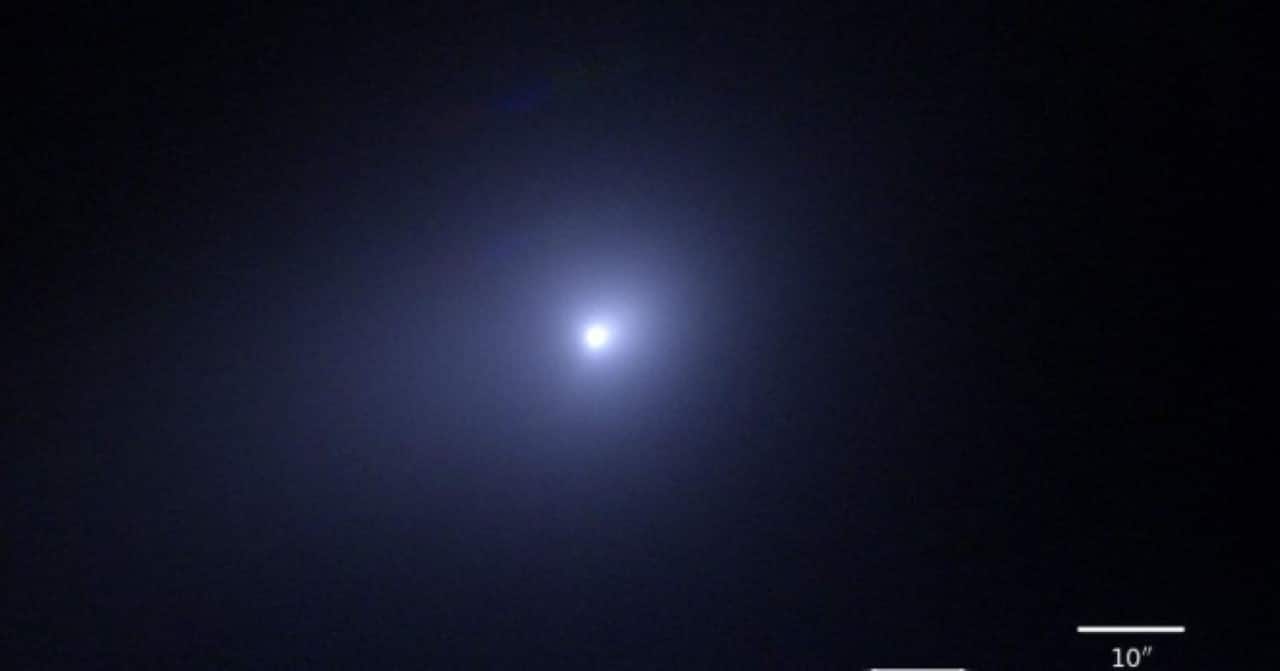
The cosmic visitor designated 3I/Atlas continues to provide unprecedented data to the international astronomical community following its initial detection by the warning system at Chile. Observações detailed data conducted by state-of-the-art telescopes, including the James Webb and the ALMA complex, have identified an unusual proportion of isotopes and complex organic molecules in its physical structure. The confirmed hyperbolic trajectory definitively attests that the object originated far beyond the borders of our solar system, traveling through deep space before its recent approach to Sol. Pesquisadores monitor each phase of this journey to understand the building blocks that formed ancient star systems, using high-precision spectroscopy to uncover the celestial body’s internal composition.
During the closest approach to our system’s central star, intense heat caused the sublimation of volatile materials trapped in the object’s core. Essa continuous gaseous emission allowed the capture of high-resolution chemical spectra, revealing evaporation dynamics that differ substantially from native icy bodies in our cosmic neighborhood.
The orbital and physical characteristics of the celestial body present unique elements that help in mapping galactic chemistry and understanding the celestial mechanics of ejected objects:
– Velocidade escape considerably greater than local gravitational standards.
– Ausência total risk of collision or interference with Earth’s orbit.
– Emissão of stardust with rare and preserved chemical signatures.
Detection of organic molecules in gas emissions
Spectroscopic instruments recorded the marked presence of methanol, hydrogen cyanide and methane in the cloud of gas and dust that surrounds the celestial body’s core during its transit. Esses chemical elements function as primary structures for the development of more complex reactions in favorable space environments. The identification of these substances reinforces theoretical models that propose the existence of fundamental chemical ingredients in the vast molecular clouds that gave rise to stars and planets in remote periods of the galaxy, demonstrating that pre-biological chemistry is a phenomenon widely distributed throughout the universe.
The rate of release of these organic compounds underwent drastic variations as the distance from the sun’s heat decreased over the months of intensive observation. At specific moments in the trajectory, sublimation activity exceeded the mathematical projections established for bodies of ice and rock with similar dimensions. The data collected required immediate adjustments to thermophysical simulation algorithms to explain how such volatile materials managed to survive intact during an interstellar journey of epic proportions, crossing the vacuum of space for eons before reacting to the heat of our star.
Isotopic signature reveals formation in extreme cold
Analysis of the water ejected by 3I/Atlas revealed a ratio of deuterium to common hydrogen that exceeds the parameters found in local comets by ten times. The registered index of approximately 0.95% works like a chemical thermometer of the distant past.
Such high values of heavy isotopes indicate that the condensation of primordial ice occurred in an environment subjected to temperatures below 30 kelvin. Esse scenario points directly to the interior of dense and extremely cold molecular clouds, isolated from intense sources of stellar radiation.
The discrepancy between this signature and the averages observed in neighboring protoplanetary disks helps in dating the ejecta. The chemical profile suggests an origin in a phase of galactic evolution characterized by a lower presence of heavy metals.
Anomalous behavior in the release of volatile compounds
The chemical composition of the coma presents a clear domain of carbon monoxide and carbon dioxide, accompanied by abundant methanol. Water vapor, interestingly, recorded low levels in several critical phases of ground and space telescopic monitoring.
This specific mixture of gases creates obstacles for theories based on the standard behavior of icy bodies formed in our cosmic neighborhood. The thermal balance and evaporation rate deviate from the predictability curves established by classical astronomy.
The carbon isotope ratios, measured between the 12C and 13C variants, fluctuated in a range of 123 to 191 during spectral readings. Esses numbers are substantially above the ranges documented in any other celestial object ever cataloged by observatories.
The irregular sublimation indicates that solar heating needed to penetrate deep layers before activating the trapped gas pockets. The prolonged activity supports the hypothesis of a highly heterogeneous and chemically preserved internal structure.
Gravitational interaction during passage through the gas giant
The Júpiter sphere of influence crossing in March provided a unique opportunity to measure the dynamic effects of massive gravity on a body traveling at hyperbolic speed. The approach did not result in orbital capture, but generated subtle perturbations that refined the object’s velocity vectors and spatial orientation on its exit route.
High-sensitivity cameras documented morphological changes in the structure of the main tail and antitail during the planetary encounter. Monitoring this mechanical interaction between the flow of ejected particles and the Jovian gravitational field validates mathematical simulations on the dynamics of interstellar intruders in consolidated planetary systems.
Physical barrier explains the delay in thermal activity
Continuous exposure to cosmic rays and the absolute zero of interstellar space over geological eons has caused severe hardening of the surface of 3I/Atlas. Essa thick crust acted as a highly efficient heat shield, trapping volatile gases within the core until solar radiation reached critical levels of thermal penetration.
Combining spectral readings with heat conduction models makes it possible to calculate the exact density and composition of this outer protective layer. The process of prolonged irradiation without interference from neighboring stellar winds guaranteed the chemical integrity of the deepest and oldest samples housed in the comet’s heart.
Observational capacity transforms astronomical understanding
The technological infrastructure mobilized to accompany this astronomical event represents the pinnacle of optical and radio frequency engineering currently available for the exploration of deep space. Equipamentos operating in the vacuum of space and antenna arrays installed in high-altitude deserts can isolate extremely weak thermal and chemical signatures, separating background noise from the actual emissions of the fast-moving object. The improved sensitivity of infrared and millimeter sensors revealed layers of data that would have remained invisible to the previous generation of telescopes, allowing the identification of rare molecules at minute concentrations. The simultaneous crossing of information captured by different observation platforms eliminates false positives and consolidates discoveries that challenge established paradigms on the formation of planetary systems in the vastness of the galaxy, transforming a single celestial body into a natural astrophysics laboratory.
Natural origin is consolidated through physical evidence
The totality of spectrographic and orbital data points unequivocally to the natural formation of the celestial body in a distant stellar accretion disk, followed by a violent ejection event. Nenhuma anomaly recorded in light curves, rotation rate or radio emission requires the formulation of theories involving biological processes or unnatural engineering to explain their dynamic behavior.
Scientific relevance for mapping space chemistry
The transit of this celestial body through our system provides concrete material evidence that the synthesis of complex molecules occurred abundantly in the early days of galactic formation. The elements detected in the gas cloud prove that the environmental conditions necessary for the emergence of chemical precursors existed long before the ignition of our own Sol. Continuously mapping these signatures allows scientists to draw parallels with other stellar systems at different stages of evolution, creating a catalog of chemical diversity that will help identify regions with the greatest potential for rocky planet formation.
The ability to retain volatile material intact for periods exceeding the age of our solar system elevates the status of 3I/Atlas to an invaluable time capsule for modern science. Monitoring teams will keep actively tracking the object even as it crosses the orbit of the outer planets into deep space, using long exposure techniques. The volume of raw data stored during the closest months will fuel research, academic theses and advanced computer simulations for decades, redefining models of chemical evolution in the observable universe.
Luís Henrique Costa é jornalista formado pela FMU, editor-chefe e fundador do Mix Vale, portal de notícias em atividade desde 2013. Responde pela direção editorial do veículo, que cobre Brasil e mundo em economia, benefícios sociais, esportes, tecnologia, ciência e entretenimento. Atua na área há mais de 15 anos e lidera uma equipe de cerca de 15 colaboradores.



