

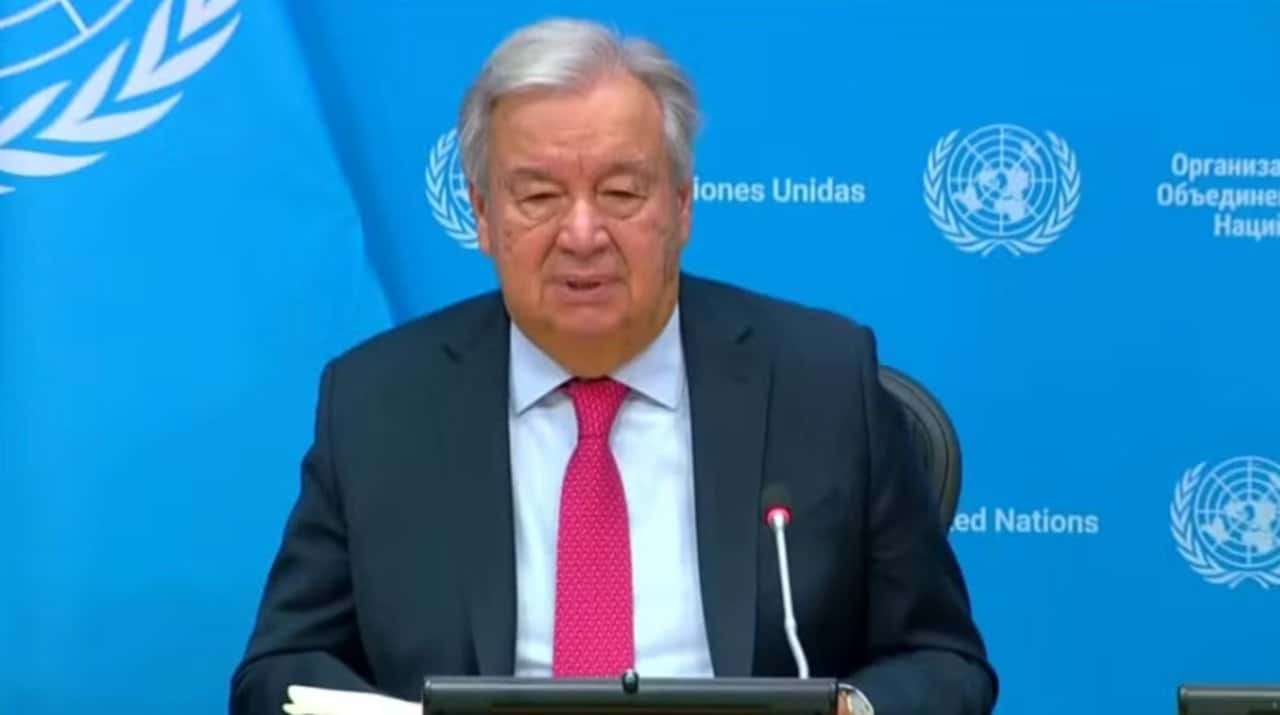
The secretary-general of the Organização of the The statement was made at a time of growing tension, following the recent attacks that intensified the crisis in the region. Guterres stressed that the imminence of a major conflict represents an unprecedented threat to global stability.
Guterres expressed deep concern about the current course of events, emphasizing that the fighting had already been previously identified as a risk of triggering a chain reaction impossible to be contained by any party. Essa reference refers to warnings made at the end of February, when attacks between regional powers intensified significantly. The urgency in his voice reflects recognition that the window for diplomacy is rapidly closing.
From his headquarters in Nova York, the UN leader made a strong appeal to the international community to move away from military escalation and embrace the diplomatic route. Guterres reiterated the need for a renewed commitment to peace and security. Seu speech sought to mobilize global efforts to avoid a catastrophe that could have incalculable humanitarian and economic repercussions.
A grave warning about regional escalation
The ongoing war in Oriente Médio, which has been dragging on for months, has reached a critical point, as per António Guterres’s alarming assessment. Ele highlighted that the region, already weakened by decades of tension, now faces the concrete risk of a widespread conflagration, which could draw in multiple countries and non-state actors. The words “out of control” resonate as a wake-up call to the failure to contain violence and the mutual retaliations that follow.
The Secretary General recalled his previous warnings, in which he already foreshadowed the danger of an unstoppable “chain reaction”. Essa prediction, made shortly after the start of new combat fronts and coordinated air strikes at the end of February, appears to be coming true. The spiral of violence has demonstrated the fragility of regional security structures and the complexity of the political and military ties that interconnect the different protagonists.
The seriousness of the situation requires, according to Guterres, an immediate change of strategy. Instead of “climbing the escalation ladder,” the world urgently needs to “climb the diplomatic ladder.” Este is a direct invitation to de-escalate and engage in substantive negotiations that can restore calm and pave the way for lasting solutions. The absence of dialogue and persistence in the military route only deepens the impasse and increases human suffering.
Direct appeals to key actors
In his statement, António Guterres sent clear and specific messages to the main parties involved in the conflict. Para the Estados Unidos and Israel, he was emphatic: “it is past time to end the war”. Guterres described deepening human suffering, increasing civilian casualties and the increasing severity of the global economic impact as urgent reasons for an end to hostilities. Paralelamente, Guterres asked Irã to “stop attacking your neighbors”, a reference to incidents that have destabilized the region. The UN leader also did not spare the Hezbollah, urging it to cease attacks against Israel, and Israel, to stop its military operations and attacks on Líbano, which have hit civilians with alarming intensity. Guterres made an explicit warning: “The model of Gaza must not be replicated in
The humanitarian and economic impact
The escalation of the conflict has had a devastating impact on the lives of millions of people, deepening an already pre-existing humanitarian crisis. Civilian casualties continue to rise, with reports indicating a rising number of deaths and injuries, while millions are displaced from their homes, seeking safety amid widespread violence. Hospitais and basic health infrastructures are overloaded or destroyed, and access to food, water and medicine is increasingly precarious, increasing the vulnerability of affected populations.
In addition to the human cost, the conflict is generating severe economic repercussions that transcend regional borders. The closure of the Estreito of Ormuz, a vital sea route for global shipping, poses a significant threat to the flow of oil, gas and fertilizers. Essa interrupção ocorre em um momento crítico da temporada global de plantio, o que pode agravar a insegurança alimentar em várias partes do mundo e impulsionar ainda mais a inflação nos preços das commodities essenciais.
The strategic appointment of Jean Arnault
On the same day as his urgent statements, António Guterres announced an important diplomatic step: the appointment of French diplomat Jean Arnault as his personal envoy for the conflict in Oriente Médio. The choice of Arnault reflects the seriousness with which the UN views the need for mediation and dialogue at this critical moment. Sua Vast experience is seen as an essential asset in trying to defuse tensions.
Arnault has an impressive resume of more than 30 years of service in international diplomacy, with a particular focus on peace agreements and conflict mediation. Essa specialization is crucial to addressing the complexity of relationships and the deep divisions between the parties involved in Oriente Médio. Sua ability to build bridges and find common ground will be tested in one of the most challenging geopolitical scenarios in the world.
Throughout his career, Jean Arnault has accumulated experience in UN missions in several regions, including África, Ásia, Europa and América Latina. Sua’s most recent mission, in 2021, was as Guterres’s personal envoy for Afeganistão and regional issues, demonstrating his aptitude for dealing with highly complex and multi-nuanced scenarios. Essa background positions him as an experienced and respected negotiator, capable of navigating the intricate dynamics of conflict.
Challenges in the search for peace and stability
The mission of Jean Arnault and, by extension, the UN, is permeated by challenges of monumental proportions. The search for peace in Oriente Médio is inherently complex, involving a myriad of actors with divergent interests, histories of mutual distrust, and deeply rooted political agendas. Mediar between states and non-state groups, who often have different goals and perceptions of justice and security, requires exceptional skill and the ability to constantly adapt.
Another significant obstacle lies in the difficulty of building consensus in an environment where each party’s historical grievances and immediate security concerns are often prioritized over a collective vision of stability. Violations of international humanitarian law and accusations of war crimes make any dialogue even more delicate, requiring a delicate balance between the search for accountability and the urgent need to stop violence. The complexity of the scenario requires not only diplomatic skill, but also a deep understanding of cultural and political nuances.
Global repercussions and the need for action
Instability in Oriente Médio is not limited to the region; its shockwaves reverberate across the planet, affecting global peace and security in unpredictable ways. The escalation of the conflict threatens the geopolitical balance, creating potential new alliances and ruptures, and could fuel tensions in other already volatile areas. The urgency of the situation demands coordinated and decisive action from the international community, not only to contain the violence, but to reaffirm the principles of international law and peaceful coexistence.
The role of multilateral diplomacy in the crisis
Organização of Nações Unidas plays an indispensable role as the main platform for multilateral diplomacy in times of international crisis. Sua’s ability to bring together leaders from around the world for dialogue and negotiation is fundamental to addressing conflicts as complex as that of Oriente Médio, offering a neutral space to search for solutions.
The appointment of a personal envoy, such as Jean Arnault, is a testament to the UN’s unwavering commitment to finding peaceful resolutions to disputes. Tal initiative demonstrates the organization’s dedication to mobilizing human and diplomatic resources to facilitate dialogue and mediate agreements between belligerent parties, reaffirming its core mission of maintaining peace.
For these diplomatic efforts to be effective, it is crucial that UN member states offer their unrestricted support to these initiatives. The active engagement and cooperation of governments are essential for peace proposals to gain strength and legitimacy, transforming appeals into concrete and sustainable actions. The responsibility for peace does not just fall on the UN, but on all the nations that make it up.
Amid escalating tensions, the importance of adhering to international law and humanitarian principles has never been more critical. Respect for the laws of war and the protection of civilians must be absolute priorities for all parties involved. Multilateral diplomacy, supported by international law, offers the best path to mitigate suffering, stabilize the region and, eventually, build lasting peace.



