

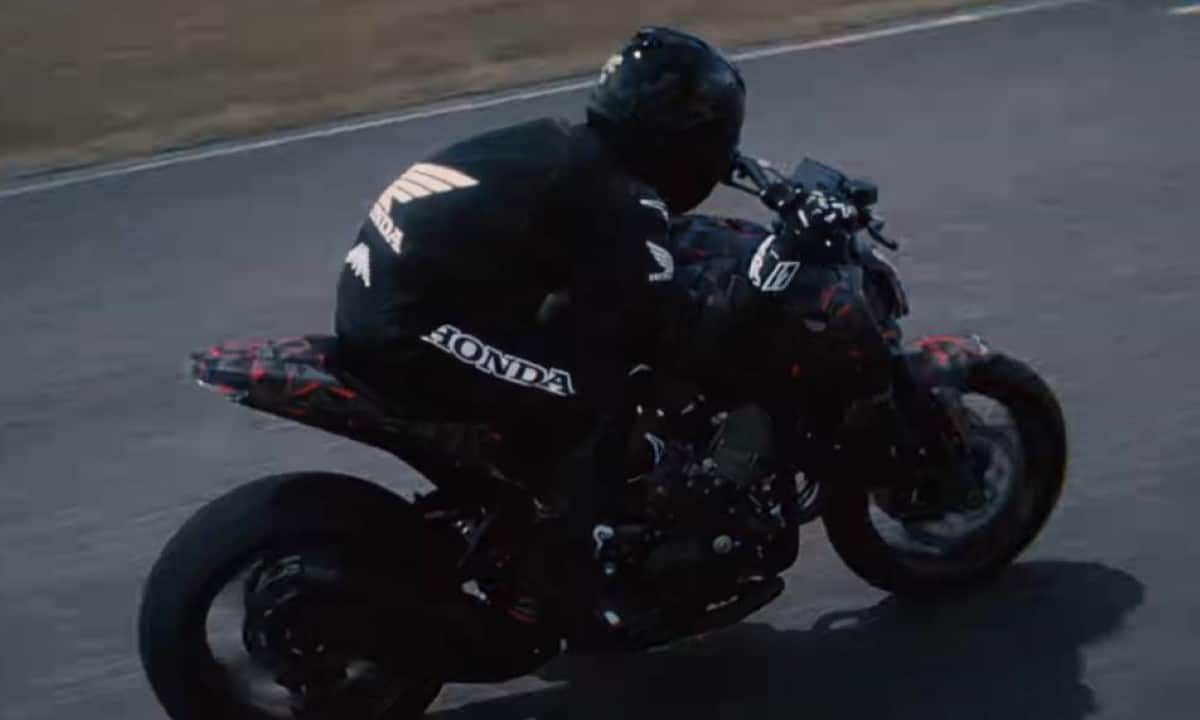
Japanese manufacturer Honda has officially presented a mechanical engineering project that promises to change performance standards in the two-wheeled vehicle segment. Durante the prestigious EICMA event, held in Milão, the automaker revealed a prototype 75-degree V3 engine equipped with an electric compressor, a technology previously unheard of in large-scale motorcycle production. The development focuses on optimizing power and torque delivery, especially at low and medium speeds, without the need to increase the cylinder’s volumetric displacement.
The brand’s main proposal is to use the compact dimensions and reduced weight of a 900cc engine to offer the characteristic performance and strength of 1200cc engines. To achieve this ambitious goal, the project was designed from scratch to meet stringent global demands for energy efficiency and pollutant reduction, whilst keeping intact the sporting appeal demanded by consumers in the premium motorcycle category.
The integration of the electric compressor allows the air intake to be controlled completely independently of the engine speed. Essa mechanical independence brings immediate benefits to the driver and the general functioning of the vehicle, changing the way acceleration is perceived on the road.
Engineers highlight that this new technological approach results in direct benefits, such as:
– Resposta instant throttle release, eliminating the lag common associated with traditional exhaust gas-powered turbochargers.
– Centralização of improved mass, a key factor in ensuring directional stability at high speeds.
– Resgate of the brand’s historical heritage in the production of high-performance V-shaped engines, modernizing a classic concept.
Mechanical architecture and thruster design
The 75-degree V configuration was selected by the brand’s designers after extensive fluid dynamics tests and structural balancing simulations. The specific shape helps to mitigate the engine’s natural vibrations organically, eliminating the need to install heavy and complex balancing shafts inside the block.
Without these additional components, power theft generated by internal friction and the addition of extra weight to the mechanical assembly are avoided. Além Remarkably smooth operation, the arrangement of the three cylinders creates an extremely narrow front profile, which facilitates the placement of the propellant in more compact and lighter frames.
This feature offers designers much greater freedom to design motorcycles with advanced aerodynamics and superior ergonomics for the rider. The reduction in the frontal drag area against the wind is a direct consequence of this lean architecture, contributing to fuel savings at cruising speeds.
Operation of the forced induction system
The great technological difference of this launch lies in the electric compressor, strategically positioned close to the motorcycle’s air box. Diferente of conventional mechanical systems, which depend on the rotation of the crankshaft through belts or gears, the electrical unit operates on demand, activated instantly when the driver demands more power.
This vital component is managed by an electronic center with high processing capacity, which reads data from the accelerator in milliseconds. Essa independence ensures that the air pressure admitted into the combustion chambers is always ideal, regardless of the speed at which the motorcycle is traveling or the gear engaged.
As a direct result of this electronic precision, you get a flat and incredibly robust torque curve from the first engine revolutions. In road practice, this facilitates safe overtaking on highways and vigorous speed recovery without the need for constant downshifts by the driver.
To power this forced induction system without discharging the battery, engineering developed a high-efficiency parallel electrical network. The compressor requires high levels of energy in short peaks, which are supplied by a resized alternator and an optimized charge storage system, ensuring that the activation of the electric turbine does not compromise the motorcycle’s other vital systems.
Structural benefits for the chassis
Eliminating the intercooler and heavy piping associated with traditional forced induction systems saves valuable space at the front of the motorcycle. Esse Free space can be reallocated to optimize main radiator cooling airflow or to improve the vehicle’s static weight distribution, allowing heavy electronic components to be repositioned to lower areas of the chassis. With the V3 engine acting as an integral structural part of the frame, the motorcycle’s torsional rigidity has been significantly increased, supporting greater lateral loads.
The compact assembly of the powertrain allows the rear suspension swingarm to be designed longer. Essa geometric change substantially increases rear wheel traction during strong acceleration, preventing unwanted wheelies, without altering the vehicle’s original wheelbase. The centralization of mass provided by this intelligent design facilitates quick changes of direction, making driving more intuitive and less tiring on winding routes.
Dynamic driving advantages
The main structural benefits observed in the prototype include fundamental technical points for vehicle dynamics, starting with the drastic reduction in the total weight of the mechanical assembly when compared to traditional high-displacement four-cylinder in-line engines. Existe a substantial improvement in the center of gravity, which is positioned as close as possible to the ground and the central axis of the motorcycle, guaranteeing unparalleled directional stability on high-speed straights and sudden braking. Simplifying exhaust system routing allows for the installation of more efficient catalytic converters without compromising ground clearance or lean angle when cornering. Além In addition, the greater free space for the air box optimizes engine breathing at high speeds and improves acoustics, delivering a full-bodied and characteristic sound that appeals to motorcycling enthusiasts. Toda this applied engineering results in a machine that responds to the rider’s commands with surgical precision, transforming the compressor’s electrical energy into driving force almost instantly and redefining the physical limits of acceleration for motorcycles intended for daily road use and long-distance travel.
Positioning in the tourism market
The introduction of this supercharged V3 engine marks a clear change in the manufacturer’s product strategy, which aims to consolidate its absolute leadership in the high-displacement motorcycle segment. The initial focus will be on the application of this innovative technology in touring and sport-touring models, categories where linear torque delivery, comfort and efficiency on long journeys are attributes highly valued by demanding customers.
The ability to offer the brutal performance of a 1200cc motorcycle with the fuel consumption and agile maneuverability of a 900cc creates a highly competitive market space. The continued development of high-efficiency internal combustion engines demonstrates that the industry still sees a long life cycle for this technology, using electrification as a support to maximize thermal performance.
Thermal management and emissions control
The strict global regulatory environment requires increasingly complex engineering solutions to maintain the commercial viability of combustion engines. The new 75-degree V3 addresses this issue through advanced thermal management and highly optimized burning of the air-fuel mixture. The electric compressor actively controls emissions, ensuring that the combustion chamber receives the exact amount of oxygen necessary for complete burning, drastically reducing the formation of harmful gases. The compact architecture of the block allows the catalytic converters to be positioned much closer to the exhaust ports, making them reach their ideal operating temperature much faster after cold starting, a critical moment for pollutant emissions.
Next development steps
The automaker has confirmed that the V3 prototype is not just a conceptual design exercise for trade shows, but a practical and advanced project with a view to series production in the near future. Engineers are currently in the extreme durability testing phase and fine calibration of the electrical compressor management software, subjecting the engine to severe weather conditions.
The automotive industry expects that the first commercial models equipped with this new engine will be announced at the next major international fairs in the sector. Esse movement will inaugurate a new phase in technological development for two-wheeled vehicles, consolidating precision engineering in the global market and offering motorcyclists a new way of experiencing the road.



