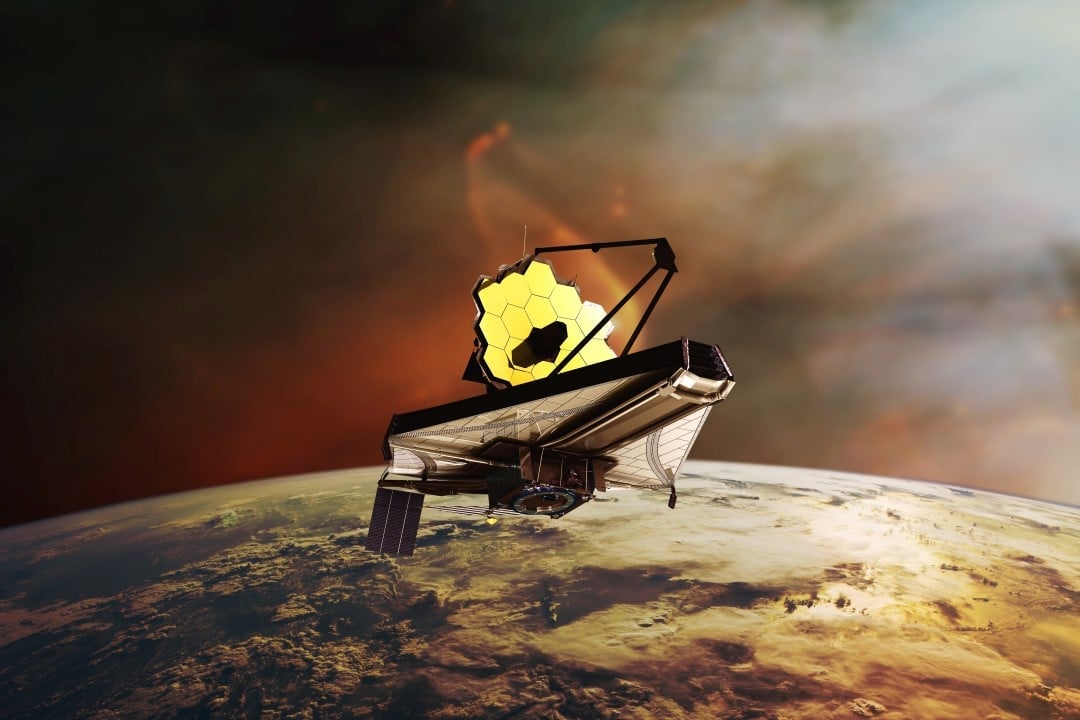
The James Webb Space Telescope (JWST) has been pointing its lens at the most distant and ancient regions of the universe, and with each new image, an intriguing enigma emerges: the repeated detection of tiny red dots. Esses objects, tiny and surprisingly bright, appear with a frequency that cannot be ignored by scientists, defying conventional interpretations and driving new lines of research in astronomy.
This is not an isolated anomaly or instrumentation error; These are consistent observations that astronomers from several institutions have studied intensively. The scientific community, although fascinated, is still searching for a conclusive explanation for the exact nature of these “red dots”, which persist as one of the great cosmic mysteries revealed by the JWST.
Initially, the most accepted hypotheses linked these objects to systems dominated by active black holes undergoing intense growth, due to their brightness and peculiar color. Contudo, Webb’s continued and more detailed observations have complicated this narrative, opening up space for new and revolutionary scientific propositions.
The persistence of the cosmic enigma
The designation of “little red dots” began to take hold in studies published from 2024 onwards, when teams of renowned researchers began a systematic analysis following the first impressive discoveries of James Webb. Essas First investigations, based on infrared light captured by the telescope, suggested that the intense luminosity and reddish color could be signs of active galactic nuclei, where supermassive black holes devour matter at incredible speeds, emitting radiation.
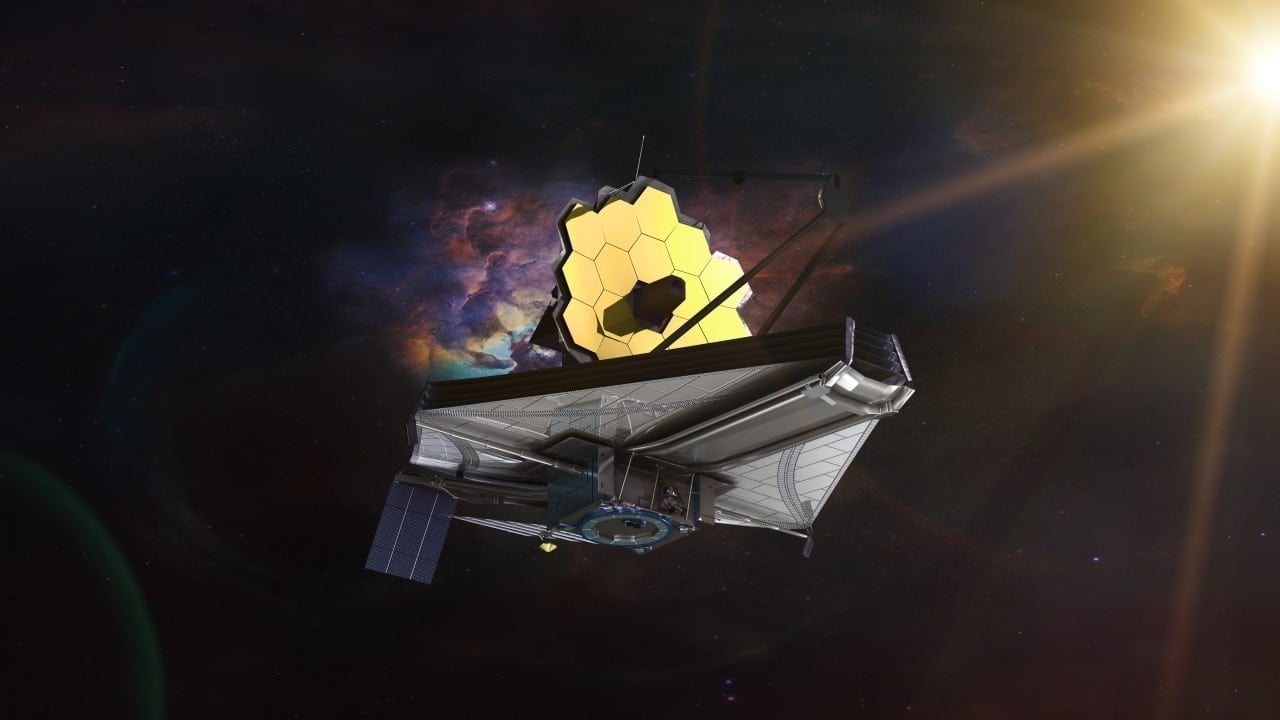
At that time, a significant number of researchers attributed the characteristic red color of these objects to the presence of dense clouds of cosmic dust in their surroundings. Essa dust would absorb blue and ultraviolet light, re-emitting it in the infrared spectrum, which would give the points their reddish hue observed by JWST, a telescope optimized for this range of the electromagnetic spectrum.
Challenges to initial interpretations
As analyzes advanced and more complex data were collected, observations began to present inconsistencies that questioned the primacy of the explanation for active black holes. One of the main obstacles is the absence of clear X-ray emissions in many of these objects, which are one of the most characteristic and expected signs of black holes that are actively accreting matter. The lack of these X-rays raises doubts about the intensity of black hole activity in these systems.
Furthermore, the spectra of some of these red dots reveal a lack of intense metallic lines, predominantly showing the presence of hydrogen and helium. Isso suggests a more primordial composition than would be expected in more developed galaxies or around supermassive black holes that have already had time to accumulate heavier elements. The sum of these observations, as in the case of the object known as “The Cliff”, analyzed by the RUBIES program, reinforces the idea that the initial explanation may not be comprehensive enough, as it fits neither as a conventional galaxy nor as a system merely dominated by dust.
Supermassive stars as a new hypothesis
Against this backdrop of growing uncertainty, a recent study published in The Astrophysical Journal, led by Devesh Nandal and Avi Loeb, both from the Harvard-Smithsonian Center for The research suggests that at least some of these red dots could actually be supermassive stars formed in the early universe, rather than systems driven by active black holes.
Nandal, speaking to Live Science, explained that this new category of stars could, in fact, explain the key characteristics of these objects without relying exclusively on the presence of growing black holes. The proposal is radical, as it challenges the current understanding of star formation in the early days of the cosmos and the evolution of the first luminous structures.
These supermassive stars would be cosmic giants composed almost exclusively of hydrogen and helium, the most abundant elements in the universe shortly after Big Bang. Elas would be observed by James Webb at a crucial stage in their existence, just before an imminent collapse, which could be either into a black hole or a hyperluminosity supernova event.
Modeling and observed characteristics
The model developed by the Nandal and Loeb team is robust and can convincingly reproduce both the extreme brightness and the specific spectral characteristics of these red dots. The key lies in the primordial composition and colossal mass of these stars. A supermassive star, upon reaching its peak luminosity, could emit an amount of light comparable to that of entire galaxies or active black holes, explaining the observed intensity.
Additionally, the nearly pure composition of hydrogen and helium aligns perfectly with the lack of intense metallic lines in the spectra, which have been one of the major challenges to the black hole hypothesis. Isso suggests that we are witnessing stellar phenomena in a very young universe, where heavy elements had not yet been synthesized on a large scale by the first generations of stars.
The open scientific debate
Importantly, the new study does not end the debate, but, on the contrary, enriches and expands it, offering a new and exciting avenue of investigation. The authors themselves recognize that directly demonstrating the true nature of these objects remains an extremely complex task, requiring even more detailed observations and perhaps new instrumental capabilities.
In the scientific community, other voices emphasize that none of the hypotheses can be completely ruled out at this time. The presence of black holes in these systems has not yet been directly proven, being inferred mainly from the brightness and apparent abundance of these objects in the distant universe. The search for definitive evidence, such as the detection of radio jets or X-ray variability, remains a priority.
Implications for primordial star formation
The possibility that these red dots are supermassive stars has profound implications for our understanding of star formation and galactic evolution in the early universe. If confirmed, this theory would suggest that the young universe was capable of forging stars much larger than those we observe today, with masses that could exceed hundreds of thousands of times that of our own Sol. Essas primordial stars, known as População III, would have played a crucial role in ionizing the universe and seeding the first heavy elements.
The discovery could also redefine how the first galaxies formed and how supermassive black holes, which reside at the center of most massive galaxies, emerged so early in cosmic history. Rather than forming just from the direct collapse of gas clouds, some of these black holes could be direct remnants of the collapse of these supermassive stars, offering a new path to the “seeding” of black holes in the early universe.
Future missions and research prospects
Research around the James Webb red dots remains one of the most dynamic areas of extragalactic astronomy. Cientistas are planning new observation campaigns using Webb and other next-generation ground- and space-based telescopes. The search for more detailed spectral signatures, analysis of brightness variability over time and improved theoretical modeling are crucial steps towards unraveling the mystery.
- Follow-up observations with higher spectral resolution.
- Temporal variability studies to distinguish compact sources.
- Comparison with improved theoretical models of primordial star formation.
- Search for evidence of galactic mergers or interactions.
The James Webb, with its unique ability to peer into the distant past, continues to present us with challenges and discoveries, pushing the limits of human knowledge about the origins of the cosmos. Solving the red dot riddle promises to unlock fundamental secrets about how the universe’s first structures came to light.