


The classic Japanese model manufactured from 1983 has undergone a rigorous on-track evaluation conducted by automotive experts at Reino Unido. The unit preserved by the automaker’s official fleet served to attest to the dynamic behavior of one of the most revered vehicles in global automotive culture. The practical test sought to separate mechanical reality from the legends created over four decades of history on the streets and racetracks.
Engineering at the time made the decision to maintain rear-wheel drive for this sports coupe, going against the market trend that quickly migrated to front-wheel drive in order to reduce costs. Essa fundamental technical choice defined the character of the vehicle and guaranteed its survival on the international sporting scene.
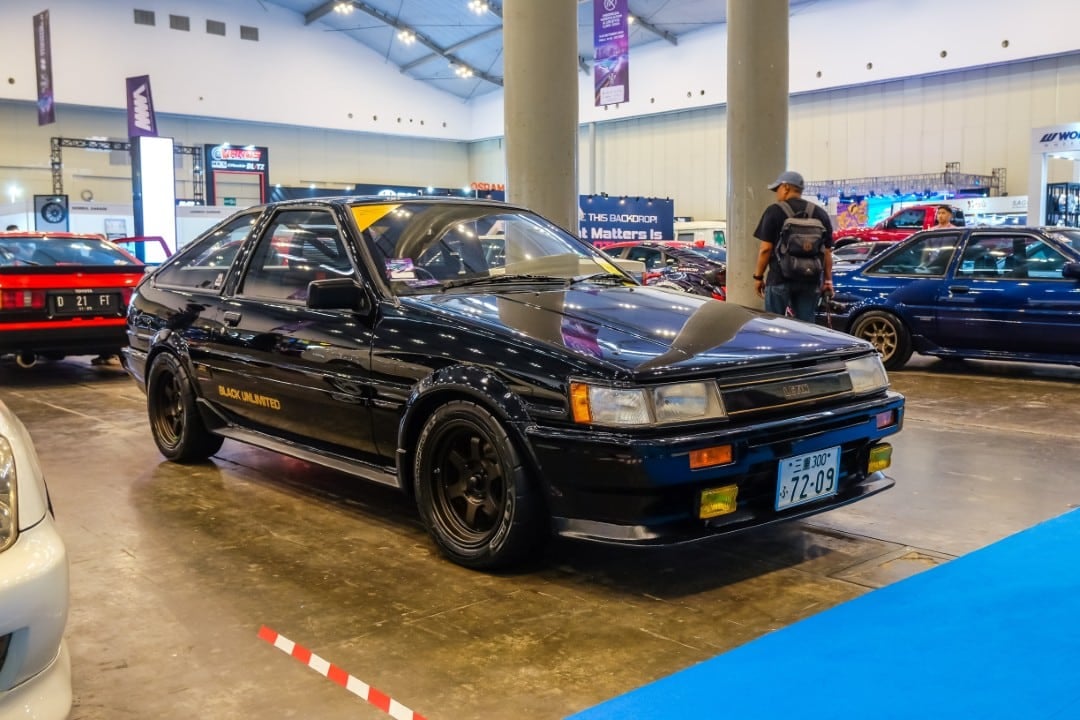
The original project delivered precise specifications that shaped its identity and guaranteed agile behavior on different types of asphalt layout:
– Motor 1.6 liter with double valve timing and 125 horsepower.
– Peso total package less than one ton in the entry-level version.
– Sistema steering with rack and pinion with shortened ratio.
Platform development and market variations
The Japanese market received the vehicle through two distinct sales networks, generating its own visual identities for the same mechanical base. The Levin version adopted traditional fixed headlights integrated into the grille, while the Sprinter Trueno variant incorporated the retractable headlight system into the hood.
Global production surpassed the mark of 360,000 units manufactured by the end of the cycle in 1987. The British market imported only one specific configuration marketed as the Corolla GT
The list price at the time of launch on the European market was around 8,799 pounds sterling. Esse financial positioning placed the Asian coupe in direct competition with the main European sports hatchbacks of that period, requiring solid technical arguments to attract consumers.
Engine performance and dynamic behavior
The closed circuit evaluation demonstrated that the four-cylinder engine requires high revs to deliver its maximum potential on the straights. The speed gain occurs linearly from 4,500 revolutions per minute and maintains mechanical breath until the cut-off limit close to 7,600 revolutions.
Acceleration tests recorded a mark of 8.3 seconds to reach 100 km/h from a standstill on a dry track. The five-speed manual transmission system featured precise engagement and long travel, making the driver’s job easier during the sudden downshifts required before sharp curves.
Influence of pop culture on chassis appreciation
The publication of the Japanese series Initial D in the mid-1990s radically transformed public perception of the sports coupe. The narrative focused on nighttime mountain racing introduced the car to an entire generation of new enthusiasts who didn’t follow the original launch.
The protagonist Takumi Fujiwara used the vehicle for commercial deliveries during the early hours of the morning before getting involved in speed disputes with local rivals. Essa fictional premise was based on real practices that took place on the winding country roads of Japão during the 1980s.
The popularity of the literary work and its television adaptations inflated the value of the remaining copies on the used market around the world. The global demand for units in good condition has drastically reduced the availability of vehicles with original factory specifications.
Owners and specialized workshops began to intensively modify the structure and mechanics of surviving cars for competition purposes. The search for greater torsional rigidity and power changed the essence of the initial project conceived by Asian engineers, creating a fleet of highly customized vehicles.
Victories in European professional motorsport
The lightweight mechanical set proved its efficiency in official touring competitions long before controlled skidding became popular. The driver Chris Hodgetts used the platform to win the Campeonato Britânico of Carros of
The agility in changing direction compensated for the lower final speed on the long straights of European race tracks. The rigid axle rear suspension, although simple in design, received specific calibrations from racing teams to maximize traction on corner exits. Esse histórico vitorioso no asfalto consolidou o respeito da comunidade automobilística internacional pela engenharia aplicada no modelo compacto de tração traseira, provando seu valor além das ruas.
Detailed analysis of suspension and brakes
The chassis architecture combines an independent McPherson strut front suspension with a rigid axle at the rear, a configuration that prioritizes robustness and ease of maintenance over absolute refinement. Durante maneuvers on the track, the original calibration of the shock absorbers demonstrated behavior aimed at daily comfort, resulting in noticeable body roll during the most aggressive corner entries. The absence of a limited-slip differential in the evaluated unit required greater precision from the driver to avoid loss of traction on the inside wheel during intense lateral accelerations. The braking system, consisting of discs on all four wheels, had a long initial pedal travel, but the total mass of less than 1,000 kg ensured safe stops and reduced thermal fatigue of the components after consecutive laps on the closed circuit. The light and communicative steering clearly conveyed the grip conditions of the front tires, allowing for early corrections before total loss of directional control.
Ergonomics and functionality of the cabin
The vehicle’s interior reflects the industrial design philosophy of the 1980s, with straight lines and easy-to-read analog controls on the main dashboard. The seats offer adequate lateral support for the sporting proposal of the time, while the large glass area guarantees excellent visibility in all directions when driving on public roads.
Technical legacy for modern sports
The Japanese automaker used the lessons learned from this classic project to inform the development of its contemporary sports cars. Engenheiros veterans such as Nobuaki Katayama applied the concepts of lightweight and rear-wheel drive to later vehicles, including luxury sedans and high-performance compact coupes. The premise that fun behind the wheel does not depend exclusively on superlative power figures guided the creation of new platforms aimed at direct driver engagement.
The launch of the GT86 and, later, GR86 lines represented the modern materialization of this century-old philosophy of automotive engineering. Esses Current models maintain the front-engine, rear-axle drive configuration, adding the safety features and structural rigidity required by current rigorous automotive standards. The historical connection between generations is often highlighted by the manufacturer itself in its global marketing campaigns.
Preservation of original units has become a priority for automotive museums and private collectors around the world. The example tested by the British team demonstrates the importance of keeping physical and functional records of vehicles that changed the trajectory of automotive design. The mechanical simplicity of the design continues to serve as an educational reference for new generations of engineers and mechanics specializing in sports preparation.
Evolution of sports on public roads
The practice of inducing loss of rear traction on mountainous roads began as a clandestine activity and evolved into world championships sponsored by official motorsport federations. The model’s low initial acquisition cost in the 1990s allowed young drivers to develop skid control techniques without the financial risk associated with European super sports cars. The engine’s modest torque required the driver to maintain the vehicle’s inertia through precise weight transfers before entering tighter curves.
The transition from the streets to professional racetracks required severe adaptations to the original structure of the Japanese coupe to guarantee the safety of the occupants. Gaiolas internal protection, fully adjustable suspension systems and extensive modifications to the intake and exhaust system have become the mandatory standard for competition vehicles. Apesar of these extreme changes in mechanics, the model’s unmistakable silhouette remains the ultimate symbol of the automobile category that has attracted the most young audiences over the last two decades.



