
Collision between collective and fruit truck paralyzes BR-116 in Magé for hours and injures two By Carolina Costa
4 min read
 |
A serious collision involving a bus and a trailer loaded with bananas caused the closure of BR-116 Norte (Rio-Teresópolis) on a recent Friday morning. The incident occurred at Magé, at Baixada Fluminense, and resulted in two people being injured, mobilizing rescue teams and significantly impacting the flow of vehicles in the region.
The accident, recorded at around 6am, occurred at Km 138 of the highway, close to a toll booth, in the direction Rio of Janeiro. The track was completely blocked due to the impact of the crash and the dispersion of the load of bananas across the road, creating a scenario of maximum attention for the authorities.
The incident generated extensive congestion and required a quick response from emergency teams, including Corpo of Bombeiros and the concessionaire responsible for the road. Coordination to care for the victims and remove the wreckage was crucial to minimize disruption and restore safety.
Details of the collision and injuries
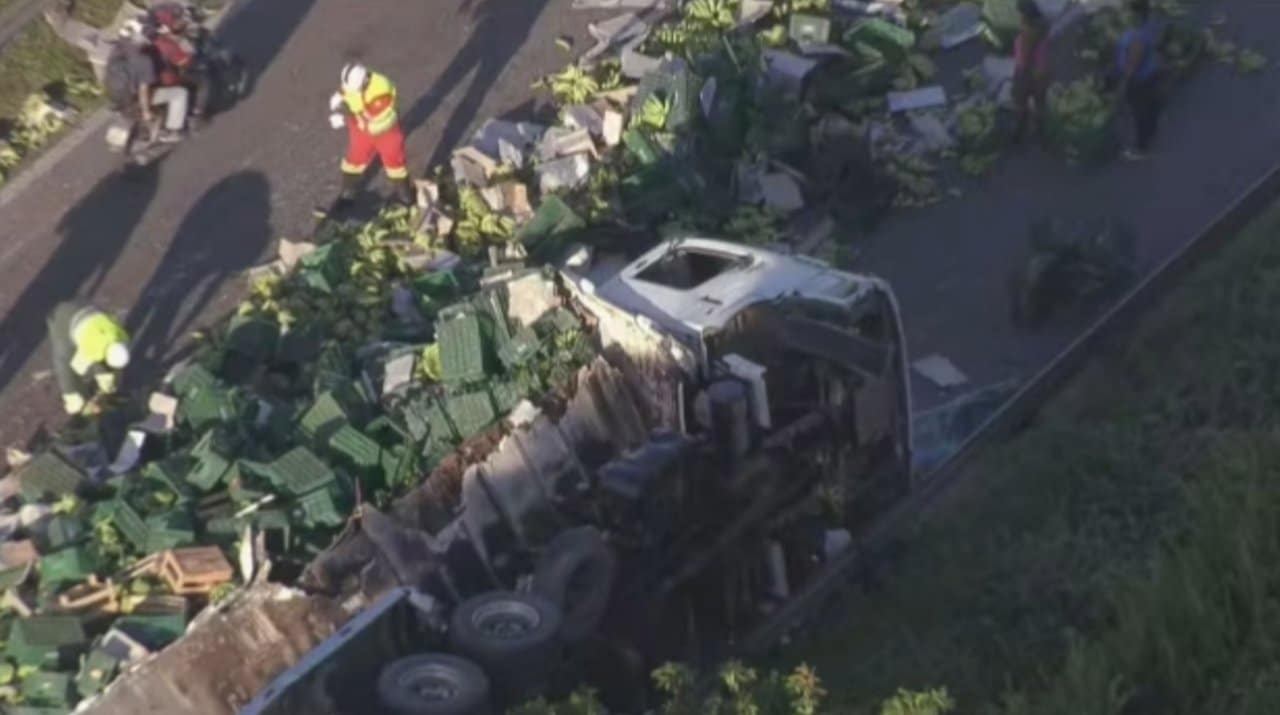
The crash between the two large vehicles was reported to the authorities at around 5:40 am, triggering a series of emergency actions. The bus and the truck collided so that part of the load of bananas was spread across all lanes of the highway, making traffic impossible.
The two injured in the accident were promptly treated at the scene by emergency teams. One of them had mild abrasions, while the other was assessed as being in moderate health, requiring more specific medical attention at the hospital.
The complex rescue operation
The teams from Corpo, Bombeiros and Ecovias Rio Minas, the concessionaire that manages the stretch, worked together to deal with the complexity of the incident. The work involved not only rescuing the victims, but also adequately signaling the area and beginning to remove the cargo.
The safety of those involved and other drivers approaching the scene was the priority throughout the operation. Foram implemented diversions and flow guidelines, ensuring that the accident area was isolated for work.
Immediate impact on BR-116 traffic
Polícia Rodoviária Federal (PRF) confirmed the need to completely close the runway in the direction of Rio and Janeiro, an essential measure for the safe removal of cargo. BR-116, one of the most important highways in the country, immediately felt the effects of the shutdown.
Drivers were advised to seek alternative routes or postpone their trips if possible. The congestion extended for several kilometers, testing the patience and resilience of those who needed to travel through the region at peak times.
At around 7:15 am, cleaning efforts allowed one of the highway lanes to be reopened. Contudo, traffic was still quite slow and with significant delays, indicating that complete normalization would still take some time.
Management of load spread on the track
Dispersing a bulky load like bananas presents unique challenges for cleaning crews. Além the need to clear the runway quickly, there is concern about the safety of workers and the proper disposal of material.
The load, being organic, could deteriorate quickly and attract animals, in addition to causing new risks of skidding if it was not completely removed. The process requires specific machinery and logistical planning to be efficient and safe.
The bananas scattered across the track made the scenario even more complex, requiring meticulous and uninterrupted work to clear the road. Cada part of the load had to be collected before the asphalt could be completely cleared and safe for traffic.
Challenges in flow normalization
The gradual release of lanes is a delicate process that requires constant attention to avoid new incidents. Mesmo with one lane open, highway capacity is reduced, lengthening travel times and vehicle queues.
Teams from the dealership and PRF remained on site for hours, monitoring the situation and assisting drivers. The total removal of the vehicles involved in the accident is always the final step towards the full normalization of traffic.
As work progressed, the expectation of drivers and authorities was that BR-116 could return to its normal capacity as quickly as possible. Communication about the status of the highway was essential for users.
Prevention and safety on busy highways
Incidents such as the one that occurred on BR-116 reinforce the importance of prudence and respect for traffic rules, especially on busy highways. Defensive driving and preventative vehicle maintenance are crucial for everyone’s safety.
Drivers of cargo vehicles must pay extra attention to the tying down and correct packaging of their goods. Cargas poorly stowed vehicles pose a significant risk, and may come loose and cause serious accidents on public roads.
Compliance with speed limits and constant attention to signage are simple but effective measures to prevent collisions. Fatigue behind the wheel is another risk factor that deserves to be combatted by taking regular breaks on long journeys.
The Brazilian road system, with its peculiarities and challenges, demands continuous vigilance and investments in infrastructure. Driver awareness, however, remains the fundamental pillar for safer traffic.
The role of concessionaires and transit agencies
The coordinated action of the concessionaire Ecovias Rio Minas and Polícia Rodoviária Federal was decisive for the effective management of the crisis. Desde the activation of the teams until the complete release of the runway, the synergy between the bodies was evident.
At 8:45 am on the same morning, BR-116 was completely reopened, allowing traffic to begin to return to normal. The removal of all debris and vehicles marked the end of the ban, but the episode serves as a warning for road safety.











