
Meta updates Ray-Ban glasses with multimodal artificial intelligence for voice and vision commands
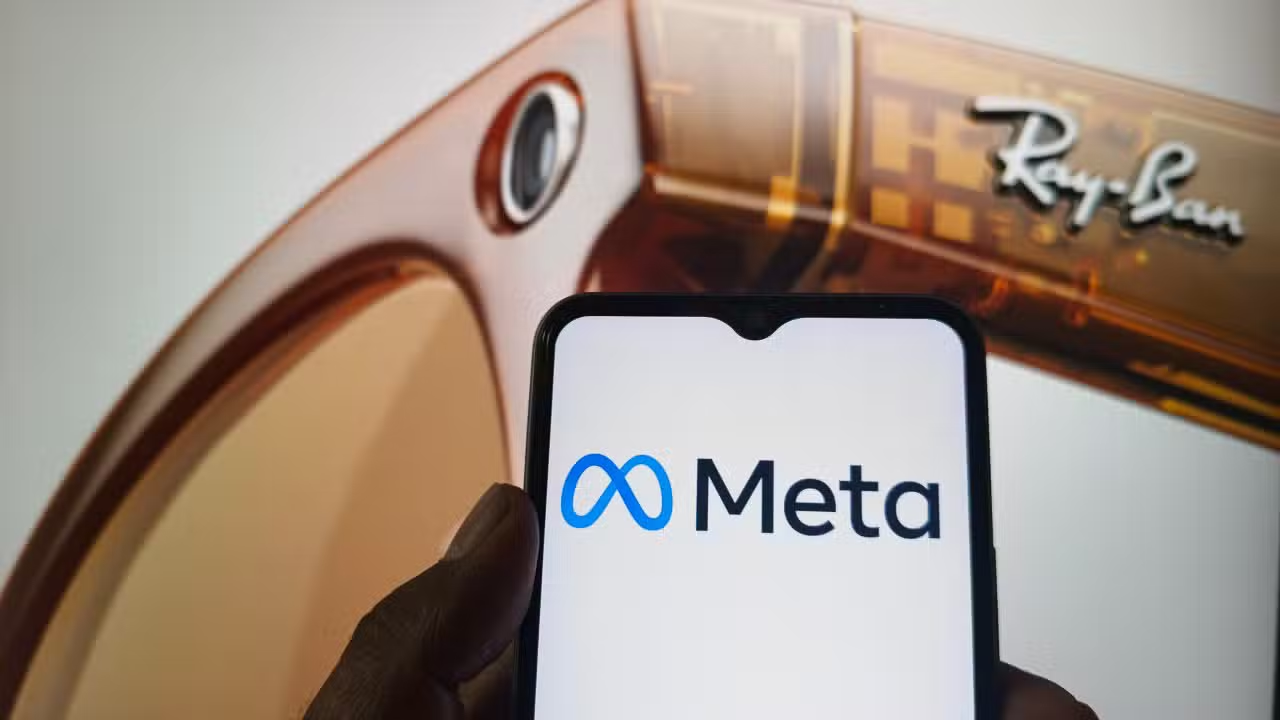
Technology company Meta announced the global expansion of the functionalities of its new line of smart glasses developed in partnership with the brand Ray-Ban. The wearable device now incorporates an advanced multimodal artificial intelligence system, allowing users to process real-time visual and auditory information directly through the wearable. The software and hardware update aims to transform the way people interact with the physical and digital environment, eliminating the need to constantly consult a smartphone screen. The launch marks a strategic step by the company to dominate the space computing and everyday devices sector.
Integration of voice commands and visual processing
The main difference of the new equipment lies in the ability to interpret the world around the user through cameras integrated into the frame. Meta’s artificial intelligence can identify historical monuments, translate signs in foreign languages and describe objects that are in the person’s field of vision instantly.

To activate these functions, the user uses simple voice commands, activating the virtual assistant built into the glasses’ temples. The directional audio system provides responses discreetly, ensuring that only the device holder hears the information processed by artificial intelligence without disturbing the environment.
Advances in multimodal technology for everyday use
Multimodal technology represents a significant evolution over traditional virtual assistants, which relied exclusively on text or audio input. Agora, the system understands the visual context, allowing complex questions about physical elements present in the user’s immediate environment during their normal activities.
A practical example of this application occurs in supermarkets or department stores. The consumer can look at a specific ingredient and ask the assistant which recipes can be prepared with that item, receiving instant suggestions through the speakers integrated into the accessory’s structure.
Additionally, the simultaneous translation function has been enhanced to support multiple languages in real time. Essa tool facilitates communication on international trips, processing the interlocutor’s speech and delivering the translation directly to the user’s ear with minimal latency, breaking language barriers fluidly.
Corporate strategy and positioning in the wearables market
Meta’s massive investment in the hardware segment reflects a paradigm shift in the technology industry, which seeks viable alternatives to traditional smartphones. The company is trying to establish its own ecosystem, reducing its dependence on third-party mobile operating systems and creating new direct-to-consumer channels.
The wearable device market has seen steady growth, driven by the miniaturization of electronic components and increased cloud processing capacity. Smart glasses emerge as the most natural interface for integrating artificial intelligence into people’s routine, keeping their hands free.
Technology sector analysts point out that the historical barrier to the adoption of these devices has always been their clunky design and low practical utility. The current strategy focuses on solving these two problems simultaneously, combining globally recognized aesthetics and high-performance, fast-response software.



Competition in this sector is also intensifying, with other Vale and Silício giants developing their own spatial computing and mixed reality solutions. However, the Meta approach prioritizes lightness and continuous use, differentiating itself from heavier virtual reality displays restricted to indoor environments.
User privacy and data security guidelines
The introduction of constantly active cameras and microphones in public spaces raises rigorous debates about the privacy of third parties and the security of the information collected. To mitigate these concerns, the device is designed with an LED indicator light on the front of the frame, which automatically lights up whenever the camera is recording a video or capturing a photograph. The manufacturer implemented hardware mechanisms that prevent the camera from functioning if this LED is covered or tampered with, aiming to guarantee transparency for people around the user and avoid clandestine recordings.
Regarding data processing, the company established specific protocols for processing images and audio captured by artificial intelligence. Visual information sent to the cloud for the purpose of contextual analysis is encrypted and, according to official guidelines, discarded after generating the response to the user, unless the user explicitly chooses to save the history to improve algorithm training. Especialistas in digital security continue to monitor the effectiveness of these measures in daily practice to ensure compliance with global data protection laws.
Commercial partnership for design development
The strategic collaboration with EssilorLuxottica, the French-Italian conglomerate responsible for manufacturing the Ray-Ban brand, proved to be a fundamental element in the acceptance of the product by the end consumer. Instead of creating a technological design from scratch, the company chose to embed microscopic circuits, high-density batteries and image sensors in classic frames already established in the global fashion market, such as the Wayfarer and Meteor models. Esse Engineering work required the redistribution of weight along the temples to ensure ergonomic comfort during prolonged use, resulting in an accessory that weighs just a few grams more than a conventional pair of sunglasses. The offer of prescription and transitional lenses further expands the target audience, transforming the device into an item of medical necessity and vision correction, as well as an advanced connectivity hub that does not compromise the user’s personal style.
Technical specifications and battery life
The internal hardware is powered by a processor optimized for wearable devices, ensuring fluid artificial intelligence responses without compromising power management. The charging case, which comes with the product and simulates the traditional design of eyeglass cases, provides multiple additional charges, extending the accessory’s autonomy to cover a full day of moderate use in outdoor and indoor environments.
Perspectives for the evolution of spatial computing
The continuous development of software updates via the internet allows glasses to acquire new abilities over time, without the need for immediate replacement of physical equipment. Desenvolvedores independents are already exploring ways to integrate navigation, health and productivity apps directly into the device’s audio interface.
Public acceptance of this technology will dictate the pace of future innovations in the field of augmented reality and applied artificial intelligence. The transition from touch-based screens to voice- and vision-controlled interfaces represents a new frontier of human-computer interaction, laying solid foundations for the next decade of digital innovations in the consumer market.
Veja Tambem em News (EN)

Research reveals that parents are unaware of how their children use artificial intelligence

Samsung releases new system update with new features for Galaxy Watch 4 users

Digital retail reduces the value of the Galaxy S25 5G smartphone with bank bonuses and device exchange

Amazon’s wireless CarPlay adapter has a 50% discount and high approval ratings from drivers

Zach Cregger’s new Resident Evil ignores games and focuses on an unprecedented story with new characters

Rumor suggests that Nintendo is preparing a special edition of the Switch 2 with a remake of Ocarina of Time

Apple accelerates production of the iPhone 17e and develops new Air model with dual camera system

Epic Games platform releases twelve high-budget games at no permanent cost for PC users

PlayStation 5 Pro price drop accelerates digital retail sales and eliminates global stocks

New Galaxy Watch 9 firmware appears on server and confirms progress in software development

Apple’s commemorative project tests cell phone with 1.1 millimeter edge and curved screen for 2027
