

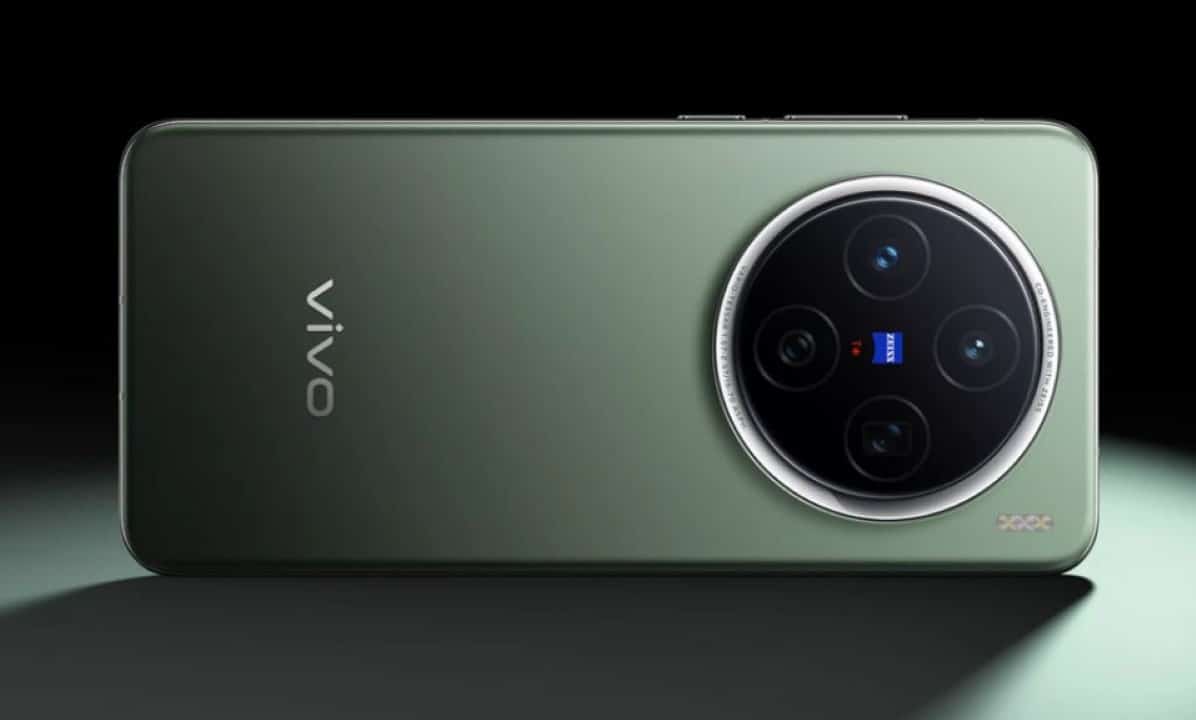
The mobile technology manufacturer has officially launched its latest high-performance device, scheduled to hit the Asian market on March 30th. The device was developed to compete directly in the high-end segment, offering a set of hardware focused on processing speed and extended autonomy. The company’s strategy involves the integration of newly announced components from semiconductor suppliers, aiming to attract consumers who demand cutting-edge technical specifications.
The device marks the debut of a new mobile processing architecture designed to handle complex artificial intelligence and advanced graphics rendering tasks. Product engineering prioritized heat dissipation and energy efficiency, allowing hardware to operate at maximum frequencies for extended periods without loss of performance. The development took into account the demands of modern applications, which require increasingly more computing power and connection stability.
Vivo X300 Ultra, Vivo X300s और हैं! 🇨🇳 लॉन्च: 30 मार्च ✅
वीवो पैड 6 प्रो स्पेसिफिकेशन:
✅ 13.2″ 4K 144Hz
✅ स्नैपड्रैगन 8 एलीट जेन 5
✅ 13000mAh🔋90W⚡
✅ LPDDR5X RAM UFS 4.1
✅ आठ वक्ता 🔊
✅ 13MP मुख्य + LED फ़्लैश…pic.twitter.com/WFExfsDurI– देबायन रॉय (गैजेट्सडेटा) (@गैजेट्सडेटा)23 min 2026
In addition to the focus on raw performance, the design project adopted high-resistance materials and certifications against water and dust. The color palette includes options in green, burgundy, white and black, seeking to reach different user profiles that value both aesthetics and durability in electronic equipment for daily use. The physical construction of the device was designed to balance the weight of the large capacity battery with the ergonomics necessary for continuous handling.
Processing architecture and thermal performance
The processing core of the new equipment is powered by the MediaTek Dimensity 9500 chipset, built using an advanced lithography manufacturing process that guarantees greater transistor density and lower energy consumption. The octa-core CPU features an optimized cluster configuration, led by a main core operating at a maximum frequency of 4.21 GHz, designed specifically to handle peak demands in heavy applications and high-end games. Acompanhando this power core, the processor has intermediate cores running at 3.5 GHz for moderate-intensity tasks, and energy-efficient cores at 2.7 GHz, responsible for managing background processes and keeping battery consumption under control during light use. Graphics processing is handled by the Mali-G1 Ultima GPU, which supports modern rendering technologies, such as hardware-accelerated ray tracing, providing an immersive and fluid visual experience. To ensure that all this computing power does not result in overheating, the manufacturer implemented a liquid cooling system with a large-area vapor chamber, capable of dissipating the heat generated by internal components quickly and efficiently, keeping operating temperatures within safe limits even during intense sessions of prolonged use.
Energy capacity and charging systems
One of the device’s main technical differences lies in its 7100mAh battery, a capacity considerably above the current standard found in most mobile devices in the same category. Esta high-density power cell is designed to withstand multiple days of moderate use on a single charge, eliminating the need for frequent recharges during work hours or on long trips. The technology used in the construction of the battery allows it to store more energy without drastically increasing the thickness or total weight of the equipment, maintaining ergonomics and comfort during the user’s daily handling.
To complement the long-lasting battery, the power system supports 90W fast wired charging, allowing the user to recover a significant percentage of the charge in just a few minutes when plugged in. Adicionalmente, the device supports 40W wireless charging, providing convenience for users who prefer induction charging pads on desks or nightstands. Integrated power management circuitry constantly monitors temperature and voltage during the recharging process, dynamically adjusting current to preserve the physical integrity and long-term life of the lithium-ion cell.
Screen specifications and visual quality
The front panel of the device consists of a 6.78-inch flat AMOLED screen, which offers a resolution of 1.5K, ensuring high clarity for displaying texts, images and videos. The choice for a flat display meets the demand of users who prefer to avoid accidental touches on the edges and seek greater ease in applying protective tempered glass films.
Visual fluidity is ensured by a 144Hz refresh rate, which provides smooth transitions in system animations and technical advantages in electronic games that require fast response times. The panel also features high-frequency PWM dimming technology, reducing imperceptible flickering and eye fatigue in low-light environments.
The display’s color calibration covers a wide range of the RGB spectrum, delivering the precise tones and absolute blacks characteristic of OLED technology. The maximum brightness has been adjusted to allow excellent readability even in direct sunlight, making it easier to use the device outdoors during the day without loss of contrast or saturation.
Camera system setup
The rear photographic module houses a triple lens system, headed by a 50-megapixel main sensor equipped with optical image stabilization. Este primary component has been tuned to capture high levels of detail and operate efficiently in low-light scenarios, reducing noise and blur in night photographs.
Accompanying the main lens is a 50 megapixel ultrawide camera, designed to capture wide landscapes and groups of people without the need for physical distancing. Edge distortion correction is performed via image signal processing, ensuring straight lines and accurate proportions in the resulting images.
The third component of the rear assembly is a 50-megapixel periscopic telephoto lens, which offers 3x optical zoom without loss of visual quality. Esta lens allows you to zoom in on distant objects and is especially useful for portrait photography, providing natural perspective compression and background blur generated by the lens itself.
On the front, the device features a 50-megapixel camera dedicated to high-resolution self-portraits and video calls. Built-in image processing software applies facial mapping algorithms to optimize exposure and contrast in real time, ensuring sharp results in a variety of ambient lighting conditions.
Memory and internal storage
To ensure the fluid functioning of the operating system and the execution of multiple applications simultaneously, the equipment is available with up to 16GB of RAM memory in the LPDDR5X standard. Esta volatile memory technology offers higher bandwidths and lower power consumption compared to previous generations, speeding up temporary data loading and task switching.
In terms of storage, options reach up to 1TB using UFS 4.1 technology, which provides extremely fast data reading and writing speeds. High transfer rate makes it easy to install heavy applications, move bulky files, and continuously record videos in 4K resolution without stuttering or file system interruptions.
Connectivity and hardware features
The connectivity suite includes full support for 5G networks, ensuring access to next-generation mobile internet speeds for fast downloads and high-definition media streaming. The device also incorporates Wi-Fi 7 technology, which offers greater connection stability and lower latency on compatible wireless networks, as well as Bluetooth 5.4 for efficient, low-power pairing with audio peripherals and wearable devices.
Additional hardware features include the ultrasonic fingerprint reader embedded under the screen, which works quickly even with wet fingers, and the X-axis linear motor, which provides precise tactile feedback while typing. The device has IP68 and IP69 certifications, confirming its resistance to submersion in fresh water and high pressure jets in controlled laboratory tests.
Operating system and user interface
The equipment leaves the factory running the OriginOS interface, based on the central architecture of the Android 16, offering an updated software environment focused on fluid navigation. The interface was designed to optimize usability on large screens and integrates native tools for managing application permissions and continuously monitoring the health of the device’s internal components.



