


The German automaker’s sports division has officially launched a station wagon-shaped vehicle for the traditional long-distance race on the Nordschleife circuit. The model chosen to tackle the route known for its technical complexity is a direct adaptation of high-performance touring vehicles already used in global competitions.
The development project began last year, focusing on adapting the aerodynamics and weight distribution to withstand the extreme demands of an all-day non-stop race. The engineering team used the structural base consolidated on international tracks to create this new competition variant.
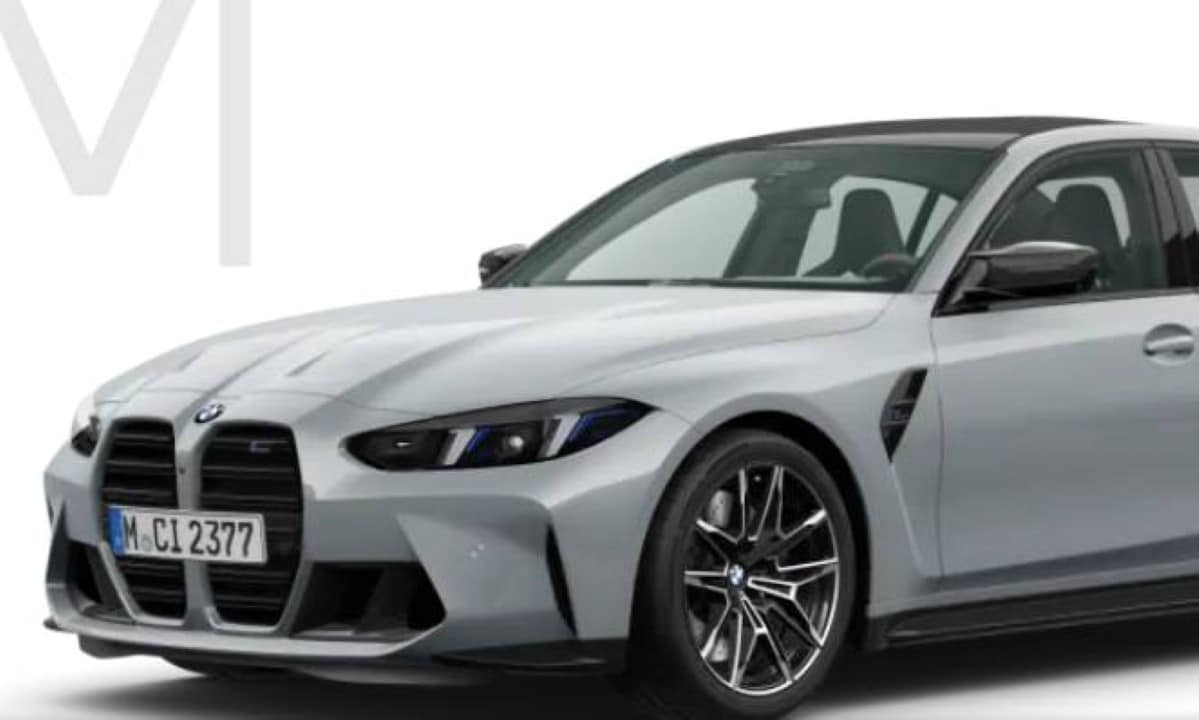
The official debut on the tracks is scheduled for May, marking a unique moment in the manufacturer’s history by pitting a car of familiar proportions against traditional prototypes and super sports cars. The initiative seeks to prove the versatility and durability of mechanical components in severe conditions of continuous use.
Technical specifications and aerodynamic adaptations
The vehicle shares the same mechanical base as the M4 GT3 EVO model, inheriting its advanced engine and competition transmission systems. However, the elongated body required substantial modifications to the rear to ensure directional stability at high speeds on the straights of the German circuit.
Engineers increased the car’s overall length by two hundred millimeters compared to the original version, as well as widening the track to accommodate wider competition tires and improve traction. The roof height has also been increased by thirty-two millimeters to adapt the airflow towards the adjustable rear spoiler.
Aerodynamics was one of the most critical points of the project, requiring extensive simulations in a wind tunnel and fluid dynamics software. The station wagon shape creates a different low-pressure zone at the rear, which forced the team to redesign the lower diffuser and adjust the tilt of the main wing to generate the downforce needed in fast corners.
Strategic partnership for tire supply
The Japanese manufacturer Yokohama was selected as the official partner to supply the rubber compounds that will equip the vehicle during the race. The choice was based on the brand’s history of performance in endurance competitions and the ability to develop specific tires for the unique weight and dimensions characteristics of this car.
The station wagon’s additional weight and slightly higher center of gravity required the creation of a reinforced tire casing. Initial tests demonstrated that the compounds developed by the partner can maintain grip and structural integrity even under the constant mechanical stress generated by the track’s high-speed undulations and curves.
Formation of the team of official pilots
Driving the vehicle will be the responsibility of a quartet of drivers with extensive experience in long-term races and in-depth knowledge of the European circuit. The lineup includes professionals who already have a history of victories and podiums in tourism competitions around the world, ensuring a strong and constant pace.
Brazilian Augusto Farfus is one of the names confirmed for the relay behind the wheel during the motorsport marathon. X__NM1____
He is joined by the German Jens Klingmann and the North Americans Connor De Phillippi and Neil Verhagen. Esta combination of driving profiles aims to guarantee a constant pace during the twenty-four hours of racing, minimizing driving errors and optimizing fuel consumption and equipment wear.
The rapport between the drivers and the pit crew will be extensively tested in the preparatory stages leading up to the main event. Clear radio communication and the ability to adapt to sudden climate changes, very common in the forest region of Eifel, are factors that will determine the quartet’s competitiveness against class opponents.
Inline six-cylinder engine performance
The heart of the design is an in-line six-cylinder engine with dual supercharging technology, a mechanical configuration that has become a signature of the brand’s sports division over the decades. Este engine was meticulously adjusted to deliver a flat torque curve, favoring acceleration on corner exits and reliability at high speeds for prolonged periods. Cooling received special engineering attention, with resized radiators and optimized front air ducts to prevent the system from overheating during the hottest hours of the day or in heavy traffic situations on the track, where the flow of clean air is reduced.
The electronic engine management allows different power maps, which can be selected by the drivers directly at the steering wheel according to the track’s grip conditions and the strategy drawn up by the team of engineers in the pits. Durante at night, when temperatures drop dramatically and air density increases, the system automatically adjusts the fuel mixture to maximize thermal efficiency. Além In addition, traction control has been recalibrated specifically to deal with the dynamic reactions of the elongated body, ensuring that power is transferred to the asphalt in a linear and predictable manner, which reduces premature tire wear on the rear axle.
Insertion in the experimental and regulation category
Due to its unique body characteristics and the absence of a standard homologation for station wagon type vehicles in the main classes of Gran Turismo, the car was officially entered in the SPX category. Esta specific class is intended for experimental vehicles, prototypes in the testing phase or models that do not perfectly fit into the strict technical regulations of the traditional GT3 or GT4 categories. Participation in this division allows the development team a greater margin of freedom to test aerodynamic innovations and new mechanical solutions that could eventually be applied to future series production models. Embora the vehicle does not compete directly for victory in the general classification against models built exclusively for the tracks, the central objective of the operation is to demonstrate the technical feasibility of the concept and collect a massive volume of telemetry data in a real and unforgiving competition environment. The event organization closely monitors the performance of all vehicles registered in this experimental class, using GPS sensors and power limiters to ensure that the balance of performance (Balance of Performance) is maintained fairly and that the safety of all competitors on the route is not compromised by the difference in final speed between the different categories that share the same asphalt.
Marketing strategy and audience engagement
The presence of a high-performance station wagon in one of the most demanding races on the international calendar generated a strong organic response from the public and motorsport enthusiasts on digital platforms. The manufacturer plans to use this sporting participation as a central tool in its communication campaigns, highlighting the direct connection between the competition vehicles developed on the tracks and the high-performance family models available in dealerships, reinforcing the brand’s image of mechanical durability and technical capacity.
Preparatory tests and component validation
Before tackling the real asphalt of the German circuit, the model underwent hundreds of hours of rigorous testing in state-of-the-art vehicle dynamics simulators. Official drivers were able to experiment with different suspension settings, chassis stiffness and downforce in a controlled virtual environment, speeding up the initial development process and reducing the team’s operating costs.
The practical sessions in closed tracks later served to validate the mathematical data obtained in the digital environment. The technical team carried out full race simulations, including driver change procedures, rapid refueling and replacement of wear components such as brake pads, ensuring that the entire pit operation is perfectly synchronized for the official race day.
Evolution of tourist motorsport in Europa
The introduction of unconventional body shapes to the race track reflects a gradual shift in car manufacturers’ approach to professional touring motorsport. Historicamente dominated by compact sedans and two-door sports coupes, motor sports now makes room for vehicles that more faithfully represent consumer trends in the global automotive market. Adapting family wagons to the high-competition environment requires considerable engineering effort to overcome aerodynamic and weight disadvantages, but offers a substantial return in terms of media visibility and direct identification by consumers looking for practical vehicles for everyday life without giving up extreme sportiness.
The Nordschleife circuit, with its more than twenty kilometers in length, extreme elevation variations and dozens of blind curves, remains the definitive testing laboratory for the global automotive industry. A vehicle’s ability to withstand lateral forces, sudden changes in the type of asphalt and the often unpredictable weather conditions of this track is considered the ultimate attestation of structural quality and mechanical reliability. The success of this technical endeavor could encourage other rival manufacturers to explore similar concepts in their competition departments, further diversifying the starting grid for long-distance races and providing a visually renewed spectacle for endurance racing fans.



