

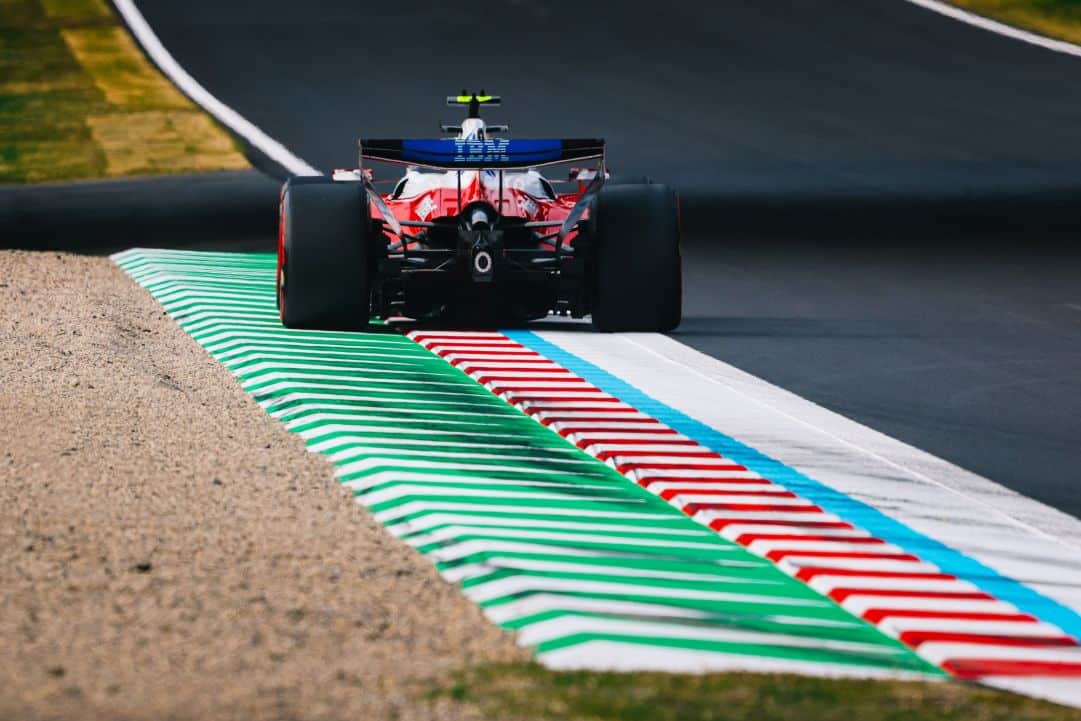
Driver Lewis Hamilton expressed deep dissatisfaction with the performance of his car after the conclusion of Grande Prêmio of Japão of The seven-time world champion, who now defends the colors of Ferrari, finished the race in sixth place and classified the entire weekend as “quite terrible” due to persistent technical problems. The lack of power and difficulties with the energy management system were the main points highlighted by the Brit, who saw his performance plummet during the race.
Hamilton’s frustration marks a drastic change in his recent speech about the new dynamics of cars in the category. Durante pre-season, the driver had been optimistic about the drivability of the current models, but the scenario faced on Japanese soil changed this perception in a major way. The driver stated that, since the beginning of the race, he was unable to keep up with the pace of his direct opponents, resulting in a progressive loss of positions even when he occupied temporary positions on the podium under the intervention of the safety car.
Technical difficulties and loss of income in Suzuka
Lewis Hamilton detailed that the suffering with power delivery was a constant throughout all the laps on the Japanese circuit. Ele emphasized that, in the second stint of the race, the situation became even more critical, making any attempt to defend against overtaking rivals impossible. The Ferrari pilot highlighted that he needs to carry out an in-depth technical analysis with the team to identify whether there is a specific fault in his single-seater or whether the problem is inherent to the energy recovery system.
Analysis of telemetry data will be essential to understand why car number 44 was unable to record competitive times in either free practice or the official qualifying session. Hamilton had a lackluster performance, falling far from contention for the lead and struggling to keep the car on the track with new and old tires. The Italian team is now working against time to resolve the mechanical inconsistencies that prevented the Brit from fighting for a result higher than the sixth place achieved.
- Investigation into the drop in performance in the second stage of the test.
- Detailed analysis of fuel flow and engine torque delivery.
- Assessment of premature wear of electronic components at high temperatures.
- Telemetry comparison between the two cars from the Italian team.
Criticism of the new energy management regulation
Hamilton’s outburst was not just limited to his individual performance, but directly affected the technical guidelines imposed by the FIA for the current season. Ele joined the chorus of veteran pilots, such as Max Verstappen and Fernando Alonso, who had previously voiced concerns about the control of kinetic and thermal energy. The Briton admitted that he does not understand the logic of running out of available battery while still having to manage fuel consumption according to the team’s instructions via radio.
This change in attitude reflects widespread dissatisfaction on the grid with the risks of sudden decelerations on the straights, a phenomenon known as “clipping”, which occurs when electrical energy runs out before the end of the full acceleration section. The accident suffered by Oliver Bearman in Suzuka served as a catalyst for the complaints to gain more political weight behind the scenes in the category. Hamilton reinforced that driving loses its fun factor when the competitor feels vulnerable and unable to react to attacks from other drivers due to systemic limitations of the regulations.
Impact of the Oliver Bearman accident on safety
Pilot safety was once again on the agenda after the heavy crash of Oliver Bearman, driver of Haas, during the weekend on Japanese soil. The incident raised questions about the differential speeds that occur when an energy recovery system fails or goes into recharge mode at critical points on the track. Representantes of the teams and grid members increased the tone of their demands with the international federation, demanding immediate reviews to avoid collisions due to high-speed reach.
The highest motorsport entity had already signaled its intention to discuss adjustments to the rules after the previous stage, but the severity of the accident in Suzuka accelerated the schedule of technical meetings. Embora the FIA considers it premature to talk about drastic changes to the 2026 technical regulations, the pressure from drivers for greater stability in power delivery is constant. The focus of discussions in the coming weeks will be the balance between technological sustainability and the physical integrity of competitors during competitions on high-speed circuits.
Forced pause in the calendar and return in Miami
Fórmula 1 is now entering an unexpected hiatus period of one month due to the cancellation of the stages that would have been carried out on Bahrein and Arábia Saudita. Geopolitical conflicts in the Oriente Médio, involving major regional and international powers, forced the category to prioritize security logistics and suspend events scheduled for the region. Esse interval will be used by teams to reorganize parts stocks and focus on developing aerodynamic and mechanical upgrades.
The resumption of activities is confirmed for May 3rd, with the holding of Grande Prêmio of Miami, in Estados Unidos. The race on the urban circuit around the Hard Rock Stadium will be the fourth valid stage of the season, and the expectation is that many teams will present significant improvement packages. Hamilton and Ferrari hope to use this extra time to resolve the power problems identified in the Japão and regain competitiveness on American soil, where the public tends to give intense support to the British driver.
Rise of Kimi Antonelli and leadership in the world
While veterans like Hamilton face technical difficulties, the new generation represented by Kimi Antonelli is experiencing a moment of absolute brilliance on the tracks. The young driver achieved his second consecutive victory in Suzuka, consolidating his position as leader of Campeonato Mundial and Pilotos. Antonelli’s consistent performance has surprised even the most experienced team managers, who highlight the young man’s maturity in the face of the complex energy rules that are challenging the world champions.
Antonelli’s leadership brings a new component of pressure to Mercedes and Ferrari, who observe the meteoric growth of a talent that promises to dominate the category in the coming years. The young driver’s success contrasts with the management difficulties faced by more experienced drivers, suggesting that adapting to new technologies can benefit those just entering the sport. The world of Fórmula 1 is closely watching whether this trend of youth dominance will continue in the next stages of the season.
Technical analysis of the lack of power on the track
The internal investigation at Ferrari should focus on the hybrid system components that failed to provide the necessary power during the acceleration phases at Suzuka. Engenheiros point out that the power loss reported by Hamilton may be linked to inefficient electronic mapping or accelerated degradation of the battery cells. Durante most of the race, the British driver was seen struggling to maintain traction on corner exits, which compromised his final speed on the long straights of the Japanese circuit.
In addition to electronic failures, tire management was also hampered by the lack of balance in torque delivery, forcing the driver to demand more from the rubber compound to compensate for mechanical sluggishness. Hamilton mentioned that, even with new tires, the feeling of helplessness was evident, which mischaracterizes a purely aerodynamic or tire wear problem. The precise diagnosis of these failures will be a turning point for the Italian team’s ambitions following the 2026 world championship.