
Italian team loses on penalties to Bosnia and accumulates third consecutive absence in the World Cup By Carolina Costa
6 min read
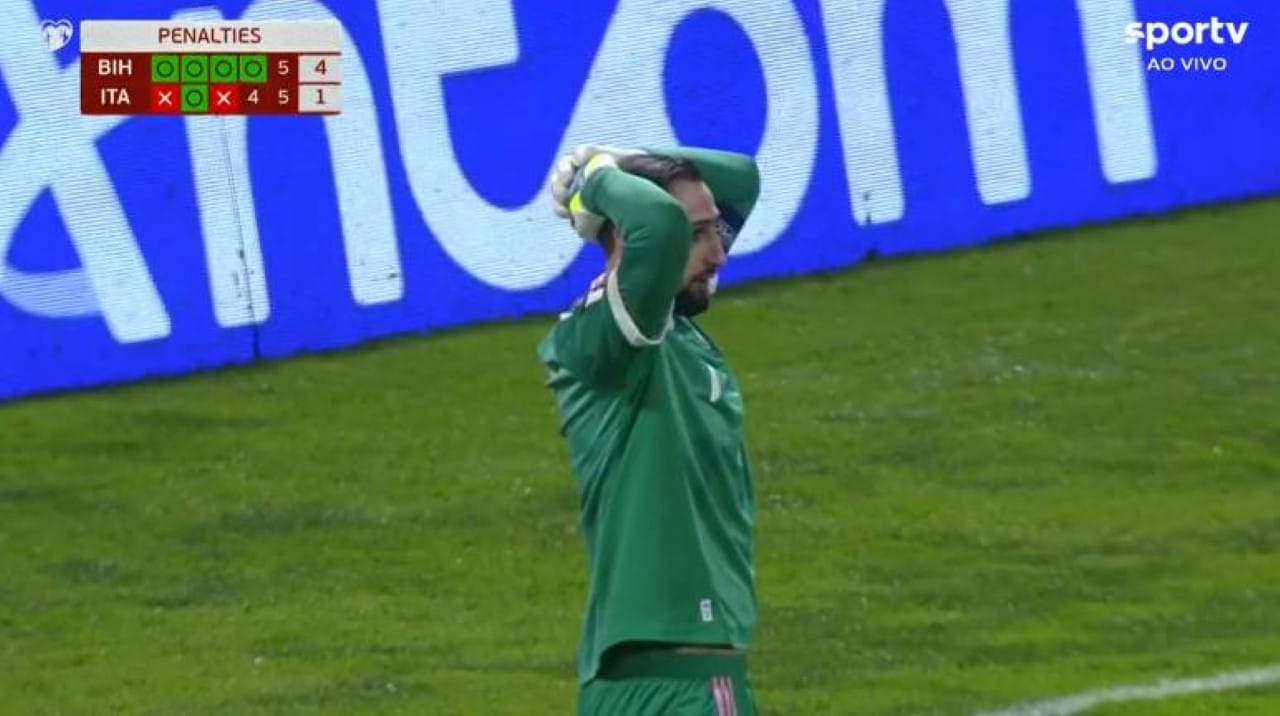 |
The Itália national team suffered a severe blow to its sporting aspirations when it was defeated by Bósnia and Herzegovina in the European playoff. The decisive clash, which ended in a 1-1 draw in regulation time and extra time, was resolved by penalty kicks. The home team demonstrated greater precision on the spot, winning the match 4-1 and guaranteeing their place in the world tournament.
The negative result marks an unprecedented moment in the recent history of European football, confirming the third consecutive absence of the Italian squad in the main national team competition on the planet. The team, which has four world titles to its credit, had already failed in its attempts to qualify for the editions hosted by Rússia and Catar, deepening a structural crisis in the country’s sport.
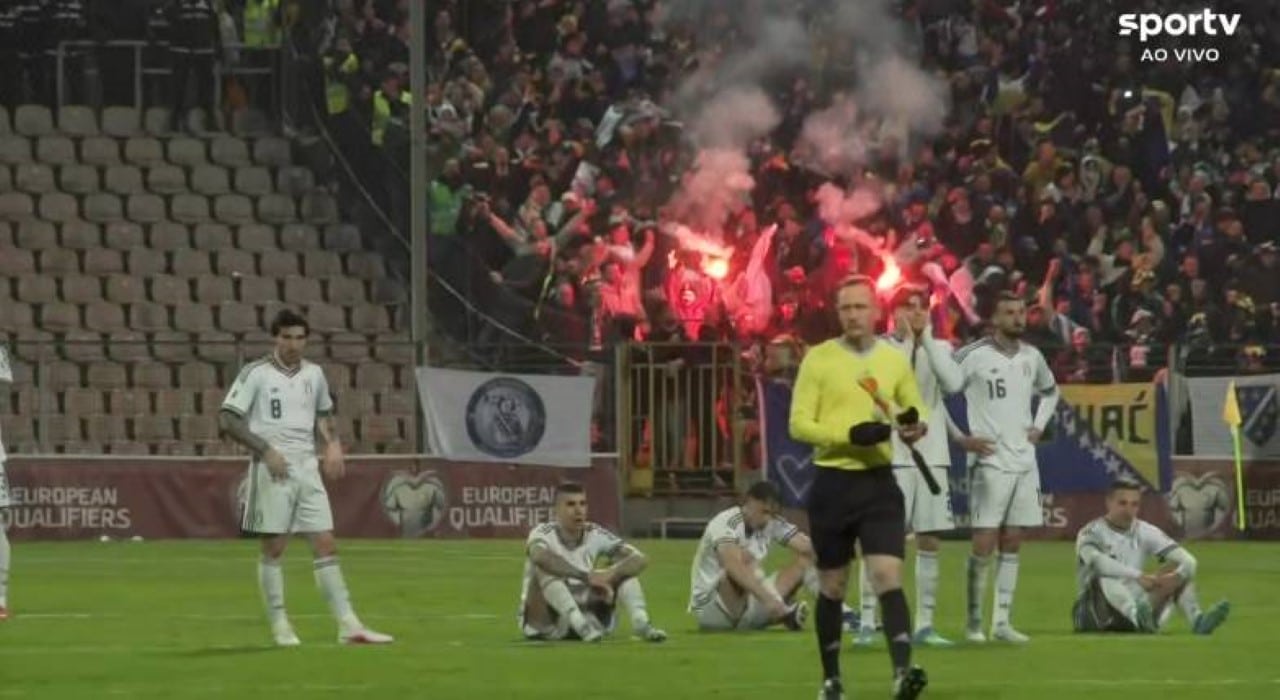
The decisive match took place at the Bilino Polje stadium, located in the city of Zenica, under strong support from the local fans. The hostile environment and the pressure for an immediate result dictated the pace of the clash from the opening minutes, requiring strategies from both technical committees based on defensive caution and the exploitation of opponent errors.
Tactical dynamics and the weight of elimination in the repechage
The Italian team’s trajectory in the qualifiers was marked by fluctuations in performance that culminated in the need to compete in the play-offs. Sob under coach Gennaro Gattuso, the team sought to mix the experience of veterans with the insertion of young talents, but ran into a lack of offensive effectiveness at crucial moments. The psychological pressure to avoid a new historic setback was reflected in the tactical choices during the confrontation in Zenica, where the initial priority was to maintain possession of the ball and dictate the pace of the game to neutralize the momentum of the home crowd.
On the other side, Bósnia and Herzegovina, guided by Sergej Barbarez, adopted a reactive stance, betting on the solidity of their defensive line and quick transitions. The home team’s strategy involved the following fundamental points during the one hundred and twenty minutes of the ball rolling:
- Closing spaces in midfield to isolate the Italian playmakers.
- Constant exploration of aerial ball plays, taking advantage of the height of your attackers.
- Maintaining tactical discipline even after conceding the first goal at the beginning of the match.
The Bosnian classification represents a milestone for the country’s sport, which reaches the main stage of the tournament for the second time in its independent history. The local federation’s planning focused on building a squad that was physically robust and mentally prepared to withstand opponents with greater tradition. The victory over a four-time world champion consolidates the renovation work and projects the team as an emerging force in Eastern Europe, capable of competing at a high level on major international stages.
Initial advantage and drastic change in the first half
The match script seemed favorable to the visitors when Moise Kean opened the scoring 15 minutes into the opening half. The striker demonstrated opportunism by receiving a deep pass, controlling the ball with agility and finishing with precision, beating the goalkeeper Nikola Vasilj and momentarily silencing the stands at stadium Bilino Polje.
However, Italy’s tranquility was short-lived due to a disciplinary error that completely changed the shape of the match. Aos 41 minutes, defender Alessandro Bastoni committed a serious foul, received a straight red card and left his team with one player less, forcing an immediate retreat from the marking lines before the break.
Home offensive and the equalizing goal in the second half
With numerical superiority, Bósnia returned from the locker room ready to corner the opponent in their own field. Possession of the ball began to be largely dominated by the home team, who began a series of crosses into the area and mid-range shots, testing the reflexes of the opposing defensive system.
To try to contain the rival’s momentum and renew the team’s momentum, the coaches made significant changes. Itália drew Matteo Politano and Manuel Locatelli for the entries of Marco Palestra and Bryan Cristante, while Bósnia responded by placing Haris Tabakovic and Dzenis Burnic in the places of Ivan Basic and Amar Memic respectively.
The home team’s offensive insistence was rewarded in the 79th minute of the game. Após A hit and a rebound inside the Italian penalty area, the ball was cleared by Haris Tabakovic, who didn’t hesitate and fired a strong shot into the back of the net, making it a 1-1 draw and once again setting the local fans on fire.
Physical exhaustion and strategies during extra time
The final whistle of regulation time took the decision to extra time, a period in which physical exhaustion became the main opponent for both teams. Itália, playing with one man less for more than an hour, had to redouble its attention to defensive compaction, almost completely giving up on structured attacking plays.
Right at the beginning of extra time, in the 91st minute, the Italian technical committee promoted the entry of full-back Leonardo Spinazzola into place Federico Dimarco, seeking to close the side corridors. Pelo Bosnian side, Amir Hadziahmetovic replaced Ermedin Demirovic in the 115th minute to oxygenate the midfield and try to avoid a penalty shootout.
Goalkeeper Gianluigi Donnarumma took on a leading role during the additional thirty minutes. The Italian captain made crucial interventions, spreading Kerim Alajbegovic shots and neutralizing the aerial attacks that frequently circled his small area.
Despite the extreme fatigue, the visiting team still managed to engineer rare counterattacks using the speed of Moise Kean. In one of these sporadic descents, the attacker managed to scare the goal defended by Vasilj, but the shot came without the necessary direction, maintaining equality on the scoreboard until the end of extra time.
Efficiency in maximum penalties and goalkeeper performances
The vacancy was defined at the final mark, a time when psychological preparation and individual technique stand out. Bósnia and Herzegovina demonstrated great control in front of their audience, converting four of their charges with firm and well-directed hits. The home scouts displaced the opposing goalkeeper in most of the attempts, demonstrating a previous study of the Italian archer’s behavior in penalties.
On the other hand, inaccuracy marked the Itália shots. The visiting team managed to make just one shot, encountering errors in aiming and the presence of goalkeeper Nikola Vasilj in the other shots. Mesmo being considered a specialist in the fundamentals, Gianluigi Donnarumma was unable to successfully intervene in the Bosnian shots, consolidating the 4-1 defeat in the dispute and the elimination of his country.
Disciplinary control and rigor of refereeing in the confrontation
Conducting the match required a firm hand from the French referee Clement Turpin, who had to deal with the high physicality imposed by the two teams. Desde the opening minutes, the judge established a strict criterion for tactical fouls, distributing yellow cards to players such as Davide Frattesi, for the Italian side, and Nikola Katic and Benjamin Tahirovic, representing Bósnia. The direct expulsion of Alessandro Bastoni in the first stage was the The culmination of the referee’s performance, a decision that followed the punishment guidelines for harsher entries. Disciplinary control prevented an excess of violent infractions, maintaining the focus on the tactical and technical dispute until the last second of extra time.
Restructuring and planning on the international stage
With the end of the match on Zenica, Bósnia and Herzegovina begin logistical and sporting planning for the global tournament. Enquanto Therefore, the Italian football federation will face a period of evaluation and will need to reform its structures and technical command to try to put the team back on the path to classification in the next international competitions.











