

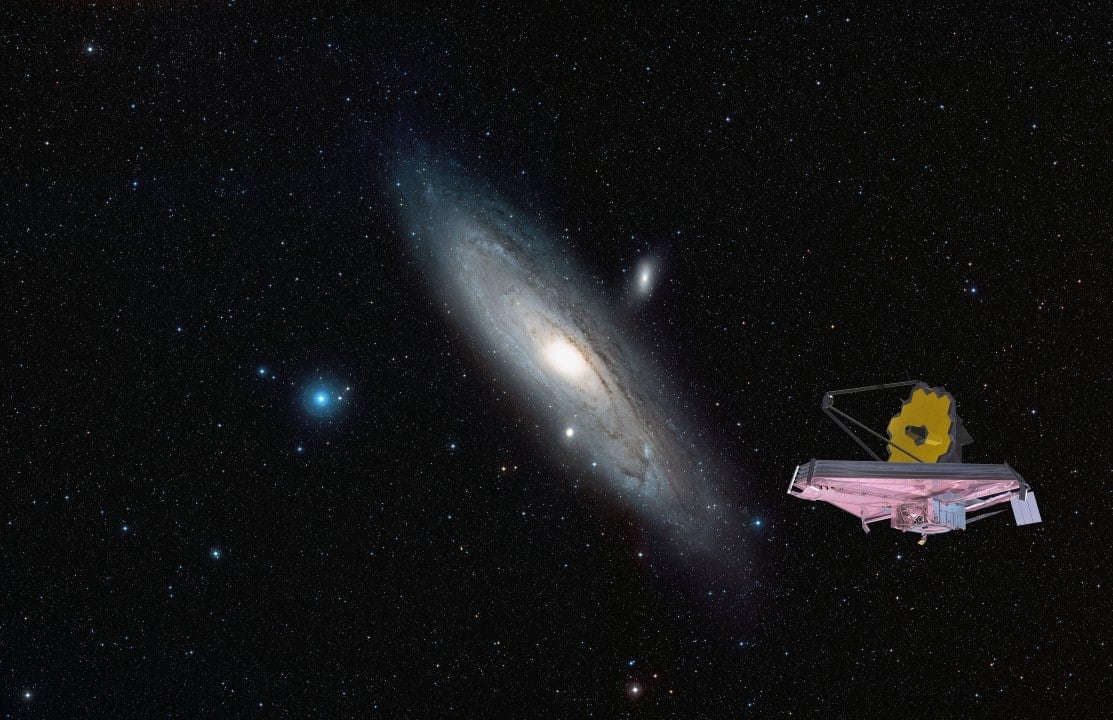
The North American space agency has confirmed a significant discovery involving the atmosphere of a celestial body far from our solar system. State-of-the-art infrared observation equipment has captured unusual chemical signatures from a distance of one hundred and twenty-four light years. The data point to the presence of elements that, in the terrestrial environment, are closely linked to biological activity.
The target of the observation is a world classified as a possible super-Earth or mini-Neptune, orbiting a red dwarf star in the constellation Leão. Spectral analyzes revealed notable concentrations of methane and carbon dioxide. The absence of ammonia reinforces the hypothesis that the celestial body may harbor a vast ocean of liquid water under an atmosphere rich in hydrogen.
Astronomowie twierdzą, że znaleźli najsilniejszy dowód życia poza naszym Układem Słonecznym, na planecie znajdującej się 124 lata świetlne od Terra zwanej „K2-18b”.
Chociaż nie ogłosili jeszcze odkrycia życia, wykryli „potencjalne biosygnatury”, które normalnie powstają…pic.twitter.com/3cvmhATRy4
—Astronomiaum (@astronomia)17 kwietnia 2025 r
The detail that most caught the researchers’ attention was the preliminary detection of a specific molecule called dimethyl sulfide. In the terrestrial ecosystem, this substance is produced almost exclusively by living organisms, specifically phytoplankton found in marine environments. Confirmation of this compound has the potential to change the direction of modern astrobiology and direct new exploration missions.
Atmospheric and structural characteristics of the celestial body
The newly analyzed world has a mass approximately nine times greater than that of our planet, placing it in a rare intermediate category in observational astronomy. Essa structural classification suggests significantly stronger surface gravity, capable of trapping a dense layer of gases over geological eras. The hydrogen-rich composition creates a natural greenhouse effect that maintains temperatures at levels potentially suitable for complex chemistry.
The orbital location of the star is a determining factor for the climatic conditions recorded by measuring instruments. Ele orbits its host star within the so-called habitable zone, a region where stellar radiation allows liquid water to exist on the surface. The red dwarf star, although cooler and smaller than our sun, provides enough thermal and light energy to sustain active atmospheric dynamics.
Theoretical models applied to the raw data suggest the existence of a Hycene-type world, presenting the following main indicators: – Temperaturas high atmospheric levels maintained by heat retention; – Superfícies potentially covered by global oceans with no exposed continents; – Envoltórios dense gases that protect the surface from harmful space radiation. Esses environments are considered ideal natural laboratories for searching for chemical signatures outside the solar system.
Chemical interactions between the putative global ocean and the hydrogen-rich atmosphere are the main focus of current computer simulations. Scientists estimate that the interface between liquid water and atmospheric gases can facilitate continuous reactions. The simultaneous presence of methane and carbon dioxide indicates a chemical imbalance that requires an uninterrupted source of renewal to prevent it from dissipating.
Applied transit spectroscopy methodology
Capturing these chemical signatures was only possible thanks to the advanced technique of transit spectroscopy, a method that analyzes filtered starlight. Quando the planet passes in front of its host star, a small fraction of the light passes through the planetary atmosphere before continuing its journey through outer space to the observatory’s mirrors. Diferentes molecules absorb specific wavelengths of infrared light, leaving a dark barcode in the light spectrum captured by the sensors. High-precision instruments can separate this light into its constituent colors, allowing scientists to identify exactly which gases are present in the exoplanet’s gas layer with a level of detail unprecedented in the history of space exploration.
The sensitivity of current infrared instruments exceeds the capacity of previous generation equipment by many magnitudes, allowing the detection of molecules in tiny concentrations. The analysis focused on the near- and mid-infrared range, where carbon- and sulfur-based compounds exhibit their strongest and most unmistakable absorption signatures. The process of decoding these signals requires months of computational processing to separate instrumental noise and stellar interference from actual data from the planetary atmosphere. Cross-validation between different instruments onboard the same satellite ensures the integrity of findings, minimizing the possibility of false positives that often occur in observations of distant targets.
The role of dimethyl sulfide in research
The possible identification of dimethyl sulfide represents the most intriguing point of the entire recent astronomical observation campaign. Trata is a volatile organic compound that, in terrestrial chemistry, does not have large-scale geological or abiotic sources. Their continued presence in an atmosphere requires a constant production mechanism to replace the molecules destroyed by daily stellar radiation.
Experts in atmospheric chemistry emphasize that the detection is still considered preliminary and requires additional rigorous validation. The signal captured in the light spectra is faint and partially overlaps with the signatures of other more abundant gases in the planet’s envelope. The research team has already requested additional equipment operating time to specifically focus on the wavelengths where dimethyl sulfide absorbs light in a more isolated way.
If the molecule’s presence is irrefutably confirmed, astrobiologists will need to investigate whether unknown inorganic processes could generate the compound under the extreme conditions of a Hycene world. High atmospheric pressure and hydrogen-based chemistry create a reactive environment very different from the known terrestrial pattern. The exclusion of all possible abiotic sources is an obligatory step before any definitive statement about extraterrestrial biology can be made.
Technical challenges in interpreting spectral data
The scientific community maintains a stance of strict caution when analyzing results from worlds located at interstellar distances, due to the inherent complexity of reading transmission spectra. The background noise generated by the equipment’s own electronic sensors, added to the natural variations in the luminosity of the red dwarf star, can create fluctuations in the data that mimic the presence of certain rare molecules. Furthermore, the physics of clouds and photochemical hazes in the exoplanet’s upper atmospheric layers often obscure chemical signals coming from the lower layers, flattening the spectrum and making it difficult to accurately quantify the abundance of the gases. The radiative transfer models used to interpret these observations are based on laboratory data obtained under terrestrial conditions, which introduces a margin of uncertainty when applied to alien environments with radically different pressures and temperatures. Validating these findings requires an international collaborative effort, involving multiple independent teams processing the same raw data using different algorithms to verify that they reach the same chemical conclusions. Esse Methodological rigor is essential to avoid premature announcements and ensure that observational astrophysics advances on solid and verifiable foundations.
Planning future observation campaigns
The space observatory’s operations schedule already includes new observation windows dedicated exclusively to this specific planetary system. Engineers plan to use different operating modes of the spectrometers to obtain even higher and cleaner spectral resolution. The primary objective is to definitively separate the absorption lines of dimethyl sulfide from the interference caused by the abundant methane in the region.
In parallel with space observations, high-pressure chemistry laboratories are conducting physical experiments to simulate conditions at the star’s ocean-atmosphere interface. Esses practical tests aim to discover whether geochemical reactions involving underwater hydrothermal vents could synthesize the observed compounds without the need for biological intervention. The results of these ground experiments will provide the necessary basis for interpreting the data that will continue to arrive from orbital sensors.
Advances in astronomical instrumentation
The ability to dissect the chemistry of such a distant world demonstrates the technological leap achieved by modern and applied optical engineering. The data collected not only expands the catalog of known exoplanet atmospheres, but also refines search techniques that will be applied to targets even smaller and more similar to our own planet in the coming decades of exploration of the deep cosmos.



