
April 2026 holds interesting opportunities for those who follow celestial phenomena. Mercúrio reaches its greatest elongation of the year on the 3rd, which makes it easier to observe on the eastern horizon before dawn. The meteor shower
Observers can spot Mercúrio low in the eastern sky, near Marte, in the early morning hours. The planet is further away from Sol in the view of Terra on that date, increasing its temporary visibility. Condições de céu limpo e horizonte livre são essenciais para acompanhar esse evento.
- Mercury appears at a favorable magnitude for a few days around April 3.
- The maximum elongation occurs around 28 degrees of Sol, according to recent astronomical calculations.
- Observers at Hemisfério Sul have a more favorable angle for this morning appearance.
Mercury gains prominence at the beginning of the month
The planet closest to Sol is often difficult to observe due to its proximity to the king star. In April 2026, the orbital configuration allows it to rise a little higher above the horizon before Sol rises. Essa visibility window lasts a few days, requiring those interested to wake up early and choose locations with little light pollution.
Experts recommend aiming east about 30 to 45 minutes before dawn. Mercúrio appears as a bright yellowish or whitish point. The presence of Marte nearby helps in the initial location of the object.
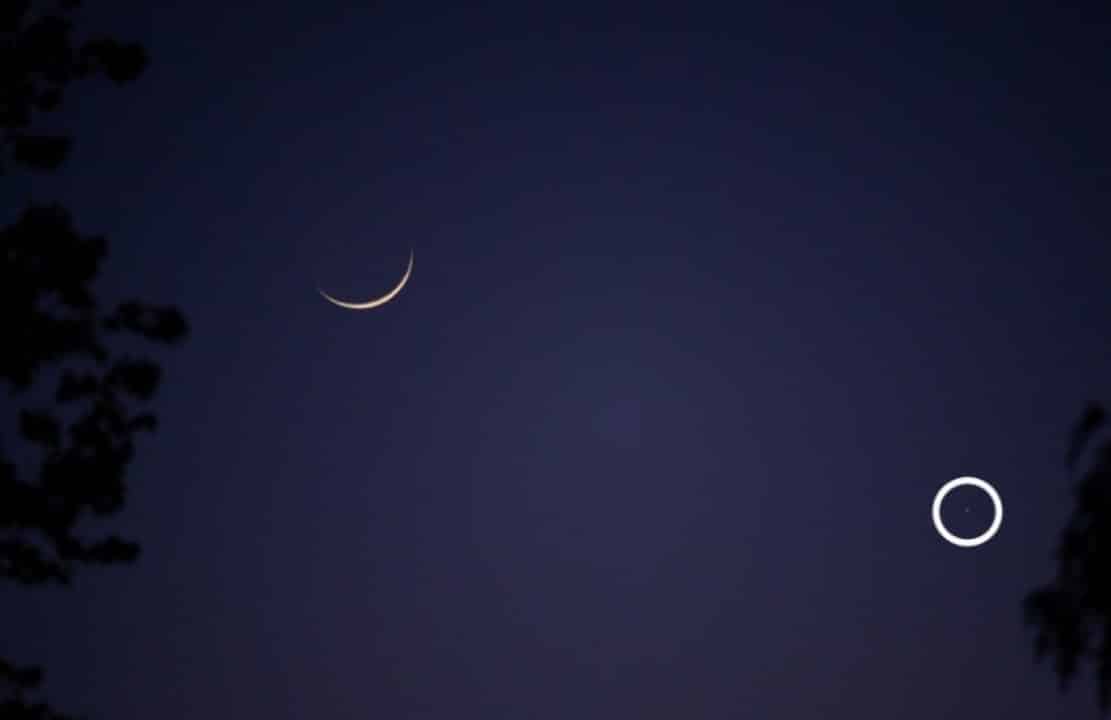
Comet C/2025 R3 offers observation opportunity
Comet C/2025 R3, also known as PanSTARRS, should achieve good visibility throughout the month. April 17th represents the best window for observation attempts, according to experts. Ele moves in the region of the constellations of Pégaso and above Peixes in the eastern sky.
Estimates indicate that the comet could reach magnitude around 8, which generally requires binoculars or a small telescope for a clear view. The tail may become noticeable under ideal dark conditions. No Hemisfério Norte, observation occurs in the hours before dawn during the second half of April.
At Hemisfério Sul, the comet should appear more easily on the nights of early May, still with a good altitude in the sky. The minimum distance of Terra occurs on April 27th, around 71 million kilometers. Essa pass allows the object to gradually gain brightness as it approaches Sol.
Líridas meteor shower promises activity at the end of the month
The Líridas meteor shower, originating from debris from comet Thatcher, records its moment of greatest intensity between April 21st and 22nd. The meteors appear to radiate from the direction of the constellation Lira, close to the star Vega, one of the brightest in the night sky. Expected Taxas are around 10 to 20 meteors per hour in dark places.
The activity begins at 10 pm on the 21st and continues into the early hours of the 22nd. Lua in a favorable phase reduces interference from natural light, improving visibility conditions. Observadores must position themselves with a wide view to the east and avoid sources of artificial lighting.
Practical tips for observing the sky in April
Preparing the equipment in advance increases the chances of success. Binóculos or a portable telescope helps detect the comet and finer details of the meteors. Aplicativos astronomy or star maps help identify the constellations involved.
Choosing locations away from large cities minimizes the impact of light pollution. Noites no clouds and clear skies are essential to follow these events. Patience also counts, as some phenomena require time for the eyes to adapt to the darkness.
Lua phases and additional considerations
Lunar phases directly influence the quality of night observation. Períodos to Lua nova or thin crescent offer darker skies, ideal for meteors and comets. Consultar astronomical calendars help you plan trips with greater precision.
Enthusiasts can record the events with simple cameras or smartphones attached to telescopes. Compartilhar images in specialized communities contribute to the collective monitoring of these phenomena. NASA maintains regular updates on missions and observations of the solar system on its official channels.
Comet gains strength as it approaches Terra
The trajectory of C/2025 R3 allows it to be followed for several weeks. Após perihelion, the comet can present variations in brightness that are of interest to amateur and professional astronomers. The passage at about 71 million kilometers represents a safe distance, but close enough for detailed observation.
Astronomers monitor the behavior of these celestial bodies to better understand the composition of comets coming from distant regions of the solar system. Dados collected during the visibility of 2026 can enrich studies on planetary formation. Gradual visibility allows observers to track progress throughout the days.
The month of April 2026 combines different types of celestial events into one accessible sequence. Mercúrio opens the opportunities at the beginning, the comet dominates the intermediate attention and the Líridas closes with meteor activity. Quem If you prepare in advance, you can record multiple phenomena in the same observation season.
