


South Korean producer Pearl Abyss faced a long and complex development process for its latest action-adventure title. Durante Over a period of five years, the technical team and dubbing cast had to adapt to profound structural changes that altered the course of the original project. Actor Alec Newman, responsible for voicing the protagonist in the English version, shared details about the behind-the-scenes of this production that required constant flexibility from all professionals involved.
The professional described the recording experience as an environment of initial uncertainty, where the complete scope of the work was not fully defined for the actors in the studios. Essa work dynamics generated an irregular flow of activities, alternating between prolonged breaks and very high-intensity sessions in the audio capture studios, requiring unusual readiness for the digital entertainment market.
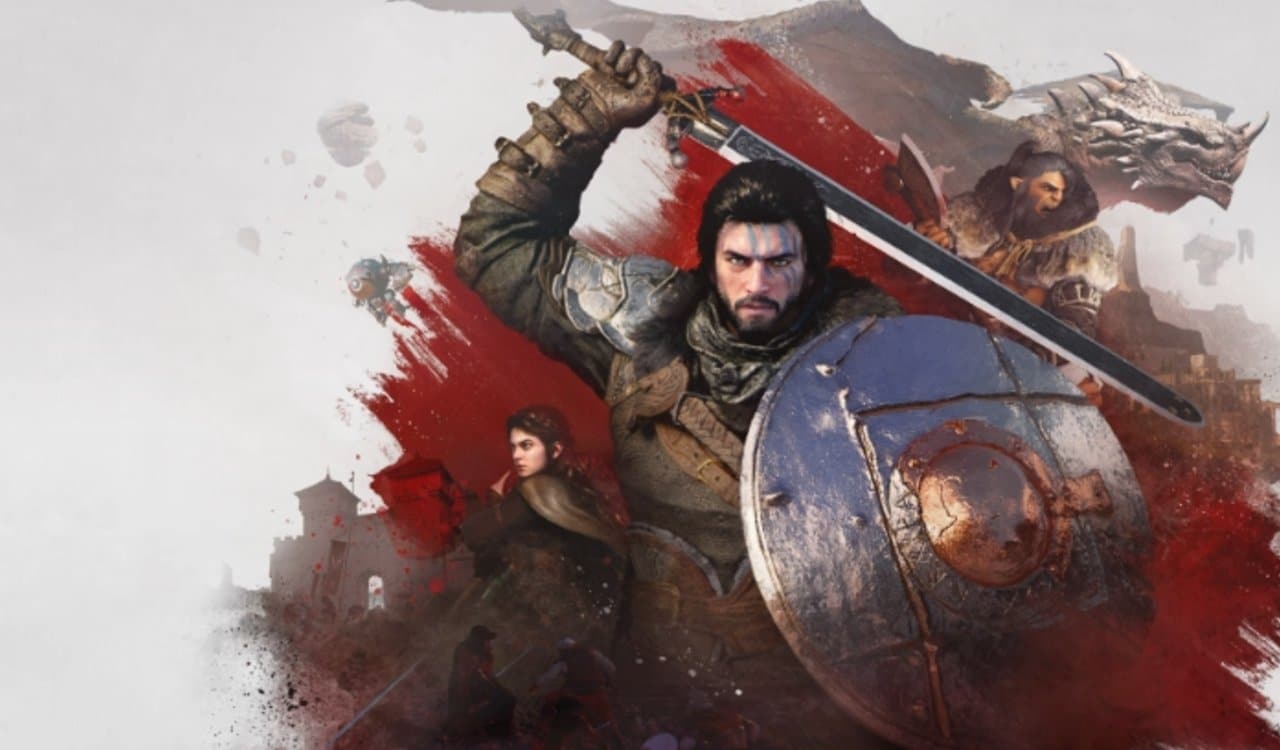
The approach adopted by the developer reflects a significant transition in the design of the software, which was initially conceived for the online multiplayer market. With the decision to focus on a single-user experience, the narrative had to be rebuilt from scratch while the combat and exploration systems were already being programmed and tested internally by the engineering team.
Format transition and impact on early recordings
The change from a format focused on massive interactions to a solitary campaign required the writing team to rethink the entire foundation of the created universe. Newman reported that, during the first eighteen months of work, the cast’s perception was that they were recording lines only for an isolated technical demonstration, without understanding the magnitude of the final product. Essa lack of a fixed narrative direction from the first day of the studio created a scenario where the characters’ motivations were adjusted according to the immediate needs of the programming and level design team.
The voice actor showed that the company began the process of capturing voices without all the elements of the plot being properly finalized on paper. The initial focus seemed to be on the construction of the fictional continent and the establishment of its political factions, leaving the main thread of the protagonist’s journey in the background. Quando studio management finally decided to accelerate the pace of consolidating the story, the actors were surprised by the immense volume of work needed to fill the gaps left by years of technical experimentation.
Protagonist’s identity change and fragmentation
The fluidity with which intellectual property was handled is evident in the very conception of the main character in the plot. In preliminary versions of the script delivered to the dubbing studios, the protagonist went by the name MacDuff.
With the advancement of development and the company’s internal restructuring, the hero’s identity was definitively changed to Kliff. Essa modification symbolizes the constant revisions that the creative team carried out to adapt the central figure to the new tone of the adventure.
The information provided to the actors arrived in a fragmented manner, often divided into isolated faction cards. Newman detailed that he received specific data about different regions of the map, but it took him a while to understand the greater purpose of his character’s actions.
This fragmentation required continuous adaptability on the part of the voice cast during the sessions. The protagonist’s loyalties and objectives were shaped in real time, following the changes that occurred in the software’s source code.
Priority of the graphics engine over the linear narrative
The decision to focus on refining mechanics to the detriment of a pre-established story has become a trademark of this South Korean production. The developer has invested massive resources into its proprietary technology to ensure a high level of visual realism.
The main objective of the executive body was to allow the virtual environment to react organically to users’ actions. The company’s CEO publicly reinforced that the technical priority was to guarantee a revolutionary and interactive combat system.
This strategic choice forced the script department to race against time to deliver the material. Writers needed to adapt lines and interactions to a scenario that constantly changed rules, requiring frequent re-recordings to maintain coherence.
Logistical challenges in building the virtual world
The game’s vast setting was the scene of several geographical experiments that directly impacted the volume of dialogue captured. The references given for action were based on territories that often ended up being redesigned by the digital architecture team.
This lack of a fixed topographic base created immense logistical challenges for audio direction and location. The actor had to re-record countless lines of dialogue simply to ensure the location and character names were up to date with the latest version of the map.
Contractual stability amid project uncertainties
Experts in the digital entertainment sector point out that the practice of building fundamental systems simultaneously with the creation of the story is common in very high-budget projects that try to raise the graphic level of the current generation. Neste In this specific case, the approach resulted in a protagonist who needed half a decade of continuous interpretation to find his definitive voice amidst so many script and design changes. Apesar environment of constant change, the contractual stability offered to Alec Newman allowed him to follow all this evolution closely, guaranteeing the character a vocal and emotional consistency that would be difficult to achieve if there were frequent cast changes. The presence of the same professional throughout the production cycle worked as an anchor for the hero’s identity, providing a solid basis for action while the world around him was repeatedly remade by the company’s programmers and visual artists.
Technical reception and the future of updates
The global market’s reception brought to light the debate about the importance of the script in titles focused on high graphic performance. The commercial success indicates that the commitment to a robust combat system was enough to compensate for the narrative fluctuations perceived by the consumer public.
Details revealed about behind-the-scenes production
Revelations made during recent interviews expose the unpredictable reality of the large-scale video game industry. Transparency about flaws in the initial definition of the project helps to demystify the creation of large interactive works and the work of voice actors.
Some of the most striking points of the development process include the following facts reported by the actor:
– The main character’s original name was changed from MacDuff to Kliff during the sessions.
– The total period of voice recordings extended for approximately five uninterrupted years.
– The narrative was initially constructed through faction cards before gaining a central arc.
– The actors worked for months believing that the material would only be used for internal testing.
Impact of Proprietary Technology on Mission Design
The use of an exclusive graphics engine allowed the developer to create physics and artificial intelligence systems that did not depend on traditional scripts. Isso means that many of the missions and encounters in the virtual world occur procedurally, which makes it difficult to implement pre-recorded linear dialogue. The sound team needed to develop a modular voice bank, where the protagonist could react to unscripted events in a natural way, considerably increasing the workload in the recording studios.
This design methodology focused on emergent systems requires actors to record multiple variations of the same phrase to cover all possibilities for player interaction. The complexity of this task explains, in large part, the extension of the five-year contract signed with the main cast, ensuring that the studio would have continuous access to the original voices whenever a new mechanic was introduced or changed in the game’s code.
Balance between combat mechanics and immersion
The producer continues to work on continuous updates, seeking to balance the consumer experience with new content and software refinements. The focus remains on emergent gameplay, where conflict situations arise naturally through interaction with the digital ecosystem, without relying exclusively on rigid script triggers.
The creation process serves as a case study on how technology dictates the direction of a work in contemporary industry. Onde Before, the text guided the programming, today the code defines the limits and possibilities of the narrative, resulting in a final product that prioritizes mechanical innovation as a way of conquering the global entertainment market.



