

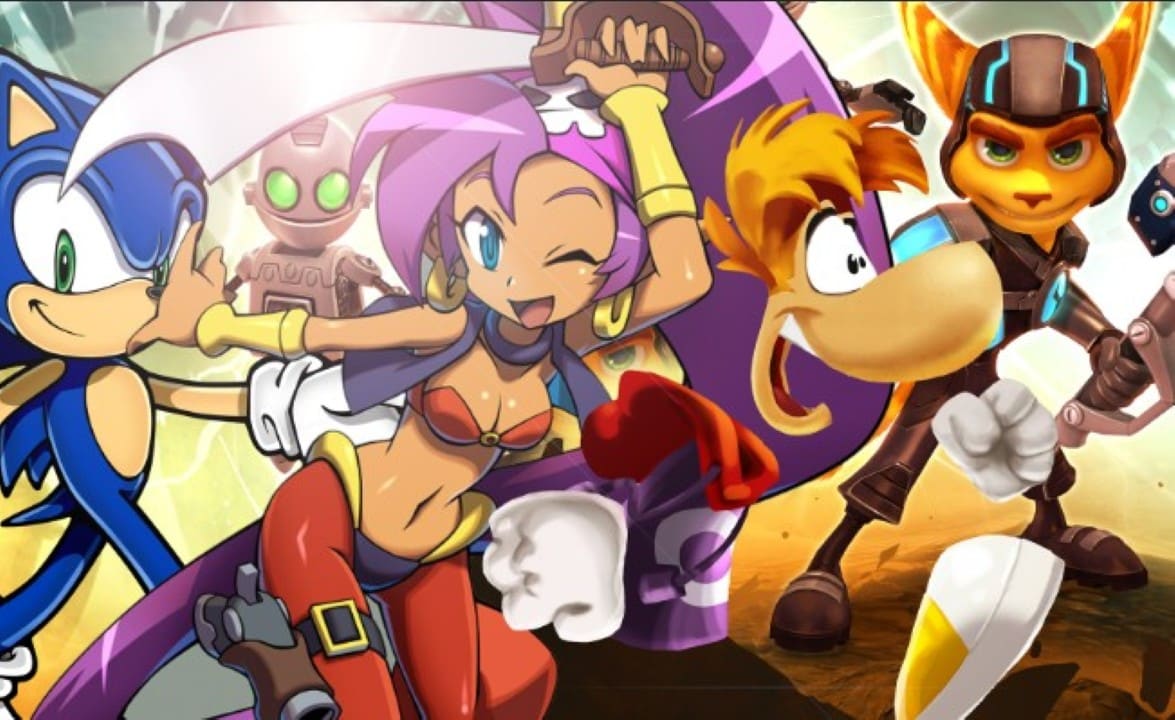
The platform game genre, characterized by navigation through complex environments through jumping and climbing, has been a fundamental pillar of the video game industry since its beginnings. Sua ability to evolve and adapt to new hardware and software technologies has ensured its permanence and relevance over decades. Desde From early 2D experiments to complex 3D landscapes and contemporary indie experiences, platformers continue to delight players of all ages, demonstrating remarkable versatility.
With each new generation of consoles, the genre has been redefined, incorporating new mechanics, improved graphics and more immersive narratives. Essa constant reinvention has not only maintained public interest, but has also directly influenced the development of other genres, solidifying the role of platformers as true catalysts for innovation in the industry. The journey through the console eras is a testament to the creativity and ingenuity of the developers who shaped this beloved segment.
Castlevania: Belmont’s Curse is the first Castlevania project to celebrate the franchise’s 40th anniversary. The project is being developed by the same people as Dead Cells!!!pic.twitter.com/936ZIAYfQq
— Daniel #OfertasNintendo Reenlsober 👾 (@danielreen)February 12, 2026
The beginnings and establishment of the bases
At the dawn of video games, platform games began to take shape, establishing the mechanics that would define the genre. Títulos like *Donkey Esses early examples, with their technical limitations, focused on precision movements and overcoming simple but captivating environmental challenges.
Graphical simplicity and straightforward gameplay were the keys to the success of these pioneering titles. Eles introduced fundamental concepts like moving platforms, ladders, and enemies with predictable movement patterns, creating the foundation for everything that would follow. The fun lay in the repetition and improvement of the player’s skills, who sought to master each phase and achieve higher scores, an entertainment model that deeply resonated with the public at the time.
The 8-bit era and the rise of icons
The arrival of 8-bit consoles, notably the Nintendo Entertainment System (NES), marked a true revolution for platform games. Foi in this generation that the genre solidified its identity and gave rise to some of the most iconic franchises in history. *Super Mario Bros.*, released in 1985, not only saved the video game industry, but also set a new standard for level design, precise jumping mechanics, and innovative power-ups.
In addition to Mario, other titles such as *Mega Man* and *Castlevania* demonstrated the genre’s flexibility, incorporating action and exploration elements that expanded its borders. The complexity of the levels increased, the graphics became more detailed and the soundtracks became memorable, contributing to players’ immersion. Nintendo, in particular, proved to be a master at creating platform experiences that were accessible yet challenging, captivating millions of fans around the world.
This generation was crucial in defining the visual and interactive language of platform games. The colorful worlds and charismatic characters have become synonymous with electronic fun, and the gameplay based on precise jumping and careful exploration has been refined to a point of excellence. The durability and cultural impact of these 8-bit titles is undeniable, with many of them being revisited and celebrated to this day for their timeless genius and lasting influence.
The 16-bit transition and the explosion of creativity
The 16-bit era, dominated by the Super Nintendo Entertainment System (SNES) and the Sega Mega Drive (Genesis), elevated platform games to new levels of sophistication. With more powerful hardware, developers were able to create richer graphics, orchestrated soundtracks, and more complex game mechanics. *Super Mario World*, for example, introduced a non-linear world map and the ability to ride a dinosaur, expanding exploration and gameplay variety.
The fierce competition between Nintendo and Sega resulted in an explosion of creativity. *Sonic the Hedgehog* emerged as a fast-paced counterpoint to Mario, focusing on speed and extreme loops, while *Donkey Essa generation also saw the emergence of titles with a darker and more challenging atmosphere, such as *Metroid*, which mixed platforming with non-linear exploration and adventure elements.
16-bit platformers not only improved on the foundations laid by their predecessors, but also dared to experiment with new concepts and visual styles. The depth of the worlds, the diversity of enemies and the introduction of new moves and abilities for characters transformed the gaming experience. The 16-bit era is often remembered as a golden period for the genre, marking a peak of innovation and popularity that resonates to this day.
The 3D revolution and the new perspective
The arrival of 32- and 64-bit consoles, such as the Nintendo 64 and the PlayStation, represented a seismic shift for platform games, which had to adapt to the new dimension. *Super
Other franchises such as *Crash Bandicoot* on PlayStation and *Banjo-Kazooie* on Enquanto Crash opted for a more linear style, with fixed cameras that simulated depth, Banjo-Kazooie embraced the concept of open worlds full of secrets and collectibles. The transition to 3D was not without its challenges, especially with regards to control and camera, but these pioneering titles paved the way for future innovations, showing the immense potential of the new dimension for exploration and gameplay.
Diversification and refinement in the sixth generation
The sixth generation of consoles, with the PlayStation 2, Xbox and GameCube, saw the 3D platform genre mature and diversify further. The developers learned from the previous generation’s challenges and refined the controls, cameras, and level design. Franquias like *Jak and Daxter*, *Ratchet & Clank* and *Sly
This generation also experimented with varied visual styles, from the cartoonishness of Ratchet & Clank to the *stealth* charm of Sly Cooper. The narrative in platform games began to gain more prominence, with more developed characters and more elaborate plots. The genre proved it could go beyond “just jumping” by offering vast worlds to explore, clever puzzles to solve, and dynamic combat, solidifying its position as one of the most adaptable and enduring in the industry. The ability to create cohesive worlds full of personality became a differentiator, attracting players who were looking for more than just skill challenges.
Innovation and accessibility in the seventh generation
The seventh generation of consoles, consisting of the Xbox 360, PlayStation 3 and Wii, brought new perspectives to the genre. O Wii, com seus controles de movimento, revitalizou o interesse em jogos de plataforma mais acessíveis e inovadores, como *Super Mario Galaxy*, que explorava a gravidade e o design esférico de planetas de maneiras criativas. On PS3, *LittleBigPlanet* introduced user content creation, allowing players around the world to design and share their own platform levels, extending the game’s longevity exponentially and fostering a creative community. Essa era demonstrated that innovation didn’t just need to come from photorealistic graphics, but also from new forms of interaction and community engagement.
Return to roots and the independent era
The eighth generation of consoles, including PlayStation 4, Xbox One and Nintendo Switch, has seen a resurgence of 2D platformers, often with a modern twist. Títulos independents like *Celeste* and *Hollow Knight* have been critically acclaimed for their challenging gameplay, stunning art direction, and deep narratives. Nintendo Switch, in particular, has become a home for diverse platformers, with *Super Mario Odyssey* redefining the 3D genre once again with its enemy capture mechanics and innovative open worlds.
This era also consolidated the idea that intelligent design and developer passion are more important than million-dollar budgets. Muitos of the best platformers of this generation came from smaller studios, proving that creativity and flawless execution can overcome any technical barrier. The diversity of styles and subgenres within the platform has flourished, offering something for everyone, from fans of extreme challenges to those who prefer more relaxing experiences.
Modern platforms and the future of the genre
The current generation of consoles, with PlayStation 5 and Xbox Series X/S, continues to push technological boundaries, enabling even more detailed graphics and more immersive worlds. The platform genre continues to evolve, exploring new forms of narrative and game mechanics. Accessibility has become a greater focus, with options that allow more players to enjoy these experiences.
The future of platform games looks promising, with trends pointing towards:
* Integration of elements from other genres:RPG, *roguelike* and adventure.
* Greater emphasis on narratives:Contando more complex and emotional stories.
* New technologies:Virtual and augmented Realidade offering unprecedented perspectives.
* Cooperative and Multiplayer Gameplay:Expandindo social interaction.
* Innovation in accessibility:Opções for players with different needs.
The genre’s ability to reinvent itself and embrace new ideas ensures that platform games will continue to be a vital force in the video game industry, adapting to player expectations and technological possibilities. The genre, which began with a gorilla and a plumber, proves that the essence of jumping and exploration is timeless.



