


Comet C/2026 A1 (MAPS) experiences decisive hours in its trajectory towards Sol. Descoberto on January 13, 2026 by four amateur astronomers in the desert region of Atacama, at Chile, the celestial object belongs to the sungrazer family Kreutz. Ele is expected to reach perihelion this Saturday, April 4, 2026, at 10:24 a.m. Estados Unidos East Coast time, when it will pass just 162,700 km above the solar photosphere.
The estimated speed reaches 518 km per second in a tight curve around the star. Observadores use real-time images from the LASCO C3 camera on the SOHO probe to follow the comet from April 2nd. The small nucleus, with a diameter estimated at around 0.4 km according to analyzes by telescope James Webb, faces extreme conditions of heat and gravity that could determine its fate.
- Discovered by Alain Maury, Georges Attard, Daniel Parrott and Florian Signoret using 11-inch telescope.
- MAPS name forms an acronym for the discoverers’ surnames.
- It belongs to the class of comets Kreutz sungrazers known for passages very close to Sol.
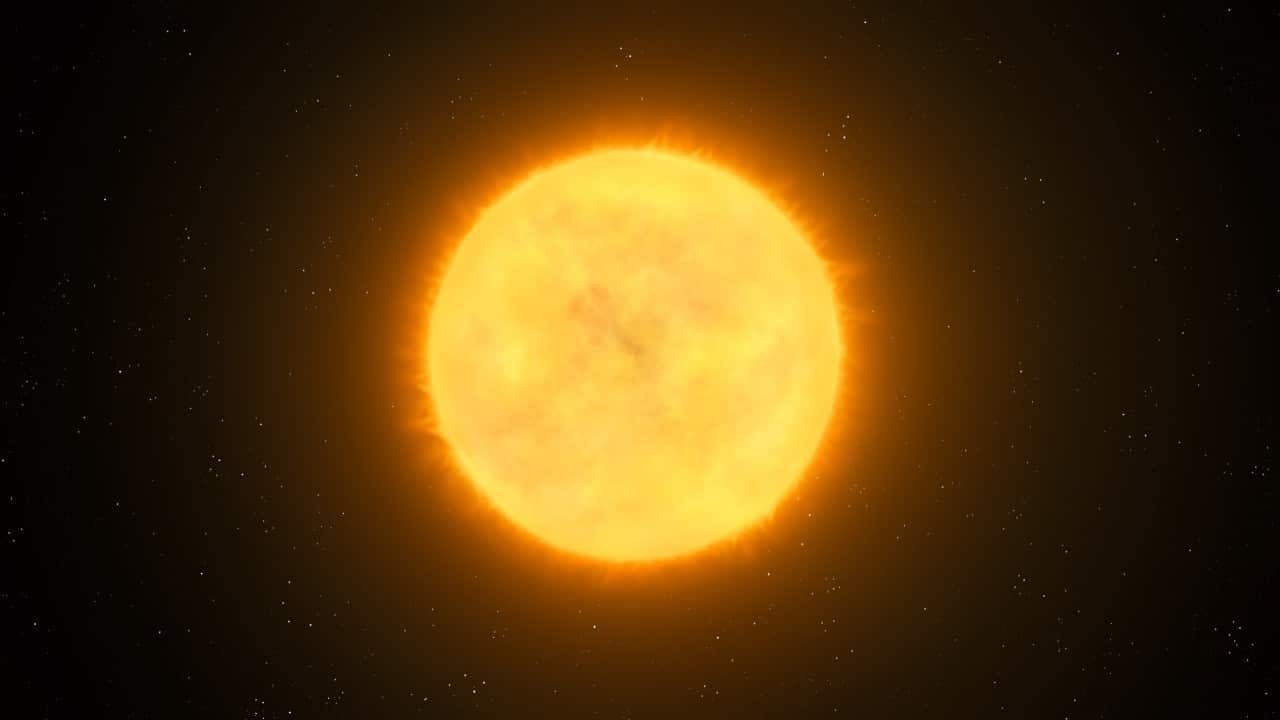
Extreme trajectory of comet sungrazer
The path of comet C/2026 A1 (MAPS) describes a record close approach to Sol. At perihelion, the object should pass behind the solar disk as seen from Terra and then reappear in front. Imagens from SOHO shows the comet entering the field of view of the C3 camera from 12:00 GMT on April 2nd and remaining visible until 5:00 GMT on April 6th.
Experts monitor possible changes in brightness caused by intense heating. The comet can undergo fragmentation even before reaching the closest point due to gas release torques. Três main scenarios are considered: complete disintegration at perihelion, partial survival with later fragments or maintenance of structural integrity for a longer period of time.
All sungrazers Kreutz observed historically have suffered some type of rupture during or after close passage. The small size of the core increases the likelihood of disruption under solar forces.
Risks and expected behavior during perihelion
Astronomers highlight the inherent unpredictability of comets. The object may rapidly increase in brightness if it survives the initial approach. Previsões indicate the possibility of daytime visibility if the comet reaches sufficient magnitude, although observation requires extreme care to avoid damage to vision caused by proximity to Sol.
After perihelion, the comet should head towards the western sky at dusk. Entre On April 8 and 14, observers at mid-latitudes in the Northern Hemisphere can look for a possible dust trail on the western horizon about 45 to 60 minutes after sunset. Binóculos help detect faint structures like narrow tails.
Comparison with historical comets sungrazers
Comet Lovejoy from 2011 passed about 140,000 km from Sol and initially survived perihelion, but fragmented days later, displaying a straight 30-degree tail with no visible nucleus. Já the 1965 comet Ikeya-Seki, with a larger nucleus of approximately 8.7 km, split into three parts but produced a daytime brightness of magnitude -10 with a prominent tail.
Grande Cometa of Sul of 1887, also from the Kreutz family, became known as “Wonder Sem Cabeça” after the passage, when it showed only a pale tail with no visible core. The 2013 comet ISON, although not Kreutz, disintegrated before perihelion at a greater distance of 1.16 million km.
These examples illustrate the variety of possible outcomes when comets come so close to Sol. MAPS has an even smaller estimated nucleus than many of these previous cases.
Safe observation and scientific monitoring
The SOHO probe continues to provide coronagraphic images that allow monitoring of the comet without direct exposure to Sol. The data helps understand the behavior of sungrazers under extreme temperature and radiation conditions. Atualizações orbitals were published in the CBAT circular to refine the predictions.
Anyone in places with clear skies in the northern hemisphere should look west after sunset in the days following perihelion. The tail, if formed, may appear as a narrow strip of dust in the twilight. Telescópios or binoculars make detection easier, but should never be pointed at Sol during the day.
Expectations surrounding the post-perihelion glow
The comet can develop intense sublimation activity as it heats up. Caso survive, the increase in brightness occurs quickly in the following hours and days. Previsões Optimists point to naked-eye visibility for a short period, especially between April 6 and 10, depending on atmospheric conditions and how much volatile material remains.
Astronomers remember that comets follow individual behaviors that are difficult to anticipate with complete precision. Monitoring by multiple observatories and space probes provides valuable data on the composition and dynamics of these celestial bodies originating from the distant regions of Sistema Solar.
Technical details of the solar passage
The minimum distance of 101,100 miles (about 162,700 km) places the comet in a zone of strong gravitational and thermal influence. The speed of 322 miles per second is equivalent to more than 518 km/s at the closest point. Gráficos trajectory shows the hairpin path around Sol.
Images from LASCO C3 capture the comet moving across the camera’s field of view. The object must first pass behind Sol and then emerge in front according to the observed geometry of Terra. Essas observations contribute to models of the evolution of sungrazer comets.
Possible results after meeting Sol
The nucleus may fragment completely or release large amounts of dust and gas that form a visible tail. In more favorable scenarios, the comet emerges with a long, narrow tail in the twilight sky. Daytime visibility would depend on exceptional brightness, but always with a risk of eye damage if observed without adequate protection.
Professional equipment and images from SOHO allow detailed study without the need for risky direct observation. The event offers a rare opportunity for scientists to analyze interactions between comets and the solar atmosphere.
Comet C/2026 A1 (MAPS) completes its critical solar approach phase this April 4, 2026. Sua trajectory and behavior will be monitored by ground and space observatories in the coming weeks. The results of the passage will define whether the object will become a visible spectacle or whether it will only leave scientific records of its disintegration.



