

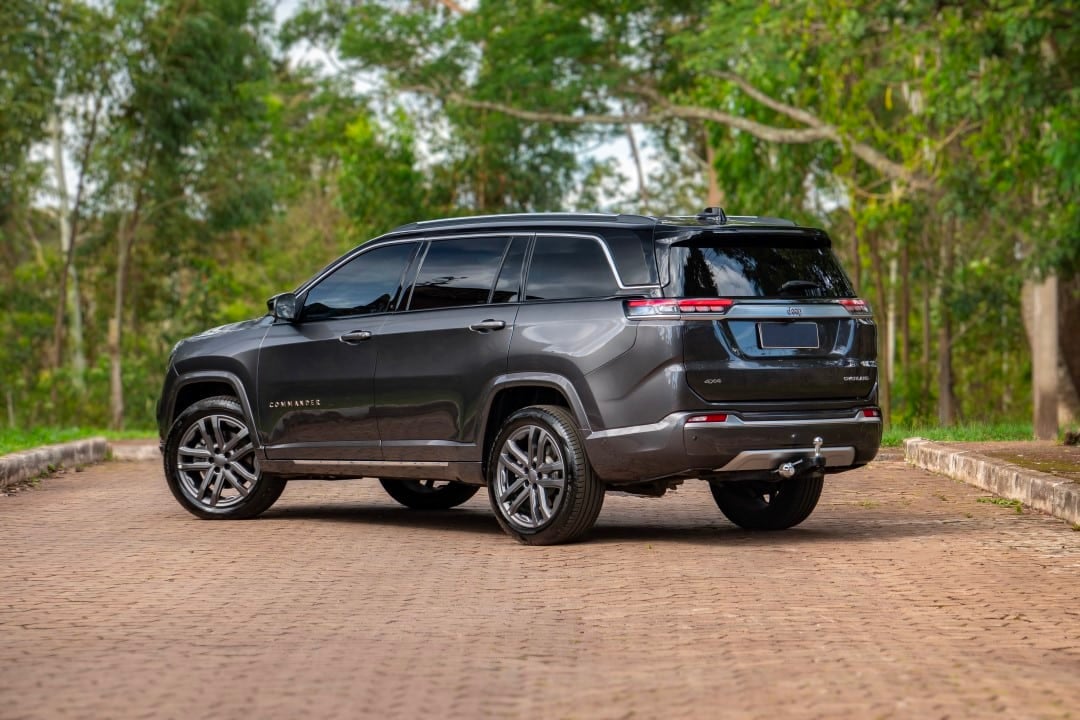
The North American manufacturer officially announces the arrival of the new range of its seven-seater sports utility vehicle on the automotive market. The vehicle receives substantial modifications to its mechanical architecture, adopting partial electrification in specific configurations to optimize energy yield in daily use and meet new efficiency demands.
The main mechanical change focuses on the integration of the 48-volt light hybrid package, which now equips the intermediate options in the portfolio. Essa technology works in conjunction with the existing combustion engine, ensuring greater smoothness when accelerating and regaining speed, without altering the driving dynamics already known by the brand’s consumers.

In parallel with electrification, the automaker made adjustments to the calibration of the version with a sporty appeal, which now accepts two types of fuel without losing its power characteristics. The changes follow the standard adopted in other vehicles on the same platform sold by the company, seeking standardization and reduction of production costs.
The main guidelines of the new line include the adoption of an auxiliary electrical system in versions Limited and Overland, the conversion of the high-performance engine to flexible technology and the maintenance of the diesel-powered option for those who need power for off-road driving.
Mechanical updates to the hybrid engine
Configurations Limited and Overland receive the electrified system associated with the 1.3 turboflex engine, commercially known as T270. Esse powertrain is capable of delivering 176 maximum horsepower and 27.5 kgfm of torque, numbers that guarantee agility to the large vehicle in different traffic situations.
The additional electrical component acts directly in moments of greatest demand, providing extra support of up to 6.6 kgfm of torque. Essa assistance occurs mainly when leaving traffic lights and overtaking, relieving the effort of the thermal engine and, consequently, reducing fuel consumption in the urban cycle.
Official data from Inmetro indicate that the sports utility vehicle reaches the 11 km/l mark in the urban cycle when fueled with gasoline. Esse number represents an improvement of up to 9.4% in energy efficiency compared to the previous generation, which used only the traditional combustion engine without any type of electrical assistance.
In addition to savings at the gas station, the technology provides a cleaner operation for the environment. The reduction in carbon dioxide emissions reaches 5% in combined use between urban and highway routes, aligning the vehicle with the new pollutant control requirements established by regulatory bodies.
Preserved performance in sports configuration
The top-of-the-line option, called Blackhawk, underwent a recalibration of its 2.0 turbo engine from the Hurricane family, which now has the ability to operate on both gasoline and ethanol. Apesar of the change to the dual-fuel system, the brand’s engineering managed to keep the performance figures intact, delivering the same 272 horsepower and 40.8 kgfm of torque that have characterized the version since its original launch. Essa strategy allows consumers to have greater freedom of choice when refueling, depending on the variation in fuel prices in their region, without giving up the vigorous acceleration and final speed that define the model in the segment.
To make the high-performance configuration more competitive in the premium sports utility vehicle market, the manufacturer applied an aggressive financial repositioning, reducing the suggested value to the consumer by R$6,500. Essa price decrease occurs in isolation, as the other options in the portfolio maintained their values or underwent minimal adjustments in accordance with inflation. The commercial decision aims to attract customers looking for a family vehicle with sporty driving dynamics, competing directly with models from traditional luxury brands, offering a complete equipment package and on-demand all-wheel drive to guarantee stability at high speeds.
Updated official table of values
The vehicle’s sales structure was reorganized to accommodate new technologies, maintaining a purely combustion entry option and offering diesel engines to specific customers. Suggested prices reflect the new positioning of the range at dealerships.
– Versão Longitude T270: R$ 228,790
– Versão Limited electrified T270: R$ 255,690
– Versão Overland electrified T270: R$ 283,790
– Versão Overland 2.2 Turbodiesel with all-wheel drive: R$ 319,990
– Versão Blackhawk dual-fuel: R$ 329,990
Tax advantages for owners
The adoption of the 48-volt electrified system legally classifies the vehicle as a hybrid model, which guarantees access to tax benefits in several regions of the country. Atualmente, six states offer some type of incentive in the collection of Imposto over Propriedade of Veículos Automotores for this engine category.
Depending on current state legislation, the owner can obtain a total exemption or significant discounts on the annual tax rate, generating savings that can reach R$9,000. In the capital of São Paulo, drivers of these versions also receive authorization from the municipal vehicle rotation, facilitating daily mobility during peak hours.
Preservation of internal space and security
Despite the changes to the engine compartment, the internal architecture of the sport utility vehicle has not undergone any changes that would compromise its main commercial proposal. The cabin continues to offer three rows of seats, accommodating seven adult passengers with adequate comfort for long trips and urban commutes.
The luggage compartment maintains its original volume, allowing the transport of large objects when the third row of seats is folded down. The interior finish continues to use soft-touch materials, leather and suede coverings, in addition to maintaining the entertainment system with a floating screen and wireless connectivity for smartphones.
In terms of occupant protection, the advanced driving assistance package remains standard equipment across a large part of the range. The vehicle features autonomous emergency braking with pedestrian recognition, lane keeping system, adaptive cruise control, blind spot monitoring and a set of six inflatable bags distributed throughout the cabin.
Technical functioning of the electrical assembly
The mild hybrid system replaces the conventional alternator and starter motor with a single high-capacity electrical generator, connected to the thermal engine via a reinforced belt. Essa The electric machine is powered by a compact lithium-ion battery, installed in a strategic location so as not to steal space from passengers or the area intended for cargo transport.
During braking and speed reduction, the generator reverses its operation and starts to act as an engine brake, transforming the kinetic energy that would otherwise be wasted into electricity to recharge the auxiliary battery. Todo This energy management process occurs automatically and imperceptibly for those behind the wheel, requiring only normal driving of the vehicle on a daily basis.
Strategic positioning in the utility segment
The technological renewal of the seven-seater utility vehicle reflects the automotive group’s global strategy to promote a gradual energy transition, offering solutions that improve efficiency without requiring drastic changes in consumption habits or dependence on external charging infrastructure. By introducing mild hybridization in the highest sales volume versions, the brand is able to reduce the average emissions of its commercialized fleet, meeting the strict government environmental standards that come into force in the coming years. Simultaneamente, diesel engine maintenance meets a captive demand from the agricultural market and from customers who undertake long road journeys, where autonomy and strength at low speeds are decisive factors for the purchase. The conversion of the high-performance engine to dual-fuel technology demonstrates the capacity of local engineering to adapt global engines to the reality of national supply, creating a diversified portfolio that manages to shield the model against competition from new Asian utility vehicles that have been gaining ground in the premium segment. With this move, the manufacturer consolidates its leadership in the category of large family vehicles, balancing tradition in the ability to overcome obstacles with contemporary demands for sustainability and operational economy in everyday use.



