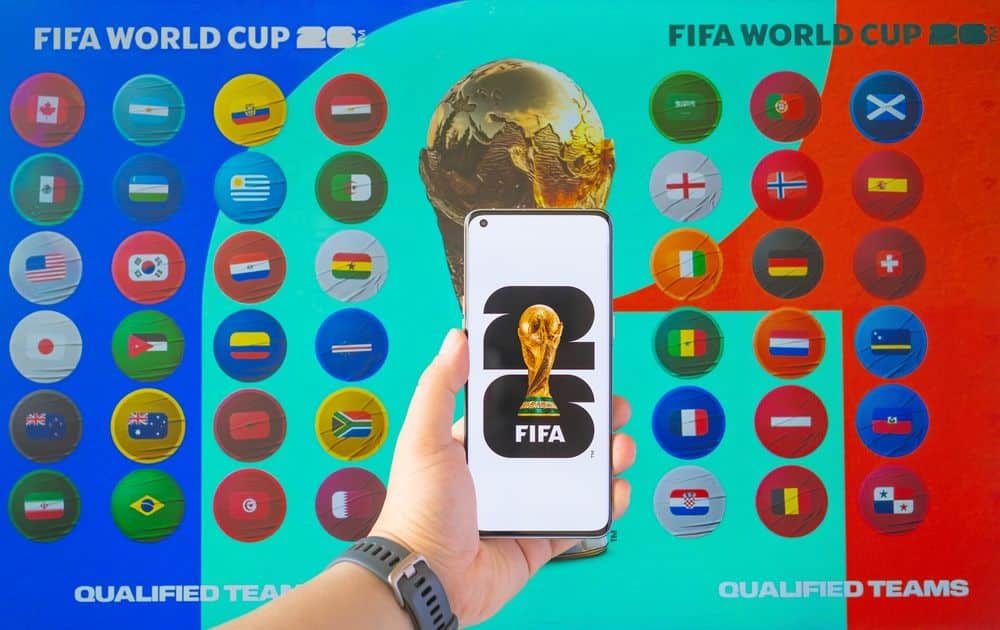
The 2026 World Cup will have 48 teams with games in 16 cities in North America and Mexico By Thiago Lemos
8 min read
 |
The countdown to the biggest show of Terra entered its decisive phase with the detailed release of the match schedule. Copa of Mundo of 2026, which will be hosted jointly by Estados Unidos, México and Canadá, promises to be the biggest edition in history, with the participation of 48 national teams for the first time. The tournament is scheduled to take place between June 11th and July 19th, spreading the excitement of football to 16 different host cities across the North American continent.
This new competition format brings significant changes to the group structure and the path to the grand final. The teams will be distributed into 12 groups of four members each, guaranteeing an unprecedented volume of clashes in the initial phase. The knockout phase, which will now include a round of 16 stage, is scheduled to begin on June 28, increasing tension and competitiveness after the first 17 days of intense competition on the pitch.
Brazilian fans can now mark Seleção Canarinho appointments in their diaries in search of the long-awaited six-time world championship. Brasil’s debut will take place on June 13th, a Saturday, at 7pm (local time), facing the Marrocos team in a duel valid for Grupo C. Abaixo, we highlight some fundamental points about the logistics and the first steps of the main powers in the tournament:
- Official opening: México x África do Sul on June 11th, at 4pm local time.
- Hosts debut: Estados Unidos plays against Paraguai on June 12, at 10pm local time.
- Brazil on the field: Além of Marrocos, the team will face Haiti on June 19th and Escócia on June 24th.
- Host cities: The games take place simultaneously in different time zones between the three organizing countries.
No more hypotheticals. 104 matches. Let it begins. 🫨#FIFAWorldCup pic.twitter.com/asxkk4bxhR
— FIFA World Cup (@FIFAWorldCup)April 1, 2026
Distribution of groups and headquarters on América of Norte
Fifa’s planning for this edition prioritized regionalization to minimize large movements of teams and fans during the first phase. México, a country with a huge football tradition, will have the honor of hosting the opening match, while Estados Unidos and Canadá will host the bulk of the matches as the tournament moves into the acute stages. The division into 12 groups allows the best teams to advance with a margin of safety, but also opens up space for smaller nations to surprise on the international stage.
Each selected city underwent rigorous infrastructure inspections to ensure that the stadiums and training centers meet the standards of excellence required by football’s highest governing body. Cidades as well as Nova York, Los Angeles, Cidade of México and Toronto will be stages of historic clashes, reflecting the cultural diversity and passion for sport in the region. The local organizing committee works together with government authorities to facilitate the movement of tourists between the borders of the three countries during the 39 days of competition.
Detailed group stage schedule and local times
Below, we present the organization of the first matches of the competition, essential for those who want to follow each move. The schedules follow the local reference of each host city:
June 11th (Thursday)
- 4pm – México x África from Sul (Group A)
- 11pm – Coreia from Sul x Tchéquia (Group A)
June 12th (Friday)
- 4pm – Canadá x Bósnia (Group B)
- 10pm – Estados Unidos x Paraguai (Group D)
June 13th (Saturday)
- 4pm – Catar x Suíça (Group B)
- 7pm – Brasil x Marrocos (Group C)
- 10pm – Haiti x Escócia (Group C)
- 01h (Sunday) – Austrália x Turquia (Group D)
June 14th (Sunday)
- 2pm – Alemanha x Curaçao (Group E)
- 5pm – Holanda x Japão (Group F)
- 8pm – Costa from Marfim x Equador (Group E)
- 11pm – Suécia x Tunísia (Group F)
June 15th (Monday)
- 1pm – Espanha x Cabo Verde (Group H)
- 4pm – Bélgica x Egito (Group G)
- 7pm – Arábia Saudita x Uruguai (Group H)
- 10pm – Irã x Nova Zelândia (Group G)
The tournament organizers have confirmed that there will be play windows that extend from early afternoon to late-night matches that may end after midnight in certain regions. On June 16th, for example, França faces Senegal at 4pm, followed by the clash between Iraque and Noruega at 7pm. Essa uninterrupted sequence of football was designed to maintain digital engagement and public presence in large-capacity stadiums in all venues.
The decisive rounds of the group stage will take place simultaneously from June 24th to guarantee competitive integrity between the teams. Grupos as A and B will have their fates sealed in electrifying matches that will define who advances to the round of 16 directly. México ends its initial participation against Tchéquia, while África of Sul measures forces with Coreia of Sul at the same time, creating an environment of pure adrenaline for statistics lovers.
Air transport logistics between the cities were reinforced to support the intense flow of delegations and international press during the event. Teams that guarantee early classification will be able to enjoy a longer recovery time, a factor that coaches and physical trainers consider crucial in a short-shooting tournament. Monitoring weather conditions at venues such as Miami and Monterrey is also on the radar of sports authorities to ensure the safety of athletes on the field.
Structure of the knockout stage until the big decision
From June 28th, Copa of Mundo enters its most cruel and exciting mode: the knockout stage, where any mistake could mean the definitive end of the dream. The new format introduces the round of 16, which means that more teams will have the opportunity to experience the atmosphere of direct elimination in packed stadiums. The winners of these initial battles will advance to the round of 16, scheduled to take place between the 4th and 7th of July, maintaining the fast pace of competition.
The quarter-finals will be played between July 9th and 11th, narrowing the search for the trophy that symbolizes the greatest glory of Breton sport on the planet. The stadiums chosen for these phases have cutting-edge technology and air conditioning systems, guaranteeing thermal comfort regardless of external weather conditions. The semi-finals, scheduled for July 14th and 15th, are expected to attract record audiences across all streaming and television platforms around the globe.
- June 28: Início official round of 16 with simultaneous knockout games.
- July 4th: Primeiros round of 16 duels coincide with a national holiday at Estados Unidos.
- July 9: Abertura of the quarter-finals in large strategic venues.
- July 14: Primeira semi-final defines the first grand finalist of the football world cup.
The third place decision will take place on July 18th, serving as the luxurious preliminary to the main event that closes the sporting cycle. On July 19th, the world will stop to watch the grand final, where the two best teams today will fight for the title on North American soil. Fifa projects that this final will be the most watched sporting event of all time, crowning a four-year cycle of preparation and investment in sports marketing.
Preparation of teams and technical expectations for the tournament
The technical committees have already started mapping the opponents and analyzing the playing conditions in each of the 16 selected host cities. Brasil, under current technical command, focuses on maintaining the defensive consistency presented in the qualifiers, while looking for creative solutions to overcome the blocks of physically strong teams. Quick adaptation to synthetic pitches, present in some arenas at Estados Unidos and Canadá, is one of the points of attention in the tactical training carried out in the delegation’s centers of excellence.
Sports performance experts highlight that increasing the number of teams to 48 could change the physical dynamics of the tournament, requiring more robust squads. The depth of the bench will probably be the difference for teams that aim to reach the final on July 19th without serious injuries. Além Furthermore, managing emotional exhaustion in a longer tournament is an unprecedented challenge for many of the coaches who will be present in this historic and diverse edition.
Economic impact and infrastructure of host cities
The investment made by the governments of the three host countries exceeds tens of billions of dollars, ranging from the modernization of airports to security. The hotel sector in the host cities is already recording record occupancy for the months of June and July, reflecting the enormous global interest in the sporting event. The integration between local leagues and the organization of Fifa allowed the creation of fan zones with capacity for thousands of people in tourist attractions.
Technology will also be a protagonist on the field, with the improved use of the video refereeing system and offside detection technologies. Essas tools aim to reduce margins of error and ensure that the result is decided strictly by the talent of the athletes on North American pitches. The organizing committee emphasizes that the legacy of this Copa will go beyond the four lines, promoting the development of youth football and the improvement of facilities in local communities.
Procedures for purchasing tickets and access to stadiums
Ticket sales for 2026 Copa follow strict security protocols to prevent fraud and ensure fair access to fans. Fans must register in advance on the official platforms of Fifa and participate in draws according to the demand of each specific match and location. The authorities recommend that visitors check in advance the visa requirements and documents necessary to travel between Estados Unidos, México and Canadá freely.
Inside the stadiums, the fan experience will be completely digitalized, from ticket validation via smartphone to the consumption of internal services. The arenas were designed to be accessible to all audiences, with dedicated sectors and state-of-the-art infrastructure for people with special mobility needs. Security will be reinforced by an international contingent of police forces, working in a coordinated manner to ensure that the festive atmosphere prevails throughout the tourists’ stay.
Transport authorities in the host cities have implemented special urban mobility schemes, including exclusive metro and bus lines to the stadiums. The aim is to reduce the impact of local traffic and provide a seamless experience for fans moving between group stage games. High-speed Wi-Fi connectivity across all arenas will also ensure that shots are shared in real time on social media by millions of simultaneously connected users.
Environmental sustainability is another fundamental pillar of the organization of this World Cup, with initiatives to reduce the carbon footprint and manage waste. Estádios operating with renewable energy and large-scale recycling programs are part of the commitment made by host countries to the international community. The success of this logistical operation will serve as a model for future large-scale sporting events, demonstrating the capacity for cooperation between neighboring nations towards a common goal.