

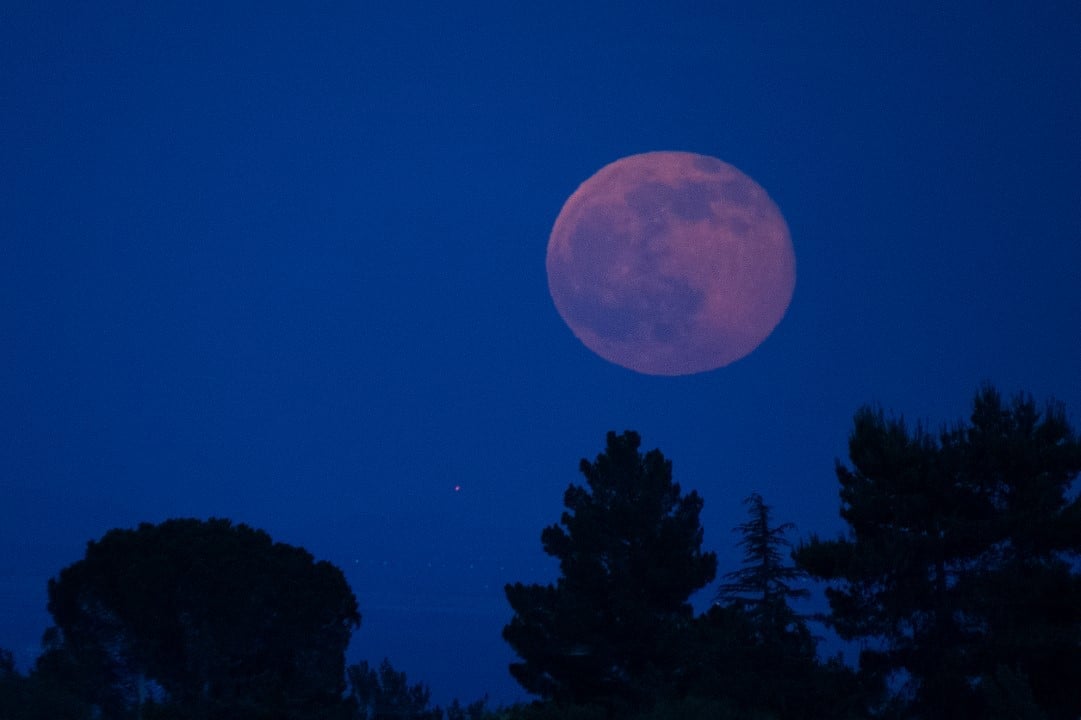
The celestial event that occurs annually attracts the attention of observers and astronomy enthusiasts during the month of April in different parts of the globe. The appearance in the night sky carries a profound historical charge, connecting the orbital behavior of Terra’s natural satellite with ancient timekeeping practices developed by past civilizations. Especialistas of space observatories monitor atmospheric conditions to ensure the best visibility of the lunar disk fully illuminated by Sol, calculating trajectories with mathematical precision. The perfect alignment between celestial bodies provides a unique opportunity for photographic recording, the study of the characteristics of the lunar surface and the understanding of the celestial mechanics that govern our planetary system.
Popular nomenclature often generates visual expectations that differ from the physical reality of the phenomenon observed with the naked eye. The satellite does not change its natural color to reddish or pinkish tones during this specific phase, maintaining the silvery or yellowish glow characteristic of the reflection of sunlight.
The visual characteristics depend strictly on local atmospheric factors and the position of the star in relation to the observer’s horizon line.
– Partículas Dust and pollution in the atmosphere affect the refraction of light, altering the perception of color.
– Visual interference from large cities reduces the contrast and apparent brightness of the satellite.
– The elevation angle creates an optical illusion that determines the perception of size in the first few minutes after moonrise.
Historical origin of popular nomenclature
The América Norte native tribes established the naming system to track the changing seasons throughout the year long before the introduction of modern Gregorian calendars. The specific term derives from a creeping herbaceous plant, scientifically classified as Phlox subulata, which flowers profusely in early spring in the Northern Hemisphere. The vegetation creates extensive carpets of pink flowers in natural landscapes, signaling the end of the harsh winter and the beginning of a new cycle of development for local flora and fauna, serving as a biological clock for agricultural communities.
Different indigenous cultures have adopted nominal variations for the same orbital period, based on their own environmental observations and survival needs. Registros ethnographers point to the use of terms related to the melting of ice in rivers, the emergence of new grass shoots on the plains and the spawning period of certain species of fish that are essential for food. The lunar calendar system guided hunting, gathering, and land preparation activities, demonstrating a deep integration between ancient societies and predictable astronomical cycles.
Orbital dynamics and distance variations
The satellite’s path around planet Terra follows an elliptical shape, resulting in constant variations in distance throughout the 27.3 days of the orbital cycle. The point of closest gravitational approximation is technically called perigee.
The coincidence of the full phase with perigee gives rise to the astronomical event popularly called a supermoon by the media. The lunar disk has a slightly larger apparent diameter and a brighter brightness than the average recorded in previous months.
The opposite phenomenon occurs when the alignment coincides with the apogee, the point of greatest orbital distance from the Earth’s surface. The reduced appearance in the night sky characterizes the so-called micromoon, requiring optical instruments for a detailed observation of the craters.
Astronomical calculations predict these occurrences with extreme precision, allowing the creation of annual calendars of celestial events. Research institutes publish exact coordinates and times to guide the public and amateur astronomers.
Influence on global religious traditions
The Christian ecclesiastical calendar uses the first full moon after the spring equinox in the northern hemisphere to determine the date of movable celebrations. The mathematical calculation defines the exact period of the April festivities, establishing a schedule followed by millions of faithful.
Islamic and Jewish traditions maintain timekeeping systems strictly based on lunar phases for organizing their liturgical years. The appearance of the illuminated disc marks the beginning of sacred months and guides the timeline of historically documented secular rites.
Hindu communities celebrate specific festivals aligned with the maximum illumination of the night sky, such as Hanuman Jayanti. The synchrony between astronomical events and cultural practices demonstrates the universality of spatial observation throughout the development of civilizations.
Physical impacts on the terrestrial ecosystem
The gravitational force exerted by the celestial body directly influences the movement of the planet’s large masses of water on a continuous basis. Alignment with Sol enhances the attraction effect, generating spring tides, characterized by extreme amplitudes between high tide and low tide in coastal regions.
Several marine species synchronize their reproductive cycles with variations in nighttime luminosity and ocean water levels. The migratory behavior of birds and terrestrial mammals also presents changes documented by biologists during days of maximum lighting, facilitating nocturnal movement.
Ideal conditions for night viewing
Choosing the appropriate location represents the main factor for a successful observation experience and the collection of accurate visual data. The distance from urban centers reduces interference from artificial lighting, revealing details of the lunar surface and allowing the identification of neighboring constellations in the sky.
Pre-monitoring cloud cover avoids frustration during the peak hours of the astronomical event. Weather apps provide up-to-date data on air humidity, high-altitude wind speeds, and atmospheric visibility in real time to observers.
Optical equipment and photographic recording techniques
Capturing high-quality images requires the use of photographic equipment with manual exposure adjustments and long focal length lenses to fill the frame with the star. Modern digital sensors allow you to set low ISO sensitivity values, reducing visual noise and preserving the geological details of impact craters and vast basalt seas. The use of a robust tripod eliminates natural vibration from hands and wind, ensuring the necessary sharpness for subsequent enlargements in editing software. Amateur telescopes, when coupled with specific adapters for smartphones, democratize access to astrophotography, allowing ordinary citizens to record the phenomenon with scientific precision. Subsequent digital processing through the stacking of multiple images enhances the contrast, corrects any optical distortions generated by the turbulence of the Earth’s atmosphere and reveals subtle variations in the mineralogy of the lunar surface.
Timeline of subsequent astronomical events
The space calendar maintains an unbroken sequence of phenomena visible to the naked eye over the following months, including meteor showers and planetary conjunctions. Astronomical observatories organize public guided viewing sessions with large telescopes to promote scientific education and interest in exact sciences among the population.



