

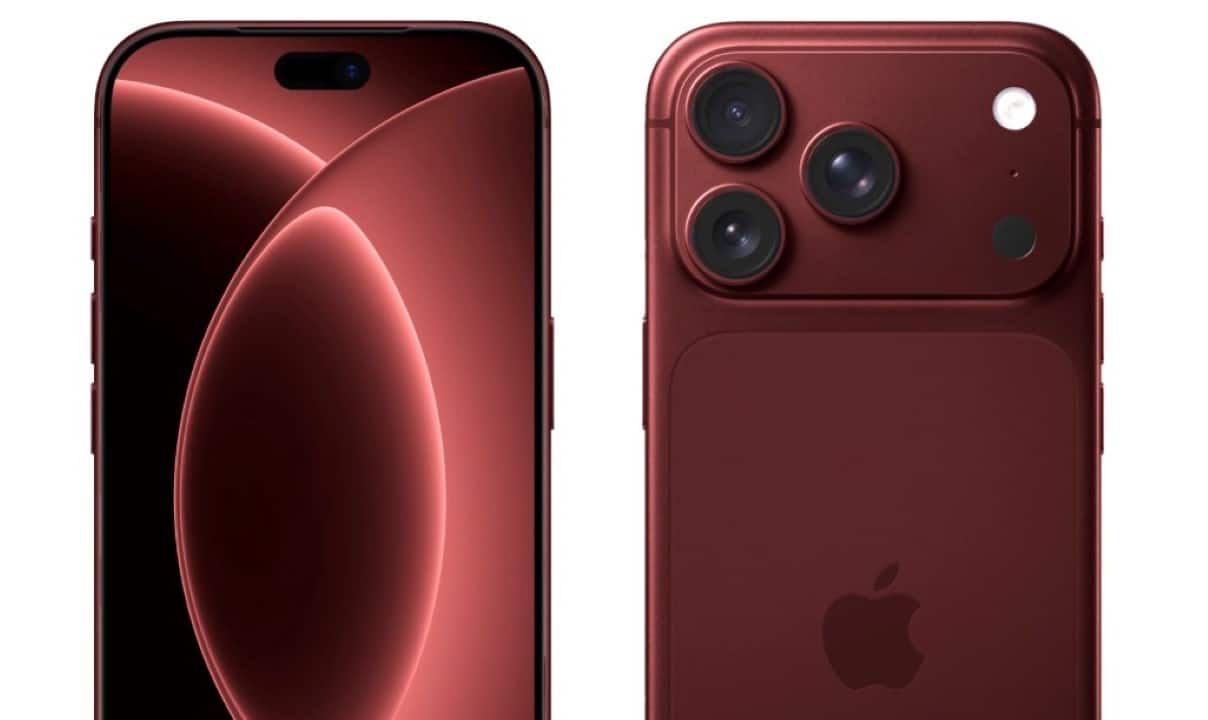
The telecommunications industry is undergoing a profound technical restructuring with the leak of the specifications of the next high-performance mobile device from Apple. The project, developed at the company’s headquarters at Califórnia, presents severe changes in hardware engineering and modifies the traditional aesthetics of premium category devices. The information details a completely new approach to building everyday consumer electronics, focusing on durability and visual innovation.
The brand’s engineers established a format that keeps the internal components visible, requiring a complete rearrangement of the motherboard and cooling modules. The visual change meets a demand from the technology sector for advances in industrial design, breaking the standardization observed in the manufacturer’s previous lines. The decision to expose the device’s interior forced the design team to treat each microchip and connector as an aesthetic element, demanding a level of internal finish unprecedented in the history of cell phone assembly.
The equipment is expected to arrive in stores in several countries in September, establishing a new level of competition in the mobile telephony segment. The device exhibits substantial improvements in its energy retention capacity and the speed at which it performs daily and complex tasks. The expectation of the commercial sector is that this reformulation will drive a new wave of updates among consumers looking for cutting-edge hardware and aesthetic differentiation.
Materials architecture and structural engineering
The development of the external structure required the formulation of unprecedented metallic alloys and the application of highly complex chemical processes. The company entered into partnerships with specialized suppliers on the Asian continent to ensure large-scale assembly of the new parts. The main objective is to maintain the rigidity of the device in the face of changes to the rear panel, ensuring that the new aesthetics do not compromise the physical integrity of the product during everyday use.
To ensure the resistance of the transparent back plate, the engineering team opted for a tempered glass alloy that undergoes rigorous chemical treatments in specific facilities. Este advanced industrial procedure creates a protective barrier against natural yellowing, a condition that is often caused by prolonged exposure to solar radiation and the wear and tear of time. The treatment involves the infusion of ions at high temperatures, creating a surface that repels stains and fingerprints.
The methodology applied also gives the material superior tolerance against accidental impacts and daily friction, preserving the visual clarity of the equipment over the years. The transparency remains unchanged even after long periods of continuous use, which highlights the search for an exact balance between a bold look and the physical security of the exposed microchips. Testes laboratory data indicate that the new rear can withstand falls from heights greater than those supported by previous generations.
The smartphone’s frame uses aerospace-grade titanium, a metallic element that provides an ideal relationship between low weight and high structural rigidity compared to conventional aluminum alloys. The union between the machined metal structure and the new glass back required the creation of an industrial adhesive compound exclusive to the electronics sector. Este chemical sealant protects the interior of the device against the entry of liquids and dust particles, maintaining international water resistance certifications.
Energy autonomy and thermal control
The time of use away from sockets registers a notable technical advance in this version, which is powered by a storage cell that reaches the 5200 mAh mark. The significant gain in energy density was possible thanks to a redesigned internal architecture for the battery modules, taking advantage of the internal space of the chassis down to the millimeter and avoiding any increase in the final thickness of the smartphone. The absence of legacy components allowed engineers to expand the usable area dedicated exclusively to charge retention, ensuring that the device can withstand intense journeys of use, continuous browsing and media playback without the need for intermediate recharges throughout the day.
The exposure of internal circuitry has made thermal management a major hurdle for hardware development teams, requiring innovative dissipation solutions. The strategy adopted to overcome heating includes the installation of thin graphene plates in critical areas of the circuit, operating in synchronization with a redesigned vapor chamber, responsible for silently dissipating the heat generated by the processor. Avaliações of thermal stress prove that the new configuration can maintain processing peaks for long periods without loss of performance, maintaining stability during the execution of heavy routines, such as editing videos in very high resolution and running three-dimensional modeling software.
Advanced processing and artificial intelligence
The smartphone’s operations center is driven by a processor built using the 2 nanometer process, an advance in component miniaturization that provides unprecedented energy efficiency in the semiconductor market. The integrated circuit was designed with the specific objective of executing artificial intelligence algorithms locally, drastically reducing the need to connect to remote servers to perform real-time translations, advanced speech processing and generation of complex graphics. Para support the new chip and the massive volume of transient data, the random access RAM memory was expanded to 12 gigabytes, a fundamental technical requirement to keep language models operating in the background without causing slowdowns in the operating system. The processing framework dynamically divides workloads between brute-force cores and power-saving units, intelligently managing consumption of the 5200 mAh battery. Desenvolvedores of applications will have access to new software tools that use the improved neural engine, making it easier to create programs that adapt to the user’s routine. The integrity of the information processed on the device itself is guaranteed by a security module physically isolated from the main system, which stores banking data, biometric records and access credentials in encrypted form, blocking external intrusion attempts.
Optical capture system and mechanical shutter
The rear camera block incorporates a variable lens aperture mechanism, a feature adapted directly from professional photography equipment. The mechanical component allows the sensor to physically regulate the light input, instantly adjusting to the ambient lighting. The new functionality optically enhances background blur in portraits and increases the clarity of images captured at night.
The glass components of the lenses have an optical coating specifically formulated to neutralize reflections caused by direct light sources such as streetlights and headlights. The optical approach module has also undergone a severe structural upgrade, integrating a more efficient refraction prism that ensures long-distance captures with improved stabilization.
Direct communication between the image sensors and the central processor allows corrections based on artificial intelligence to be applied at the exact moment of shooting. Esse Immediate processing ensures that photographs present a higher level of detail, correcting lens distortions and adjusting the white balance in a completely autonomous way that is imperceptible to the user.
Screen optimization and invisible biometrics
The display proportions have received precise calibrations, delivering 6.3 inches in the standard high-performance version and 6.9 inches in the enlarged edition. Image engineers managed to thin the physical edges that delimit the OLED panel, expanding the active viewing area and improving user immersion when playing audiovisual content and reading documents.
The most noticeable change on the front is the transfer of the facial recognition and light measurement modules to the bottom of the pixel matrix. The technical adaptation made it possible to reduce the area occupied at the top of the screen by 35%, now displaying the system indicators and notifications in a cleaner way, with the infrared light beam crossing the display without being interfered by the refraction of the glass.
Satellite communication and connectivity
The smartphone’s antenna mesh has been resized to support high-capacity satellite transmissions, going far beyond the basic emergency alert function. The new radio frequency protocol enables short voice calls and compressed media file traffic, ensuring vital communication in isolated territories where conventional cell phone towers cannot reach.
For international trade, the manufacturer determined the definitive exclusion of the physical compartment for operator cards, adopting exclusively virtual line technology. Removing the tray frees up vital cubic millimeters to accommodate the enlarged battery and heatsinks, as well as eliminating a gap in the bodywork, further reducing the risk of damage from water or dust infiltration.
Asian production and global distribution
The Asian industrial park began adapting its assembly conveyors to begin volumetric manufacturing of the new components, aiming to build a robust stock for simultaneous launch on multiple continents. The shelf value of the equipment will integrate high investments in transparent materials research and 2-nanometer lithography, positioning the smartphone at the highest level of global technology retail and redefining industry manufacturing standards for the next cycles of innovation.



