


Japanese manufacturer Casio revealed the development of the GMW-BZ5000RC-1JR, a watch that incorporates advanced algorithms into its structural design. The device fuses the brand’s classic aesthetic with engineering processes guided by high-performance computing, marking a transition in precision equipment manufacturing.
The project uses data accumulated over four decades of physical testing to optimize the accessory housing. The application of new processing technologies allowed the creation of a chassis capable of withstanding extreme pressure and impact conditions without compromising the product’s historical visual identity.
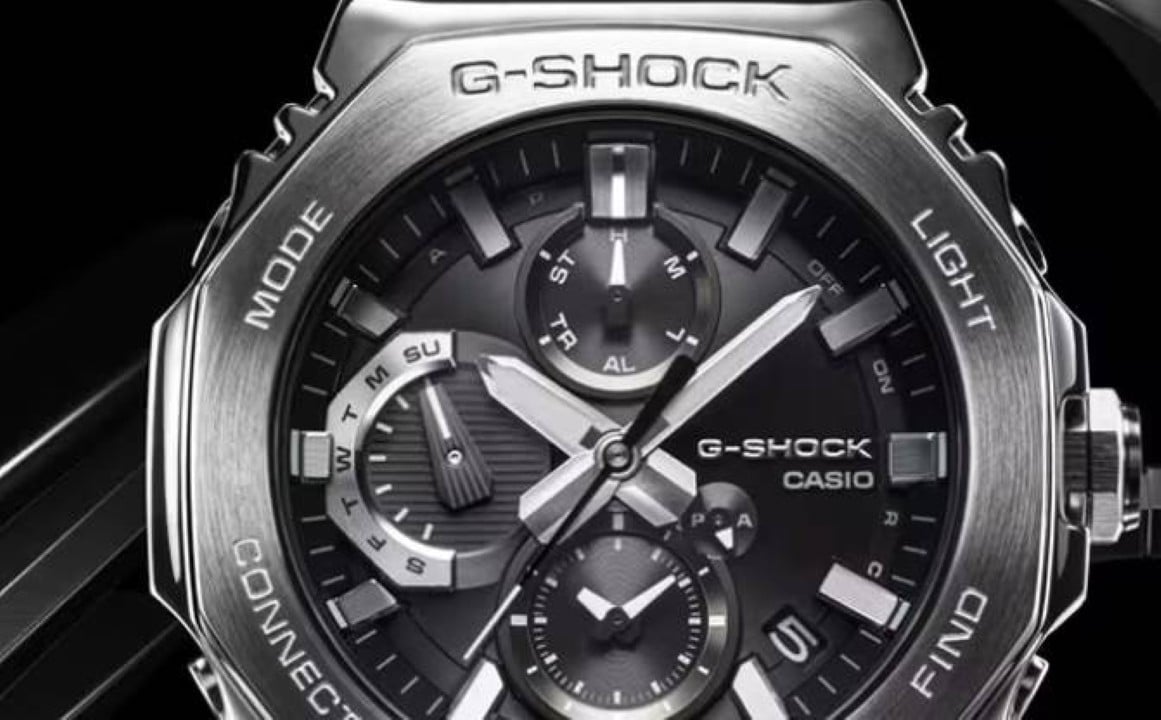
The part represents an advancement in the Full-Metal line, introducing production methods that maximize the efficiency of stainless steel. The model sets a new standard of durability for wrist equipment intended for daily use, combining the rigor of traditional watchmaking with the mathematical precision of contemporary digital systems.
Galvanizing process and visual exclusivity
The aesthetic difference of the equipment lies in its external finish, obtained through a multiple-stage ionic galvanizing system. The application of colors to the back of the stainless steel case generates random patterns during manufacturing, ensuring that each unit has a strictly unique visual signature. The arc vapor deposition technique creates a rainbow spectrum contour around the digital display, increasing the level of detail of the piece and making counterfeiting difficult on the black market.
- The metal chassis is treated against scratches and severe environmental corrosion.
- Ionic coloring acts as an additional protective barrier for the steel.
- Generative design defined the exact proportions for edge polishing.
- The base structure strictly respects the dimensions of the original DW-5000C.
This finishing approach not only gives the accessory a premium look, but also solves chronic wear issues on metal watches subjected to constant friction in urban and natural environments. The engineers responsible for the assembly line adjusted the temperature and pressure parameters in the vapor chambers to ensure that the fixation of the pigments could withstand prolonged exposure to sunlight and high salinity. The combination of vibrant tones with industrial robustness attracts consumers looking for highly durable items with differentiated aesthetics, consolidating the equipment as an item with high added value in the utilitarian fashion segment.
Materials engineering and structural strength
The use of artificial intelligence in the watch architecture focused primarily on the physical integrity of internal and external components. Algorithms processed millions of impact metrics to identify the points of greatest vulnerability in the metal casing during free falls and direct shocks.
Based on this information, the computer system suggested geometric reinforcements that would be impossible to calculate manually in a short development period. The mass distribution has been altered to the millimeter to dissipate the kinetic energy of impacts more efficiently across the entire length of the bracelet and case.
Developers oversaw the implementation of these complex geometries to ensure feasibility on the large-scale production line. The internal damping structure was completely redesigned in urethane resin to protect the digital module against continuous vibrations and sudden temperature variations.
The practical result is an optimized chassis that has a resistance coefficient higher than the standards required by the brand itself. Mechanical innovation proves the usefulness of generative design in creating durable consumer goods by eliminating excess material without compromising the rigidity of the structure.
Inheritance from the original square series
The rectangular shape with chamfered edges directly refers to the 1983 launch, a period in which the watch industry was looking for solutions to the extreme fragility of traditional glass displays. Maintaining this iconic silhouette required considerable engineering effort to adapt the new solid metal components and state-of-the-art printed circuit boards to the restricted space of the original case. The transition from absorbent plastic polymers to stainless steel represented a severe technical challenge, overcome only by advanced three-dimensional modeling and extremely high-precision machining.
The continuous evolution of the line demonstrates the ability to update a classic industrial design to meet contemporary technological demands. Inserting cutting-edge features into a nostalgic format meets a growing market demand for devices that transition appropriately between formal corporate environments and outdoor activities. The model updates the initial proposal of indestructibility, raising the standard of finishing and the materials used to compete directly in the competitive segment of sophisticated men’s accessories.
Hardware specifications and autonomy
The equipment has a high-efficiency solar energy capture system, capable of converting even weak artificial light into a charge for the internal rechargeable battery. Essa functionality eliminates the need for periodic replacement of power cells, reducing long-term maintenance and waste disposal in the environment.
Chronometric accuracy is maintained by a multiband radio wave receiver that performs daily automatic calibrations with atomic clocks spread across the globe. The device also features low-power wireless connectivity for time zone synchronization, phone location and alarm settings directly via the dedicated mobile app.
The high-contrast digital display is protected by a synthetic sapphire crystal lens with internal anti-reflective coating, ensuring absolute readability in direct sunlight. The reinforced sealing of the case and side buttons withstands static pressures equivalent to two hundred meters underwater, enabling use in recreational diving.
Reception of collectors and luxury market
The introduction of automated design processes has generated technical debates among horology experts about the added value of parts designed with the help of machines. Initial commercial acceptance indicates that consumers value the practical gains in strength and the absolute exclusivity of the color patterns generated by random plating.
The strategic positioning of the product attracts a specific audience that consumes cutting-edge technology and appreciates the long history of Japanese precision engineering. The harmonious union of modern algorithms and traditional metal manufacturing opens up a highly profitable new niche for digital collector watches.
Global distribution and availability
The device is sold in a limited batch format, with distribution strictly focused on the manufacturer’s official boutiques and authorized haute horlogerie dealers. The logistics strategy prioritizes initial delivery to Asian markets before gradually expanding inventory to the American continent and main European centers.
The strict quality control required when applying multicolored coatings naturally restricts the monthly production volume in factories. The planned scarcity reinforces the exclusive nature of the launch and intensely moves the rare accessories resale sector among brand enthusiasts.
Transformation in electronics manufacturing
The successful application of generative design to the construction of a complex metal chassis sets a fundamental technical precedent for other areas of the consumer durables industry. The proven ability to reduce the amount of raw materials used, while maintaining or even increasing mechanical resistance rates, offers significant economic and environmental advantages for global assembly lines. Fabricantes of mobile devices, industrial precision tools and personal safety equipment have already analyzed in detail the methodology used in the creation of this watch to adapt their own research and development processes. Structural optimization guided by large volumes of data eliminates multiple physical prototyping steps, drastically accelerating the time it takes for new products to reach shelves and reducing the high costs associated with researching new metallic materials.
Direction of the watch division
The manufacturer consolidates its leadership position in the development of robust hardware by integrating artificial intelligence software directly into the industrial drawing board. Technical advancement ensures the brand’s continued relevance in a global landscape largely dominated by extremely short lifecycle smart devices.



