


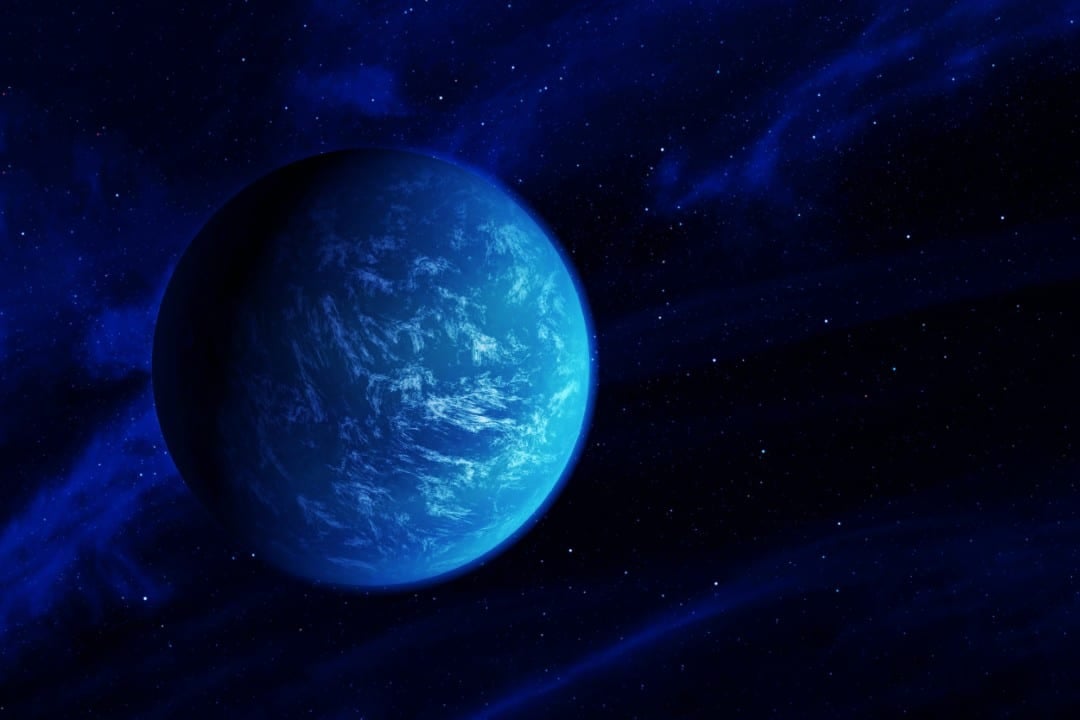
The international scientific community recorded a significant advance in space exploration with the confirmation of the existence of the exoplanet HD 137010 b, located approximately 146 light-years away. Este celestial body was identified using the radial velocity technique, a method that monitors the gravitational oscillations suffered by a star due to the presence of a planet in its orbit. Initial data suggests that the mass and composition of the star bear notable similarities to the rocky structure of Terra, which puts it at the center of attention of astrophysicists and researchers from several global agencies.
The strategic location of the planet in relation to its host star is the most relevant factor for the optimism of the experts involved in the project. The HD 137010 b is positioned within the so-called habitable zone, a region where temperatures allow the maintenance of elements in a fluid state without the risk of immediate evaporation or total freezing. According to preliminary analyses, there is a probability of up to 50% that the planet has liquid water on its surface, which is considered the fundamental requirement for the emergence and maintenance of biological processes as we know it.
This astronomical finding stands out for the precision of the instruments used, which are now able to filter out stellar interference to focus on smaller, less dense bodies. Diferente of the gas giants commonly detected in the past, this new world represents a class of terrestrial planets that are priority targets for future atmospheric spectroscopy missions. Identified habitability markers include:
- Predominantly rocky composition similar to the Earth’s core;
- Stable orbit that guarantees less extreme climate cycles;
- Relative proximity that facilitates observation by new generation telescopes;
- Thermal equilibrium compatible with the presence of oxygen and hydrogen.
Technological advances in detecting rocky worlds
The identification of HD 137010 b was possible thanks to the integration of high-resolution ground-based telescopes and space observatories that work together to measure minute variations in light. Scientists explain that the radial velocity technique has reached a level of sensitivity never seen before, allowing the gravitational influence of planets with reduced masses to be isolated. Este level of detail is essential to differentiate barren rocks from worlds that have the potential to sustain a protective atmosphere and water resources.
Data processing algorithms also played a crucial role in validating this discovery, eliminating noise caused by the host star’s natural activity. By crossing information from different orbital periods, astronomers were able to accurately determine the planet’s distance from its solar center, confirming that it receives an amount of radiation very close to that which Terra receives from Sol. Essa fine calibration is what supports the statistical estimate of 50% for the presence of liquid water.
Environmental characteristics and the search for biosignatures
The current focus of research is on analyzing the density of HD 137010 b, a factor that determines whether the planet has a solid crust or whether it is just an exposed metallic core. The evidence points to a world with sustainable gravity, which could allow the retention of essential gases such as carbon dioxide and water vapor. Caso If this atmosphere is confirmed in subsequent studies, the planet will be considered one of the strongest candidates for the direct search for chemical biosignatures.
The search for these chemical signals involves observing starlight passing through the planet’s gas layer during orbital transit. Elementos such as methane, oxygen and ozone leave specific marks in the light spectrum that can be detected by the most powerful infrared sensors currently available. The research team believes that HD 137010 b offers a unique opportunity to test new climate models that simulate the evolution of rocky planets in star systems other than our own.
In addition to thermal conditions, the planet’s geology is a point of interest that motivates new rounds of intensive observations by international consortia. Estudar the formation of a planet 146 light years away helps understand the distribution of heavy elements in the galaxy and the frequency with which habitable worlds are created. Cada new data collected reinforces the thesis that planetary systems with terrestrial characteristics may be much more common than theories from past decades suggested.
Historical context of modern astronomy and new horizons
The journey to finding a planet truly similar to Terra has been long and fraught with technical challenges that have required decades of innovation. Desde the first detections of exoplanets in the 1990s, human knowledge leapt from rudimentary observations of supermassive planets to detailed analysis of small worlds. HD 137010 b represents the culmination of this evolution, combining mass detection capabilities with the prediction of habitable surface climate conditions.
This progress fundamentally alters the way humanity sees its place in the universe, transforming theoretical speculations into verifiable factual data. Space missions planned for the coming years already include the neighboring solar system on their priority lists for deep thermal mapping. The ultimate goal is to create a catalog of planets that not only exist, but that have all the variables necessary to support life in some known form.
Collaboration between global research institutes ensures that data on HD 137010 b is peer-reviewed on different continents, increasing the reliability of the news. The transparency in the methods for calculating water probability demonstrates the scientific rigor applied to each new discovery in the field of astrophysics. With the support of artificial intelligence for data screening, the speed at which new candidates for “Earths” appear has grown exponentially in recent years.
Continuous monitoring of the star’s orbital variations
Orbital stability is one of the most important requirements for a planet to develop a complex ecosystem over billions of years. Astronomers observed that HD 137010 b maintains a consistent circular trajectory, which avoids sudden changes in temperature that would be lethal to any form of life. Esse orbital behavior suggests that the planetary system to which it belongs has reached a state of geological maturity and favorable dynamics.
Future investigations aim to determine whether there are other planets in the same system that could exert a gravitational influence on HD 137010 b. The presence of other celestial bodies could explain phenomena such as internal tides, which keep the core of a planet warm and active to generate a magnetic field. A robust magnetic field is essential to protect the surface from harmful radiation emitted by the host star, ensuring the integrity of the atmosphere.
With each observation cycle, new layers of information are added to the profile of this rocky exoplanet that challenges the frontiers of knowledge. The interest of the public and the scientific community is justified by the real possibility that we are observing an environment that shares fundamental characteristics with our own home. The continuous study of these stars is the basis for the development of travel and remote observation technologies that will define the future of space exploration.
Importance of the habitable zone in neighboring systems
The concept of habitable zone, often referred to as the “Goldilocks zone”, defines the distance range where conditions are considered “just right” for life to exist. HD 137010 b occupies the center of this band, which significantly reduces the chances of it being a barren and desolate world like Vênus or Marte. Analysis of incoming stellar radiation indicates that the planet has an energy balance that favors long-term climate stability.
Experts reinforce that, although the 50% probability of liquid water is promising, it still requires direct confirmation through high-fidelity images or spectral data. Science advances cautiously, but each new metric collected about this 146 light-year planet confirms that it is a perfect natural laboratory for testing exobiology theories. The relentless search for answers in the deep sky continues to reveal that the universe is a place full of niches where water, and perhaps life, can thrive.



