
Artemis 2 toilet presents challenge in evacuating urine and strange odor in space flight

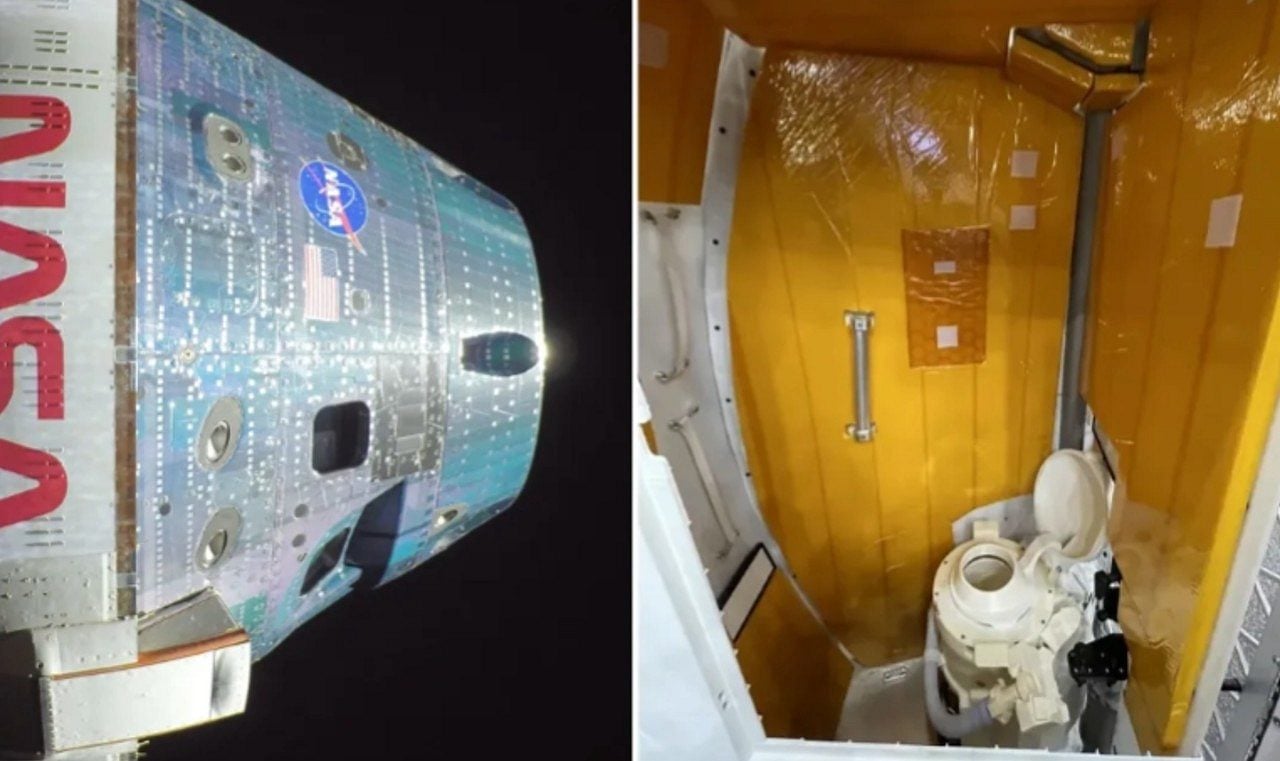
Mission Artemis 2, a milestone for manned lunar exploration, faced an unexpected challenge with the waste disposal system aboard capsule Orion. The four astronauts on board reported difficulties in evacuating stored urine into space, a problem that required the attention of the team at Terra.
In addition to the functional issue, the crew also noticed an unusual burning odor coming from the toilet. Este phenomenon, although it did not pose an immediate risk to mission safety, added a layer of complexity to the crew’s daily operations.
The sanitation incident, while peculiar, highlighted the intricate engineering and unforeseen challenges inherent in long-duration space travel. NASA’s ground team worked diligently to understand and mitigate the situation as Orion continued its historic journey around the moon.
The complexity of the space health system
The Orion toilet on mission Artemis 2 represents a compact and advanced version of the systems used on Estação Espacial Internacional. Projetado to operate in microgravity, it is fundamental to the well-being and health of astronauts during extended missions, ensuring the efficient management of liquid and solid waste.
Unlike missions Apollo, where astronauts relied on hand-held collection bags, Orion was equipped with a dedicated toilet unit, marking the first time a toilet had flown beyond low-Earth orbit. Esta Innovation highlights the advancement of technology and the commitment to crew comfort and autonomy.
Occurrences on board and the initial concern
During the flight, the crew of Artemis 2 began reporting that the ventilation system in the urinary effluent tank was not operating as expected, making it difficult to release the contents into space. Esta anomaly generated the need to implement alternative procedures for managing urine on board.
Additionally, the astronauts reported a burning smell emanating from the toilet bowl, an occurrence with no immediate explanation. Embora to Equipe of Controle of Missão didn’t show much concern about the odor, it added to the system’s performance conundrum. The flight director at Artemis 2, Rick Henfling, confirmed that, despite the problems, the vessel remained operational.
Theories and preliminary investigations during the flight
Initially, the mission team hypothesized that the ventilation blockage could be caused by ice forming on the Orion’s external nozzle. To test this theory, heaters were activated and the ship was maneuvered to tilt towards the sun, in the hope of “melting” any accumulated ice.
Contrary to expectations, the problem persisted even after these attempts, which led to the ice theory being discarded. The evacuation failure was then attributed to other possible causes, deepening the investigation by engineers and scientists on the ground.
The most recent theory, and considered most likely, points to an issue related to the chemistry used in the system. Acredita It is believed that chemical reactions designed to prevent the formation of biofilms in wastewater may have generated debris that ended up clogging a crucial filter in the ventilation system.
This complication highlights the delicacy of life support systems in hostile environments like space, where every component and every chemical reaction must be meticulously controlled to ensure functionality and safety.
Post-return analysis: the search for the root cause
With the safe return of capsule Orion and its four occupants – NASA astronauts Reid Wiseman, Victor Glover and Christina Koch, and Jeremy Hansen of Agência Espacial Canadense – on April 10, NASA’s immediate priority was to conduct an in-depth analysis of the sanitation system. The successful landing off the coast of San Diego marked the end of a historic mission, but the engineering work was just beginning.
Detailed inspection of the interior of the Orion and its waste disposal system was crucial to determine the exact cause of the malfunction. Lori Glaze, acting associate administrator for NASA, emphasized the importance of “getting in and getting to the root” of the problem once the spacecraft was on the ground. Engineers removed and examined filters and vent line components to find evidence of debris or unanticipated chemical reactions.
The impact of chemistry on sanitary operations
The complexity of waste management in microgravity environments transcends mechanics, delving deeply into the chemistry of the processes. Para To avoid the proliferation of microorganisms and the formation of biofilms that could compromise the integrity of the equipment and the health of the crew, space wastewater treatment systems employ a series of chemical agents. The theory that an unexpected reaction between these chemicals and the effluents generated waste is plausible and points to a critical area of research. The formation of these solid wastes, even in small quantities, can easily clog filters and piping designed to handle liquids and gases, highlighting the need for extremely precise chemical control and an in-depth understanding of material interactions under prolonged space conditions, especially when dealing with closed-loop systems where every element is recycled and reused.
Lessons learned and improvements for future missions
The Artemis 2 toilet incident, although a minor setback on a mission of such great magnitude, provided invaluable data for NASA engineers and scientists. Cada Flight failure or anomaly is a learning opportunity that contributes to the continuous improvement of space technologies. The post-flight analysis made it possible to identify weaknesses and aspects that require redesign.
The information collected from this mission will be crucial for the planning and implementation of life support systems in future lunar endeavors, such as Artemis III and subsequent long-duration missions. The experience reinforces the iterative approach to space engineering, where each flight serves as a testing ground for the next generation of equipment and procedures, ensuring greater robustness and reliability.
The vital role of astronaut hygiene and well-being
The functionality of waste management systems is a fundamental pillar not only for the operation of the ship, but for the comfort and psychological and physiological health of the crew. An efficient sanitary system ensures hygiene on board and minimizes stress for astronauts, allowing them to focus on the complex tasks of the mission. The ability to solve problems like Artemis 2 in real time, or to prevent them based on lessons learned, is vital to the success of future human explorations in deep space.



