
Full moon on November 24, 2026 peaks at 14:53 UTC as a supermoon

A waxing gibbous Moon is climbing toward its full phase, which the lunar calendar places on Tuesday, November 24, 2026. That full moon sits near the point of the Moon’s orbit closest to Earth, which makes it a supermoon. Its traditional North American name is the Beaver Moon, a label tied to the season when beavers finished their winter lodges.
Main Moon phases scheduled for November 2026
Four principal phases fall in November 2026. The times below use Coordinated Universal Time (UTC), the standard that the calendars consulted for this report use.
- Last quarter: Sunday, November 1, at 20:28 UTC
- New moon: Monday, November 9, at 07:02 UTC
- First quarter: Tuesday, November 17, at 11:47 UTC
- Full moon: Tuesday, November 24, at 14:53 UTC
Some calendars list the full moon at 14:54 UTC and the first quarter at 11:48 UTC, differences of one minute. The third quarter returns on December 1 at 06:09 UTC, according to the same calendar.
How to spot the waxing Moon in the evening sky
Observers find the waxing Moon low in the west after sunset, and the lit area grows by about 10% to 12% each day. Binoculars help locate the first craters on the bright edge. Urban light pollution reduces contrast, so rural areas offer clearer photographs.
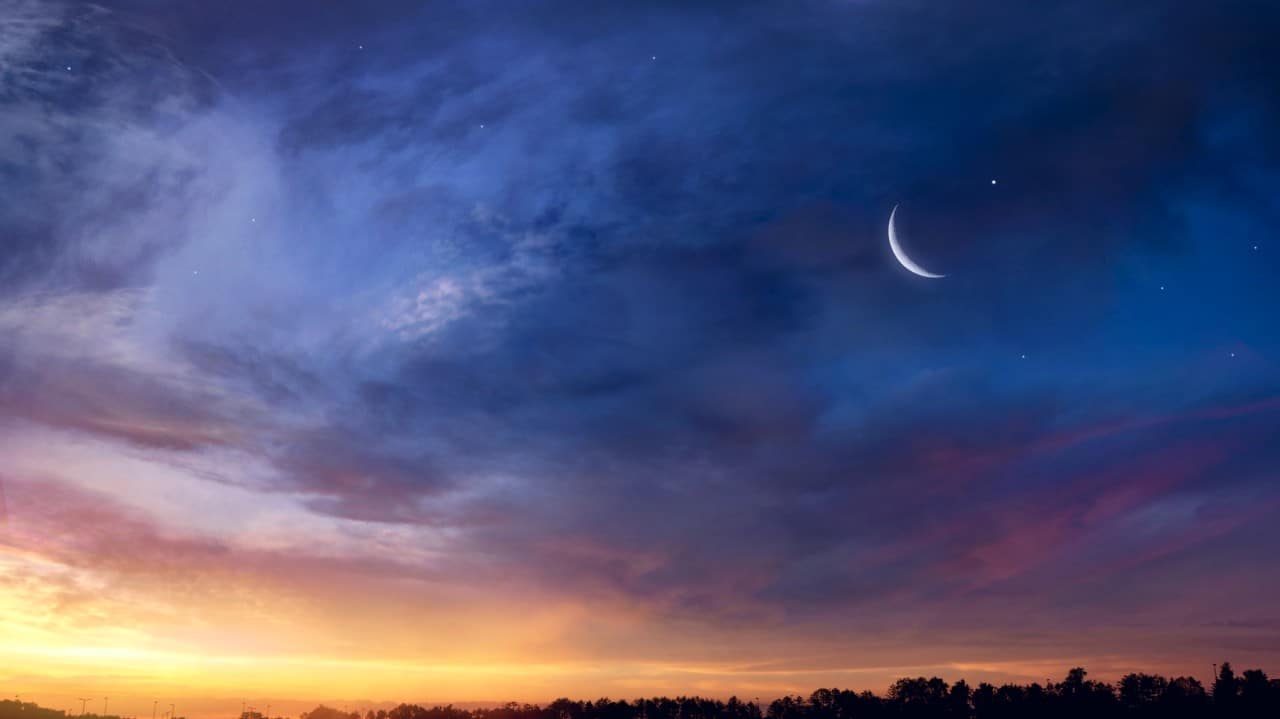
Tides rise around new and full moon phases
Astronomers call the alignment of the Sun, Moon and Earth at new and full moon syzygy, and these phases bring higher tides. The quarter phases bring lower tides, when the Sun and Moon pull at right angles to each other. Ports and fishermen keep these cycles in mind when planning trips.
Lunar cycle length and Moon distance from Earth
The time between two consecutive new moons averages 29.5 days, and the exact synodic period lasts 29 days, 12 hours and 44 minutes. Because the Moon‘s orbit is elliptical, the gap between phases varies by up to 50 minutes.
The average distance from Earth to the Moon is 384,400 km. At perigee, the closest point of the orbit, that distance drops to 356,500 km.
Sky events near the Moon in late November
On November 20, the Moon passed close to Saturn in the evening sky. The Leonids meteor shower peaks on the night of November 17 to 18, with up to 15 meteors an hour under dark skies. From November 30, the Moon appears near Jupiter and Mars, a view that is best seen from New York.
Tips for photographing the Moon at home
A tripod keeps the camera still during long exposures, and a low ISO setting reduces noise in night images. Manual focus avoids autofocus errors in low light. Stargazing apps show the exact position of the Moon and the rise time for each city.
Amateur telescopes reveal surface details on the waxing Moon. Never point binoculars or telescopes toward the Sun, because it can damage the eyes.





