
Boca Juniors dominate Universidad Católica in Chile and secure an advantage in the Libertadores group stage

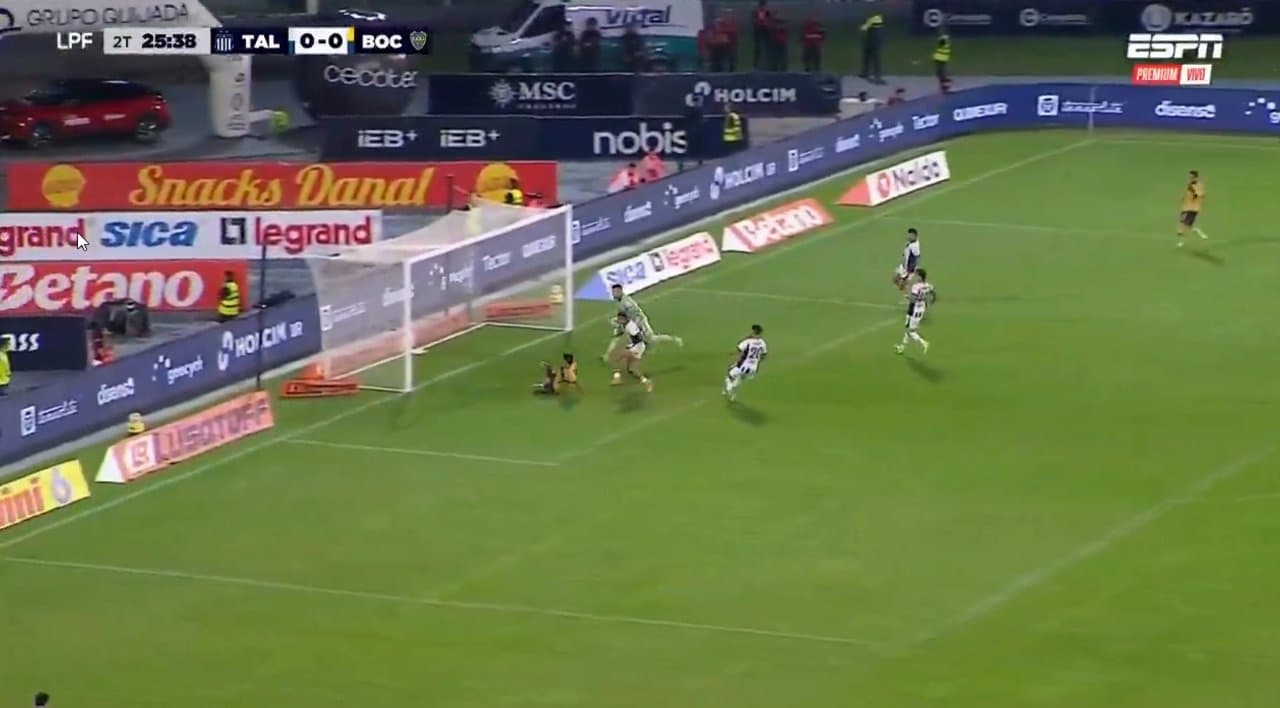
The clash valid for the opening round of Grupo D of the continent’s main competition had the stands of Claro Arena moving, in the city of Santiago. The Argentine team demonstrated technical and tactical superiority acting as a visitor against the traditional Chilean team. The territorial dominance and efficiency in finishing were directly reflected in the score built over the ninety minutes of competition.
The match required high physical intensity and absolute concentration from both squads from the referee’s opening whistle. The home team tried to impose an aggressive rhythm in the first moves to fire up the crowd, but they came up against an extremely well-structured defensive system. The visitors’ strategy focused on quick transitions, closing spaces in midfield and precision in vertical passes.
🇦🇷🔵🟡 Talleres 0-1 Boca Juniors | Torneo Apertura
The Paraguayan ADAM BAREIRO returns to be the key to give victory to Xeneize 🇵🇾⚽️pic.twitter.com/n0tyNjvQFb
— Ligas Top of Fútbol (@LigasTopFutbol)April 3, 2026
As the clock ticked, the difference in effectiveness between the two clubs became evident on the Chilean pitch. The construction of the offensive plays went through the feet of the midfielders, who dictated the pace of the South American clash with great calm. The partial result consolidated the strength of the Buenos Aires squad, which knew how to manage the pressure and exploit the opponent’s positioning flaws.
Initial strategy and pressure on Claro Arena
The atmosphere in the stadium presented the traditional and vibrant atmosphere of continental tournament nights. Universidad Católica entered the field with a 4-1-4-1 formation, seeking to populate the midfield sector and make it difficult to get the ball out. The coach Daniel Oscar Garnero’s intention was to retain possession, run the game from the wings and play the center forward Fernando Zampedri in the penalty area.
On the other side, coach Claudio Ubeda set up Boca Juniors in a 4-1-3-2 system, prioritizing protection in front of the defense. The team bet on the versatility of its midfielders to break the opposing passing lines and initiate counterattacks. The defensive compactness allowed the Argentines to withstand the initial minutes of pressure without suffering major scares or giving up dangerous spaces.
The fight for space generated several physical clashes in the center of the field, demanding strength and vigor from the athletes. The Chilean players tried to exploit the plays on the wings, using the speed of their wingers to try to break through the block. However, the Argentine full-backs’ coverage worked synchronously, blocking crosses and forcing the home team’s passing errors.
Patience was a determining factor for the visiting team to establish absolute control over the game. When recovering the ball, the midfielders paced themselves and looked for precise game changes to tire the marking. Essa dynamics forced physical exhaustion on the home team, who had to chase the ball for much of the initial stage and lost offensive momentum.
Construction of the scoreboard and decisive moments
Boca Juniors’s offensive effectiveness began to emerge in the 16th minute of the initial stage, when Leandro Paredes found space at the edge of the area and finished with precision to open the scoring, taking advantage of a lack of attention in Universidad Católica’s marking system. The early goal forced the Chilean team to advance their lines in a disorganized manner, which created even more spaces for Argentine counterattacks. Durante the second half, the dynamics remained largely favorable to the visitors, who extended the lead in the 65th minute with striker Adam Bareiro, after receiving a tailored assist from L. Blanco and demonstrating coolness in front of the goalkeeper Vicente Bernedo. The confrontation also recorded moments of tension and stoppages, such as the disagreement between Paredes and Zampedri after 10 minutes of play, in addition to strategic substitutions, such as the entries of Milton Giménez and Leandro Paredes0 by the Argentine side, and Leandro Paredes1 and Leandro Paredes2 by the home team, changes that sought to renew the breath for the teams in the final stretch of the clash at Leandro Paredes3 and redefine the tactical design on the pitch.
Tactical adjustments during the complementary stage
The disadvantage on the scoreboard forced the Universidad Católica coaching staff to modify their game structure at half-time and in the subsequent minutes. The addition of Fernando Zuqui in the vacancy of Gustavo Medel aimed to increase the creation capacity in midfield, while Matías Palavecino replaced Clemente Montes to offer greater aggression on the sides of the field. Essas changes provided a slight increase in the offensive volume of the Chileans, who began to prowl the opponent’s area more frequently. Jhojan Valencia even risked mid-range shots, but the lack of aim and the correct positioning of the goalkeeper Leandro Brey prevented any effective reaction from the home team.
To contain the momentum of the home team, Boca Juniors responded with substitutions aimed at maintaining possession and reinforcing the marking. Ander Herrera took over from Miguel Merentiel to set the pace in the creation sector and retain the ball in the attacking field. Posteriormente, the departure of Adam Bareiro, who needed medical attention before being replaced by Milton Giménez, and the entry of Juan Barinaga in place of Marcelo Weigandt, guaranteed new legs for the defensive recovery. The containment system led by Lautaro Di Lollo and Aarón Costa maintained the necessary solidity to ward off crosses and guarantee the unbeaten goal.
Individual highlights on the Chilean lawn
Leandro Paredes’s performance was one of the fundamental pillars for the Argentine triumph away from home. Além of finding the net with a beautiful shot, the midfielder dictated the rhythm of the transitions, distributing precise passes and guiding the positioning of his teammates. Sua Accurate reading of the game made it easier to get the ball out under pressure and broke the Chilean marking lines.
In the offensive sector, Adam Bareiro justified his presence among the starters with intense movement and a keen eye for goal. The striker bothered the Chilean defenders the entire time he was on the field, opening spaces for the midfielders coming from behind to infiltrate. Sua Finishing the second goal demonstrated a high technical level and calmness in the decisive moment.
On the side of Universidad Católica, Branco Ampuero tried to organize the defensive system and start the plays from the defense field. Goalkeeper Vicente Bernedo, despite the goals conceded, made important interventions that prevented an even more elastic score in favor of the visitors. The collective effort of the home team, however, was not enough to overcome the organization and technical quality of the opponent.
Arbitration and disciplinary control
The Uruguayan referee Gustavo Tejera took on the responsibility of leading a duel marked by strong physical imposition and harsh disputes. The clashes in midfield required constant interventions to prevent tempers from rising beyond sporting limits. Faltas committed by players like L. Blanco and Milton Delgado paralyzed the game at strategic moments, demanding rigor in the application of the rules.
Despite the atmosphere of rivalry inherent to the South American competition, the match took place without any serious indiscipline or red cards. The refereeing team’s stance in dialoguing with the captains helped keep the athletes’ focus on fighting for the ball. Strict control of infractions ensured the regular running of the clock and avoided widespread confusion on the pitch.
Grupo D Tentative Scenario
The result obtained at Claro Arena puts Boca Juniors in an extremely comfortable position at the opening of the group stage of the tournament. Somar Three points as a visitor is a fundamental step towards the hopes of qualifying for the round of 16, demonstrating the strength of the squad. The Argentine team shows maturity in managing advantages away from home and is consolidating itself as one of the key forces.
The dynamics of the match highlighted determining factors for the sequence of the competition:
– Universidad Católica’s need to look for points away from home to make up for the stumble as home team.
– The importance of the goal difference constructed by Boca Juniors, which could be a tiebreaker in the future.
– The requirement for quick tactical adjustments for teams that started at a disadvantage in the leaderboard.
Impact of absences on squads
The planning of both teams had to overcome significant absences in the medical department before kickoff. The Chilean team was unable to count on Agustín Farías, Sebastián Arancibia and Carlos Palacios, severely limiting coach Garnero’s rotation options on the bench. Boca Juniors also entered the field without the experienced striker Edinson Cavani, but managed to make up for the lack of their top scorer with an efficient collective game, a lot of compactness and the sharp aim of their immediate replacements, proving the strength and depth of their squad for the long season.





