
Chery Group launches new Lepas brand in Brazil with a focus on SUVs to displace veteran rivals

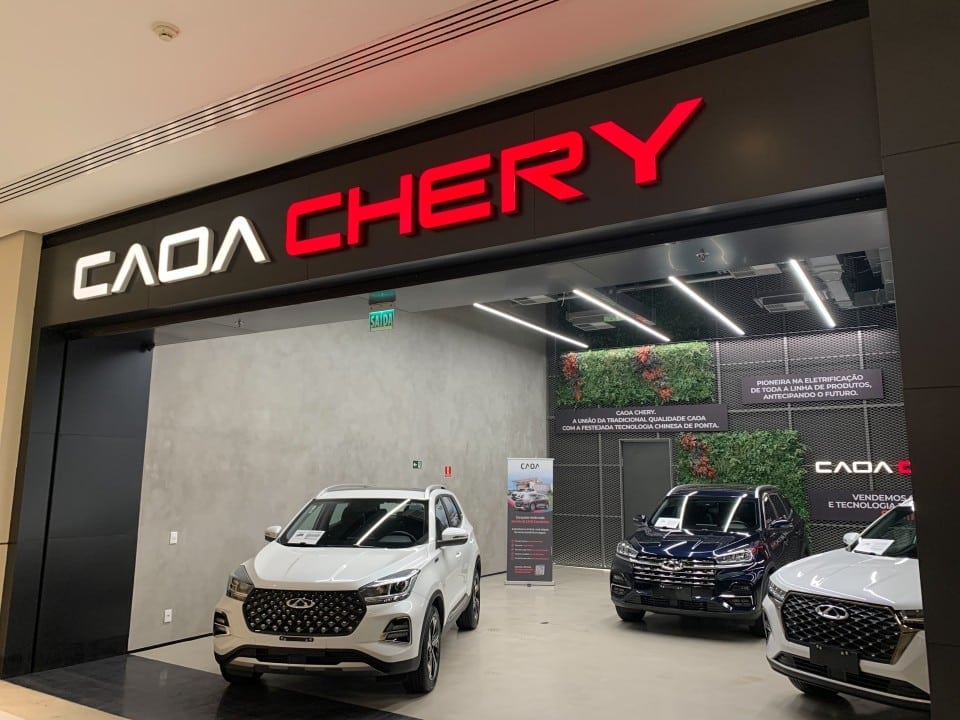
The Brazilian automotive market officially receives confirmation of the arrival of a new Chinese manufacturer under the umbrella of Grupo Chery. The Lepas brand, recently founded at China, began the procedures to establish its operation in the country with an exclusive focus on one of the most profitable categories in the sector. The strategy is part of a global expansion movement that places the national territory as a fundamental piece for the automaker’s growth in Hemisfério Sul.
The company’s arrival occurs at a time of consolidation of Asian brands, which seek to expand their portfolio to serve different consumer profiles. With a structure specifically aimed at the export market, the manufacturer intends to use the Brasil as a launch platform for its most competitive models. The Brazilian operation must rely on logistical and technological support already established by the controlling group, facilitating the rapid introduction of vehicles into dealerships.
The automaker’s plans include the introduction of three sport utility vehicles that vary in size and onboard technology. Abaixo, we detail the main pillars of this new operation:
- Exclusive focus on the SUV segment to maximize sales volume in high-demand categories.
- Use of shared platforms to ensure production efficiency and more aggressive prices.
- Strategic distribution network that takes advantage of the group’s previous experience on Brazilian soil.
- Launch schedule that prioritizes the entry model to quickly gain market share.
Global strategy accelerates brand entry into Brasil
Lepas is a newly created manufacturer, having been officially established in April 2025 with headquarters at Wuhu, at China. Diferente from other divisions of Grupo Chery that focus on the Chinese domestic market, this unit was designed with a DNA focused entirely on global exports. The board’s goal is to reach a presence in at least 45 countries by the end of the 2027 cycle, ensuring international capillarity.
Brasil was selected as one of the priority destinations for the start of operations in 2026, appearing alongside markets such as Austrália and África of Sul. Essa choice reflects the importance of the Brazilian consumer, who has demonstrated high receptivity to upcoming technological vehicles da Ásia. The logistical infrastructure for receiving the first batches is already in the planning phase to ensure that the sales schedule is not delayed.
Group Chery expands presence with portfolio diversification
Grupo Chery’s trajectory on the national scene is marked by constant evolution since the beginning of its activities in 2009. Após the strategic association with the Caoa group in 2017, the company raised its level of quality and acceptance, becoming one of the main forces in the market. The introduction of Lepas is seen as a diversification move, allowing the group to operate in specific niches without overlapping its current brands.

Recently, the conglomerate accelerated its pace with the announcement of other business fronts, such as the brands Omoda, Jaecoo and Jetour. Lepas appears to complement this offer, bringing a differentiated design and equipment packages focused on cost-benefit. Essa Multiplicity of brands allows the Chinese group to surround the competition in different price ranges, from entry-level models to luxury vehicles.
L4, L6 and L8 models define the new line of SUVs
The nomenclature chosen by the manufacturer follows a simple and direct numerical logic to facilitate consumer understanding of the product hierarchy. The initial portfolio is made up of the L4, L6 and L8 models, where the increase in number directly indicates a vehicle of greater size and sophistication. Todos The models share chassis and suspension technologies that have already been tested and approved on other vehicles in the group, guaranteeing mechanical reliability.
This standardization of components is a relevant competitive advantage, as it allows for simpler maintenance and easier replacement of parts. The vehicle design seeks to align European trends with Chinese digital technology, featuring minimalist interiors and large connectivity screens. The idea is to attract a young and connected audience that is looking for alternatives to the traditional models manufactured by veteran automakers.
L4 entry model challenges compact segment leaders
The Lepas L4 will be the brand’s first step into the Brasil, strategically positioned to take on the country’s best-selling vehicles. With dimensions of around 4.30 meters in length and a wheelbase of 2.60 meters, the model offers competitive internal space for the category. Essas measures put the Chinese SUV on a direct collision course with established models such as the Volkswagen T-Cross and the Hyundai Creta.
To win over customers who today opt for traditional brands, Lepas is betting on a more generous package of standard items starting from the basic version. Estão driver assistance systems, premium interior finishing and wireless connectivity for smartphones are expected as differentiators. The objective is to offer more technology for the same price charged by direct competitors, forcing a readjustment of values in the market.
Turbo engines and electrification are in national plans
Although the final technical details still depend on local approvals, the expectation is that the Lepas line will use modern and efficient engines. The main trend points to the use of a 1.5 turbo four-cylinder engine, capable of delivering good performance with fuel economy. Esse mechanical assembly must be adapted to flex technology, taking into account the reality of fuels available at Brazilian gas stations.
In addition to the purely combustion versions, the brand is seriously studying the introduction of hybrid variants to keep up with the electrification of the market. Mild or plug-in hybridization systems can be applied mainly to larger models, such as the L6 and L8, to reduce emissions. Essa Mechanical versatility is essential for the automaker to be able to meet the energy efficiency targets established by the federal government.
Market potential and expectations for launch
The arrival of a new Chinese brand usually leads to a drop in prices or an increase in offers from existing brands. Analistas in the industry believe that Lepas can repeat the success of other countrymen by focusing on delivering value and extended warranties. Brazilian consumers have shown themselves to be less loyal to old brands when faced with products that offer greater safety and comfort.
The schedule for the start of sales should be announced in the coming months, including the list of dealerships that will represent the brand in the main capitals. The expectation is that the first units will begin circulating on Brazilian streets in the second half of next year. With a robust portfolio and the support of a large industrial group, Lepas has the potential to become one of the protagonists in the automotive sector in a short time.
Expansion of the customer service network and after-sales services
One of the biggest challenges for any new brand is building a reliable and comprehensive technical assistance network across the entire territory. Lepas plans to mitigate this risk by leveraging existing parts distribution centers to speed up service for new owners. The strategy includes forming partnerships with groups of experienced dealers who already operate with other Grupo Chery brands.
The factory warranty should be one of the main selling points, possibly surpassing the traditional five years offered by the competition. Planos of fixed price reviews are also being designed to convey financial transparency and predictability to future customers. The initial focus will be on regions Sudeste and Sul, where the demand for compact and medium SUVs is proportionally greater.
Embedded technology and active safety systems
Vehicles from the Lepas line will arrive at Brasil equipped with the most modern in terms of active and passive safety. The technology package should include autonomous emergency braking, lane keeping assistant and adaptive cruise control in several versions. Esses systems are highly valued by the modern consumer and raise the level of protection for occupants and pedestrians.
Inside, the highlight is the infotainment system with high-speed processing and high-resolution screens that integrate all of the vehicle’s functions. The interface must be fully translated into Portuguese, featuring voice commands and full integration with digital ecosystems. Essa The digital approach is one of the brand’s pillars to differentiate itself in the market and attract buyers who prioritize technological modernity.
Fierce competition in the SUV market
The scenario that the Lepas will find in the Brasil is one of the most sought after in the last decade, with constant launches from almost all manufacturers. The SUV segment already represents almost half of total passenger vehicle sales, which explains the Chinese brand’s massive interest. The dispute will not only be in price, but also in design and energy efficiency, where Chinese turbo engines have stood out.
Models like the Chevrolet Tracker and the Nissan Kicks are also on the list of rivals that the Lepas L4 will have to overcome to gain volume. Para For larger models, competition will involve seven-seater vehicles and mid-sized SUVs, where comfort and luxury are most demanded. The diversity of the L4, L6 and L8 line allows the brand to have a ready answer for almost all utility subsegments currently available.
Sustainability and commitment to the national market
The arrival of Lepas also signals a commitment to the new sustainability guidelines that govern the global industrial sector. The manufacturer has invested in production processes that minimize the environmental impact in its units at China and intends to bring this philosophy to Brasil. Isso includes the future possibility of nationalizing components to reduce the logistics carbon footprint.
In the long term, the brand’s presence may evolve from an import operation to local assembly, depending on the sales volume achieved. Esse movement would strengthen the national economy by generating direct and indirect jobs in the automotive supply chain. For now, the total focus remains on consolidating the brand’s image and satisfying the first Brazilian customers.





