
Movement in Portugal suggests ending the driving license for drivers who reach 75 years of age

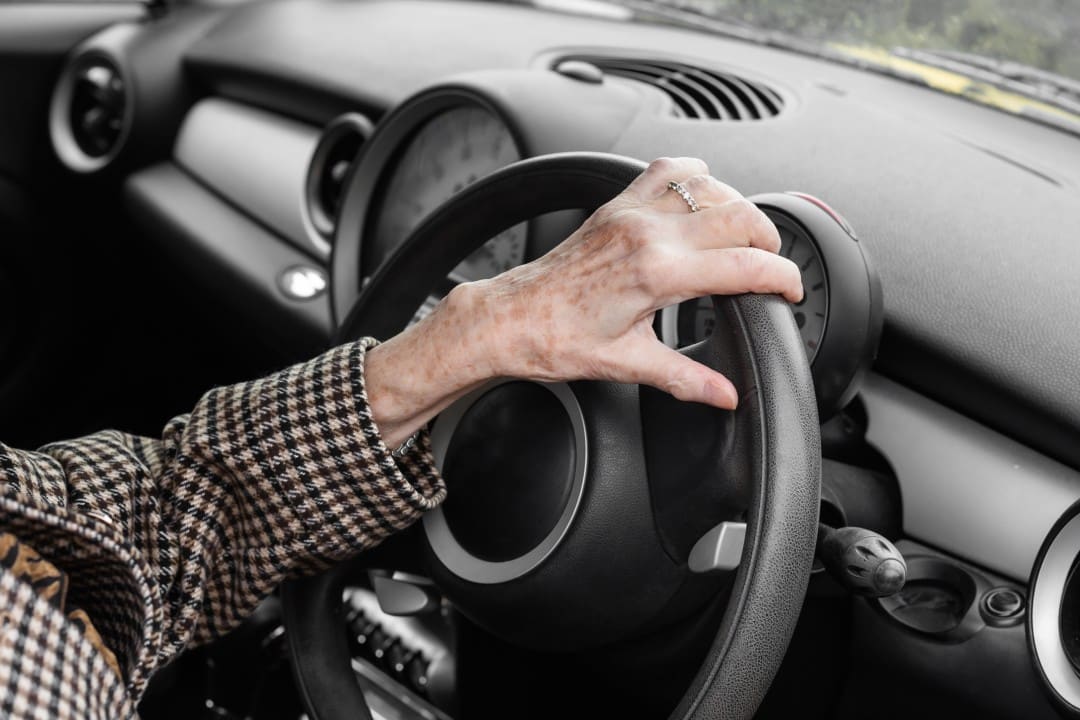
A public petition started on Portugal is generating intense debate about road safety and individual rights by proposing a driving ban for people over 75. The movement argues that the measure is necessary to reduce the number of accidents on Portuguese roads, claiming that the decline in physical and cognitive abilities associated with old age represents a growing risk. Atualmente, local legislation already requires periodic revalidations of driving licenses, but the proposal suggests a definitive interruption of the license after the established age limit.
Road accident statistics in Europa have been used by supporters of the measure to justify the need for stricter rules for senior drivers. Embora elderly people are not always the main causes of accidents, the central argument of the petition focuses on biological fragility and reduced reaction time in emergency traffic situations. The organizers of the petition are seeking enough signatures to take the topic to Parlamento, where deputies must analyze the constitutional feasibility of restricting the right to come and go based on chronological age.
- Increase in the frequency of mandatory medical examinations for elderly people in Europe.
- Questioning the effectiveness of current medical certificates issued by general practitioners.
- Impact of the loss of the license on the autonomy of citizens who live in rural areas with little transport.
- Comparison between accident rates caused by young and elderly drivers.
Current requirements for elderly drivers in Portugal
The legislation in force on Portuguese soil already establishes specific criteria for senior citizens to maintain the right to legally operate motor vehicles. From the age of 50, drivers must renew their document every five years, and after the age of 70, this interval drops to just two years, always accompanied by a detailed medical certificate. The assessment focuses on visual acuity, hearing and basic reflexes, ensuring that the individual still has the necessary faculties for safe urban and road driving.
The ongoing petition alleges that this current system is flawed, allowing people without full conditions to continue traveling on public roads. Muitos Critics of the system point out that medical examinations are often superficial and do not detect the onset of neurodegenerative diseases that can compromise collective security. On the other hand, mobility experts argue that age should not be the only determining factor, arguing that individual performance in clinical tests should prevail over any arbitrary limit imposed by law.
Arguments about safety and reaction time in traffic
Proponents of a total ban after age 75 argue that natural aging brings limitations that modern vehicle technology cannot fully compensate for. Decreased peripheral vision and difficulty processing multiple simultaneous information at complex intersections are cited as high-risk factors for this age group. The group’s aim is to align Portugal with discussions taking place in other União Europeia countries about updating road safety guidelines for a population that is living longer and longer.
Traffic studies indicate that, although experienced drivers tend to be more cautious and respect speed limits, slow maneuvers can create dangerous situations for other drivers. The petition suggests that by removing drivers over the age of 75 from the streets, there would be a significant drop in side collisions and pedestrian collisions in dense urban areas. Proponents believe that the safety of the majority must be prioritized, even if it means the end of an era of motorized independence for a significant portion of the elderly population.
Reactions from civil society and motorsport associations
The proposal met with strong resistance from associations defending the rights of the elderly and motoring clubs at Portugal. Estas entities claim that the measure is discriminatory and ignores the fact that many 80-year-old citizens maintain impeccable health and reflexes superior to those of many young people. Eles argue that the forced ban would cause severe social isolation, affecting the mental health of those who depend on cars to carry out basic daily tasks, such as shopping or medical appointments.
- Proposals to encourage the use of free public transport for those who hand in the letter voluntarily.
- Development of driving assistance systems that can mitigate human errors.
- Need for urban requalification to facilitate the movement of elderly pedestrians.
- Discussion on the civil responsibility of families in supervising senior drivers.
Legal sector representatives warn that a law based strictly on age could be challenged in European human rights courts. Constituição Portuguesa guarantees equality before the law, and preventing the exercise of an activity based solely on the date of birth is seen by many jurists as a civilizational setback. Enquanto the debate is taking shape on social media and in cafes at Lisboa and Porto, the number of signatures on the petition continues to rise, forcing authorities to look at the issue more closely.
Evolution of traffic rules on União Europeia
Portugal is not alone in this dilemma, as Comissão Europeia has been working on a review of the enabling directives for all member states. The central aim is to standardize renewal processes, possibly introducing practical driving tests for drivers over a certain age across the block. Essa The international trend ends up fueling local movements such as the Portuguese petition, which seeks to anticipate more severe safety measures to achieve goals of “zero vision” for fatal accidents on the roads.
The implementation of new rules requires a delicate balance between the need to save lives and respect for the freedom of movement guaranteed to every European citizen. Diversos countries already adopt more rigorous psychotechnical exams, which assess not only the body, but cognitive capacity and decision-making speed under pressure. Caso the Portuguese petition moves forward, the country could become a laboratory for senior mobility policies, directly influencing decisions on Bruxelas the future of road circulation in the region.
Urban mobility and alternatives for the elderly population
If the ban on driving after the age of 75 is implemented, the Portuguese Estado will have the challenge of offering viable alternatives to ensure that these people are not trapped at home. The public transport system in many interior cities is still insufficient to meet the specific mobility needs of an aging population. Sem the private car, the risk of social exclusion and depression increases considerably, generating a new public health problem that would need to be managed by the national government.
Some city halls are already testing on-demand transport models, where small vehicles pick up elderly people at home for short journeys at subsidized prices. Essas Micro-mobility solutions are seen as the most likely path to replacing private car use without sacrificing individual autonomy. The debate over the petition, therefore, goes far beyond a simple ban; he touches on the way cities are being planned to accommodate a society that, statistically, will have more and more elderly inhabitants.
Impacts on the economy and the auto insurance sector
The insurance market is also closely watching the development of this legislative proposal in Portugal, as the risk profile would change drastically. Atualmente, insurance premiums for seniors may be higher in certain categories, reflecting the statistical perception of risk associated with age. If an entire segment of consumers is compulsorily removed from the market, there will be a direct impact on insurers’ revenues and the sale of new and used vehicles in the country.
Furthermore, the domestic tourism sector, which is very dependent on travelers traveling around the country by car, could suffer declines in specific leisure segments aimed at retirees. Muitos European tourists choose Portugal to spend their retirement and value the freedom of driving along coastal and historic roads. A severe restriction like the one proposed by the petition could make the country less attractive to this public, altering regional economic dynamics that depend on consumption by this demographic group.
Position of health and road safety authorities
Autoridade Nacional of Segurança Rodoviária (ANSR) has maintained a cautious stance, focusing on the importance of supervision and continuous education. Órgãos technicians suggest that, instead of an absolute ban, the focus should be on improving medical assessment criteria and introducing partial restrictions, such as banning driving at night or on high-speed highways for those showing mild signs of decline. Essa modular approach is seen as fairer and more effective than a definitive age cutoff that does not consider individuality.
Geriatricians emphasize that aging is a heterogeneous process and that chronological age rarely accurately reflects functional health. Alguns patients aged 80 have motor capabilities equivalent to those of individuals aged 60, making any measure that neutralizes their ability to drive based solely on the year of birth unfair. Medical consensus suggests that diagnostic science has evolved enough to allow accurate assessments, making blanket prohibition laws unnecessary from a purely clinical perspective.
Next steps for petition no Parlamento Português
For the topic to be debated in plenary on Assembleia of República, the petition must reach a minimum number of certified signatures, as provided for in local legislation. Assim Once this level is reached, the document will be analyzed by a parliamentary committee that will convene experts, petitioners and government representatives for public hearings. Este process ensures that all sides of the issue are heard before any decision is made on changes to Estrada or the issuance of driving licenses.
The outcome of this popular mobilization will be a milestone for mobility policy in Portugal and could serve as an example for other countries facing similar challenges with an aging population. Independentemente Whether the ban is approved or not, the debate already fulfills the role of alerting society to the need for safer roads and more robust support for elderly citizens. Road safety remains a national priority, and the debate over who is fit to hold the steering wheel is a key part of this complex equation.





