
NASA sends Artemis II mission to explore geological mysteries on the far side of the Moon today

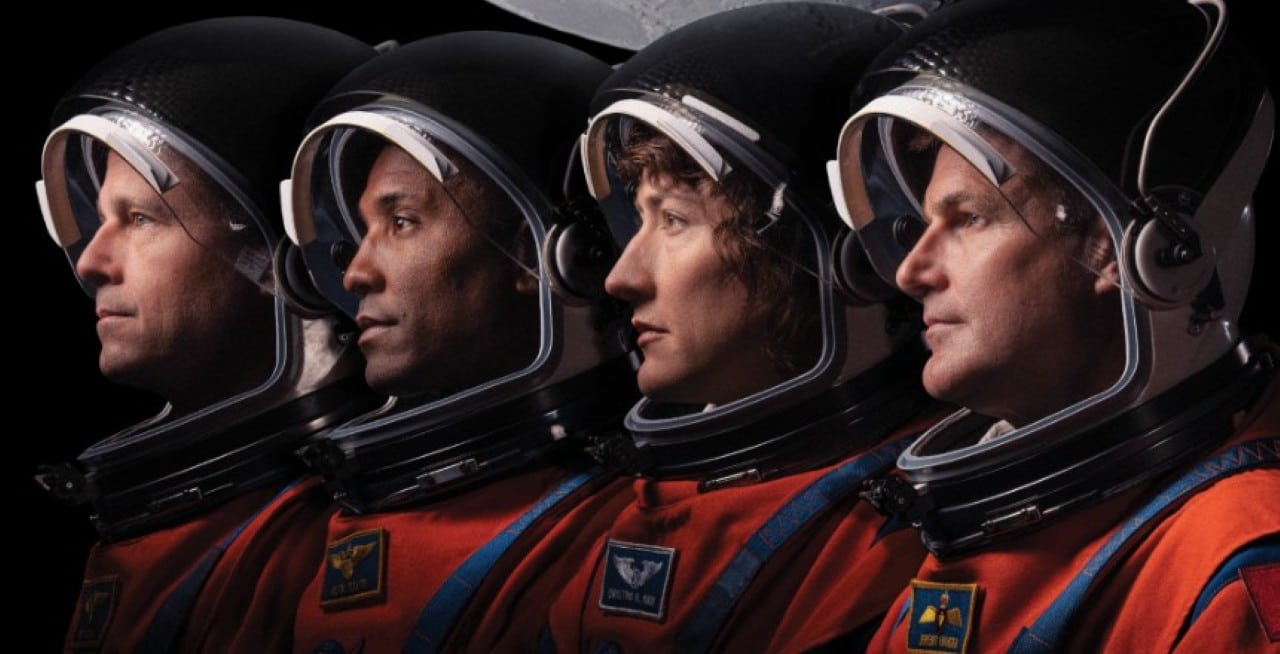
The capsule Orion reached its maximum approach to the lunar surface this Monday, marking one of the most critical and visually impactful moments of the mission Artemis 2. On board the spacecraft, astronauts Reid Wiseman, Victor Glover, Christina Koch and Jeremy Hansen became the first eyewitnesses, in more than five decades, of the desolate and mysterious landscape that makes up the satellite’s hidden face. Este phenomenon occurs due to synchronized rotation, a spatial-mechanical process where Lua takes the same time to rotate on its own axis and to orbit Terra, always keeping the same hemisphere facing our planet.
Scientific exploration of this region is fundamental to understanding the formation of the solar system, since the far side functions as a fossil record of cosmic impacts. Unlike the basalt plains known as “seas” that dominate the visible face, the terrain observed by the crew today is made up of colossal mountains and a significantly higher density of craters. Geólogos from the space agency explain that this morphological difference is due to the asymmetric cooling of the satellite and the thickness of the crust, which is much more robust on the side that we cannot see from Terra.
Unique terrain features and the composition of the lunar crust
The landscape that the crew of Orion encounters during this Monday’s flyby is described as a true planetary protection shield. For billions of years, this hemisphere has absorbed the impact of space debris and meteorites that might otherwise have struck Terra or the nearby lunar face. Essa constant exposure resulted in an extremely rugged surface, where the relief is marked by deep depressions and peaks that defy understanding of lunar gravity.
- The absence of large seas of solidified lava makes the ground brighter and more reflective than the visible hemisphere.
- The terrain is primarily composed of anorthosite, a light rock that indicates an ancient and preserved crust.
- The thickness of the crust on the far side prevents subsurface magma from reaching the surface, explaining the lack of “dark spots.”
- Visual monitoring of astronauts helps validate data previously collected by automatic orbital probes.
Sol shines brightly over this territory today, demystifying the popular idea that the dark side is permanently dark. In reality, as Lua is in a new phase for terrestrial observers, the opposite side is in full lunar day, receiving direct solar radiation. Esse excess light allows astronauts to use high-resolution cameras to map regions of interest for future manned landing missions, such as Artemis 3 and permanent bases.
Technical challenges and radio silence during the maneuver
One of the most tense moments for the control teams at Houston and the crew is the so-called “radio blackout”. Quando capsule Orion is positioned behind the physical mass of Lua, communication with Terra is completely blocked, leaving the astronauts in complete autonomy for several minutes. Este isolation occurs because radio waves cannot pass through thousands of kilometers of solid lunar rock, requiring all ship systems to operate automatically or under direct manual command from the crew.
During this quiet period, Orion makes essential trajectory adjustments to ensure that lunar gravity propels the spacecraft back to Terra with precision. The gravity assist maneuver saves fuel and tests the resilience of life support systems in an intense radiation environment. Astronauts take advantage of these minutes of isolation to carry out scientific observations that automated instruments cannot always capture with the same level of contextual detail.
Importance of the flyby for future bases on lunar soil
The success of this step Artemis 2 paves the way for the installation of stable human infrastructure at the lunar south pole in the coming years. By better understanding the thermal resistance and mineral composition of the far side, engineers can design habitats that withstand extreme temperature variations and micrometeorite bombardment. The collection of photographic and sensory data carried out today will be used to refine the landing maps for subsequent missions aimed at long-term stay.
In addition to geological aspects, the far side of Lua is considered the best location in the solar system for installing low-frequency radio telescopes. Isso is due to the fact that the lunar mass acts as a natural filter against the electromagnetic “noise” generated by human civilization in Terra. Astronautas of Artemis 2 are evaluating the conditions of visibility and stability of the ground, providing preliminary data for astronomers who plan to observe the deep universe from the radio tranquility of that region.
Preparation for return and systems integrity
After completing the tour around the hidden face, capsule Orion must resume signal with the antennas of Deep Space Network and Terra, bringing with it gigabytes of unprecedented information. The structural integrity of the ship is constantly monitored, especially the heat shield which will be tested to the extreme at atmospheric reentry in a few days. Até At the moment, all technical parameters indicate that the mission continues within the planned schedule, with oxygen and energy levels operating at nominal capacity.
This flyby not only breaks records for distance traveled by humans in deep space, but also reaffirms technological leadership in a new era of space exploration. Cooperation between international crew members demonstrates the viability of complex missions that require high technical expertise and psychological resilience. The data obtained today will serve as the basis for training manuals for future generations of explorers who will not only fly over, but also walk over, the mountains of the hidden face.
Biological experiments and radiation in deep space
In addition to visual and geological observation, Artemis 2 carries a series of experiments that analyze the impact of cosmic radiation on the human body outside the belt of Van Allen. The far side of Lua offers a unique radiation environment without the magnetic shielding of Terra, which is vital for planning future trips to the planet Marte. Sensores scattered around the cabin and on the astronauts’ suits, they record each variation in the flow of solar particles during the journey.
Preliminary studies indicate that Orion’s shielding has been effective in maintaining exposure levels within the safety limits established by aerospace medicine. The crew maintains a rigorous exercise and health monitoring routine to mitigate the effects of prolonged microgravity. Esses Health data is transmitted as soon as communication is reestablished, allowing doctors on the ground to assess astronauts’ physical vigor in real time.
Evolution of space communication technology
To mitigate the radio blackout problem on future missions, space agencies are already planning to launch relay satellites that will be stationed at points Lagrange. Esses equipment will allow spacecraft on the far side to maintain constant contact with Terra, eliminating the periods of total isolation faced by Artemis 2 today. The current test serves to validate how much autonomy a modern crew can maintain without immediate support from the control center.
Cameras installed on the outside of Orion captured ultra-high definition images that will be processed and released to the public in the coming days. Essas Images are fundamental to public engagement and science education, allowing people around the world to see the hidden side with a clarity never before achieved. The precision of optical instruments makes it possible to identify craters just a few meters in diameter, something impossible to do with telescopes based on the Earth’s surface.
Scientific conclusions and the legacy of Orion
The end of this stage of the mission marks the beginning of an exhaustive analysis that will last months, where each image and telemetry data will be scrutinized by international scientists. Orion has proven to be a robust and reliable platform for transporting humans into deep space, overcoming the thermal and mechanical challenges posed by the lunar environment. The legacy of this mission will be measured not only by the records broken, but by the knowledge accumulated about the origins of Lua.
Every mapped crater and crustal density measurement brings humanity closer to fully understanding how rocky planets form and evolve. Artemis 2 is the necessary link between the glorious past of the Apollo missions and the sustainable future of the lunar colonies. The journey continues with the spacecraft now on its return trajectory, preparing for the final dive into Oceano Pacífico that will close this chapter of contemporary space exploration.





