
New generation of Nissan Kicks debuts on the Japanese market with e-POWER system and robust design
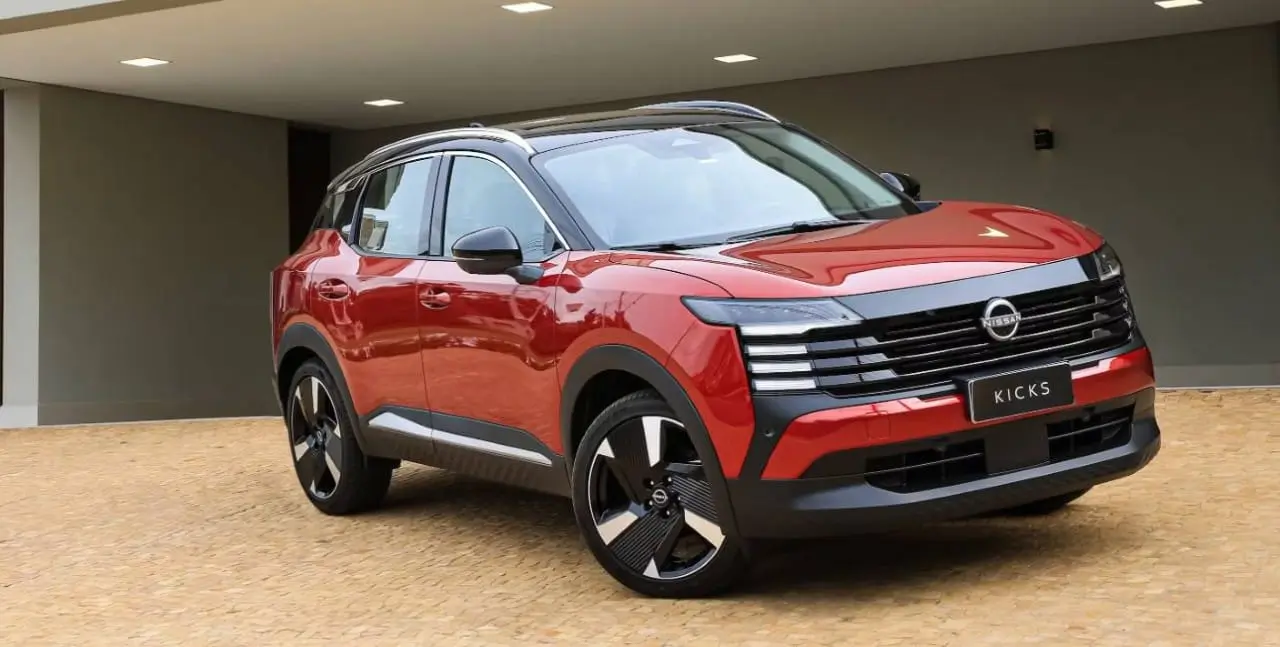
The Japanese automaker confirmed the launch of the second generation of its compact sports utility vehicle for the Asian market in the last quarter of the year. The vehicle underwent a complete redesign of its structure, adopting a more imposing stance and expanded dimensions to meet new consumer demands. The project aims to consolidate the brand’s presence in one of the most sought-after segments of the global automotive industry.
The development of the utility vehicle focused on improving internal space and directional stability, resulting in a significant increase in wheelbase and overall width. Engineers prioritized occupant comfort, implementing aerodynamic solutions that reduce noise in the cabin during highway travel. The updated platform allows for a smoother, more responsive ride on different types of terrain.

The sales strategy focuses on offering an electrified engine exclusive to Japanese territory, eliminating traditional combustion options. The decision reflects the commitment to reducing emissions and the transition to cleaner mobility, in line with the strict environmental regulations in force in the Asian country.
Historical context and reactions of the Asian market
The compact SUV segment in Japão has experienced continued growth over the past decade, driven by urban drivers’ preference for versatile vehicles. Competition has set high standards of efficiency and technology, forcing automakers to constantly innovate. Modelos Rivals have dominated recent sales, creating the need for a forceful response from the manufacturer.
The introduction of this new generation represents a milestone in the model’s trajectory, which originally won over the public for its agility and economy. Local consumers showed great expectations regarding technological updates and the new design, expressing interest in dealerships even before the official announcement. Preliminary reception indicates strong pent-up demand for affordable electrified options.
Understand the case: Nissan Kicks utility vehicle offers a wider cabin than Toyota Yaris Cross XRE for R$ 152 thousand
Automotive sector analysts estimate that vehicle repositioning could significantly change the market shares of the main automakers. The combination of an efficient powertrain with an advanced safety package exactly meets the purchasing criteria of modern Japanese families. Commercial success will depend on production capacity and the pricing policy adopted at launch.
Dealers prepare demonstration campaigns to familiarize customers with the unique propulsion technology. The electric driving experience, without the anxiety of limited autonomy, is the main sales argument that will be explored in advertising campaigns. The distribution network expects an increase in the flow of visitors during the first months of product availability.
Mechanical architecture and energy efficiency
The heart of the new utility lies in its series hybrid propulsion technology, where the combustion engine acts exclusively as an electrical energy generator. Este system eliminates the direct mechanical connection between the gasoline engine and the drive wheels, ensuring that the vehicle is powered entirely by electric motors. The configuration provides instantaneous and linear acceleration, a typical characteristic of fully electric vehicles, but with the convenience of quick refueling at conventional gas stations. Intelligent energy management optimizes generator operation, keeping it in the most efficient rotation ranges to minimize consumption and pollutant emissions.
Intelligent all-wheel drive is another technical difference implemented in this generation, using independent electric motors on the front and rear axles. Torque vector control distributes driving force precisely and in fractions of a second, instantly adapting to road grip conditions. Esta technology substantially improves cornering stability and safety on slippery surfaces, such as roads covered in snow or heavy rain. The integration of the regenerative braking system allows the recovery of kinetic energy during decelerations, recharging the high-voltage battery and increasing the overall efficiency of the mechanical assembly.
Learn more: Japanese automaker reveals new Nissan Kicks e-POWER with hybrid engine and updated design in Asia
Enlarged dimensions and internal comfort
The structural redesign resulted in considerably larger external measurements, with the length reaching 4,366 millimeters and the width reaching 1,801 millimeters. The 2,660 mm wheelbase represents a substantial gain in legroom for rear seat passengers. The ground clearance was also increased, making it easier to overcome urban obstacles and improving the driver’s visibility.
The interior has been completely redesigned to offer a premium atmosphere, using soft-touch materials and refined finishes on the dashboard and doors. Key cabin highlights include:
– Assentos Front wheels with zero gravity technology to reduce fatigue.
– Isolamento improved acoustics with thicker glass.
– Materiais sound absorbers applied to the fire wall and floor.
The trunk capacity was optimized by repositioning the battery pack, ensuring a flat floor and facilitating the loading of bulky luggage. Compartimentos additional storage units have been integrated into the cabin, meeting the need for practicality in daily use. The automatic multi-zone climate control system ensures individualized thermal comfort for all occupants.
Innovations in connectivity and digital screens
The traditional instrument panel has been replaced by a fully digital interface, consisting of two 12.3-inch screens integrated under a single glass frame. The display positioned in front of the driver displays vital driving information, energy flow and safety alerts, with customizable layouts. The central screen manages the infotainment system, satellite navigation and general vehicle settings.
Integration with smartphones occurs wirelessly, supporting the main protocols on the market for application mirroring. The vehicle has multiple fast charging ports and an induction base on the center console. Atualizações Remote software ensures that operating systems remain at the latest versions, adding new functionality throughout the life of the car.
More on this story: Chevrolet Trax and Nissan Kicks 2026 intensify competition in the entry-level compact SUV market
Driver assistance systems
Active safety has been taken to a new level with the incorporation of a comprehensive package of sensors, high-resolution cameras and millimeter-wave radars that monitor the vehicle’s surroundings in 360 degrees. The semi-autonomous driving assistant controls steering, acceleration and braking on single-lane highways, keeping the car centered in the lane and maintaining a safe distance from traffic ahead. The emergency braking system now has the ability to detect pedestrians and cyclists even in low light conditions, automatically applying the brakes if the driver does not react in time. Blind spot monitoring intervenes with steering if a dangerous lane change is initiated, while rear cross traffic alert prevents collisions during reversing maneuvers in parking lots with restricted visibility. Sensores of fatigue analyze the driving pattern and issue visual and audible alerts suggesting breaks when they detect signs of drowsiness or inattention on the part of the operator.
Visual identity and exterior design
The exterior aesthetics adopt a geometric and robust design language, highlighted by the wide front grille that merges perfectly with the tapered LED headlights. The floating roof, a trademark of previous generations, was maintained and improved with two-tone paint options, giving the silhouette a dynamic appearance. 19-inch alloy wheels fill the prominent wheel arches, reinforcing the vehicle’s athletic stance and visual presence on the streets.
Commercial positioning strategy
The pricing of the new model was carefully calculated to maintain competitiveness against direct rivals, offering a superior equipment package in the entry-level versions. The automaker is betting on long-term cost-benefit, highlighting fuel savings and lower electrical system maintenance costs compared to traditional combustion engines.
The launch campaign will emphasize the transition to sustainable mobility without compromising everyday practicality. The dealership network will offer flexible financing plans and guaranteed buyback programs to attract a younger audience connected to new automotive technologies.
More news in Latest News (EN)
See more → Apple prepares iOS 27 with contextual Siri and visual search
 Chinese leaks reveal Xiaomi 18 Fold panel reaches 4,000 nitsXiaomi 18 Fold display reaches 4,000 nits peak brightnessApple redesigns iOS 27 with upgraded Siri and camera search
 Final Fantasy VII trilogy bundle hits Japan for 500 dollars
 Capcom classics and Mycopunk arrive on PlayStation Plus tiersDino Crisis 2 leads fresh wave of PlayStation Plus gamesTrilogy pack for Final Fantasy VII arrives in Japan for $500
 Ten classic PlayStation 2 titles that deserve full remakes
More news on Mix Vale
- 1German racer Michael Schumacher remains secluded 12 years later
- 2Menendez brothers granted earlier 2027 parole hearing, reigniting debate over high-profile case
- 3Alaskan cruise dreams shattered as technical woes force abrupt cancellation for hundreds of passengers
- 4Indiana farm manager affirms dedication to controversial Charlie Kirk corn maze despite widespread public backlash
- 5Classic PlayStation 2 games demand complete modern revivals
- 6Classic RPG Astonishia Story arrives on Switch platforms in 2027
- 7Astonishia Story remake will launch on two Nintendo platforms
- 8Larissa Morata dies from gunshot wound in Embu das Artes
- 9Woman found shot dead with officer gun in Embu das Artes
- 10Standalone edition opens the frontier of Red Dead Online