
Purple Ray Studio reveals Koshmar The Last Reverie for PC with sanity mechanics and dream rifts

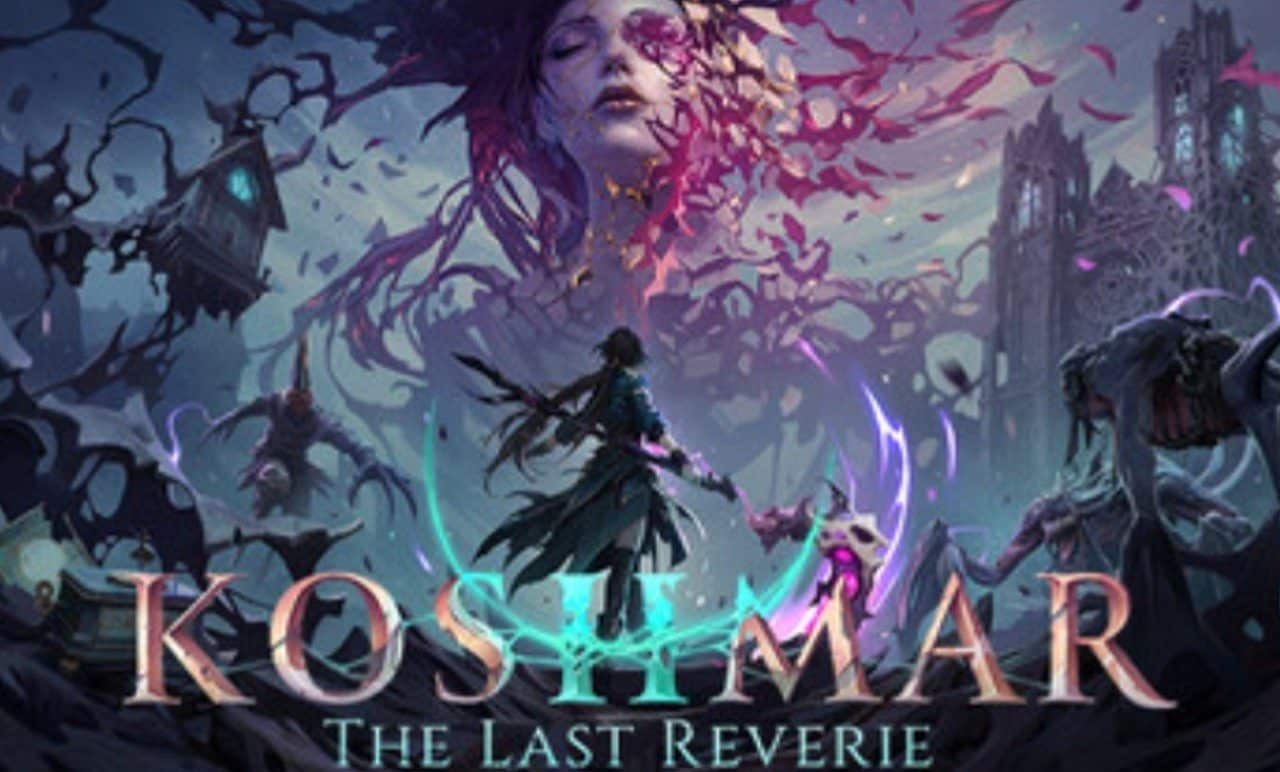
The entertainment software development industry sees the introduction of a new project focused on action and narrative progression. Developer Purple Ray Studio has officially confirmed the production of Koshmar: The Last Reverie, an unprecedented title structured in a universe of dark fantasy and survival mechanics. The ad highlights the direct integration between gameplay and the consequences of choices made by the user during the main campaign.
The project’s central setting transports players to a gothic setting affected by a severe and inexplicable clinical condition. The narrative is based on an anomaly described as a sleep plague, which puts the population in a state of profound lethargy. The spread of the disease resulted in the loss of control by local authorities, causing the collapse of basic services and the paralysis of commercial activities in the affected region.

The game mechanics require a continuous transition between the physical world and the dream plane, requiring the user to manage resources, apply combat tactics and carry out investigations. The software was programmed to prioritize the exploration of scenarios and the resolution of environmental puzzles, elements that make up the technical structure and design of the title’s levels.
Victorian architecture and the collapse of infrastructure in Radwan
The progression of the journey takes place entirely in the fictional city of Radwan, a place characterized by its Victorian-inspired industrial architecture and urban districts in an advanced process of structural degradation. The construction of the virtual environment ranges from factory areas, marked by the presence of heavy machinery and smoke, to peripheral areas that were abandoned by the local aristocracy. The graphic design team established an oppressive visual atmosphere, in which the elements of the scene directly reflect the severity of the health crisis that is compromising the municipality’s infrastructure.
Navigating the three-dimensional map requires the player to understand local geography to establish safe routes and avoid dangers associated with the sleep anomaly. Urban mapping presents blocked shortcuts, doors that require specific keys and restricted passages that require prior acquisition of crossing skills. The environment acts as an active component in the gameplay, requiring the memorization of landmarks and the identification of safety zones distributed throughout the city’s different districts.
Dream investigation and the role of the protagonist Violet
The narrative is driven by Violet, a character whose family lineage has historical connections with the funeral services of Radwan. Esta professional heritage provides the protagonist with a technical perspective on anatomy and the ongoing health crisis. Knowledge of rites of passage makes it easier to navigate restricted areas and interpret collected medical documents.
The character’s main mechanics consist of the ability to move between physical reality and manifestations of the dream plane. Esta duality makes it possible to investigate the origins of the plague, at the same time that dimensional anomalies begin to invade the material world. Switching between realities alters the geometry of the environment, revealing hidden platforms and paths.
During exploration, the system generates procedural anomalies that act as unpredictable tactical challenge zones. The architecture of these locations undergoes modifications with each new incursion, changing the arrangement of opponents, traps and supplies. The procedural algorithm prevents the exact repetition of routes, requiring constant adaptation of the user’s movement strategies.
Dynamic Sanity System Impact on Progression
The game’s development structure incorporates a sanity system that operates as an active gauge of decisions made during the investigative campaign. Diferente traditional secondary indicators, this mechanic actively modifies the visual, auditory and interactive perception of the environment around the protagonist. Prolonged exposure to the dream realm, utilization of specific abilities, and moral choices impact the appearance of Violet and the reception of non-playable characters in survivor camps. The character’s psychological state determines the release of new dialogue options, changes the exploration routes available in the districts and modifies the data contained in the documents found. Managing this meter regulates access to different powers and affects the ramifications of the main plot. Diferentes approaches result in varied outcomes for the urban crisis, demanding continuous strategic planning from the player. The mechanics require a precise balance between applying brute force in confrontations and maintaining cognitive stability to solve complex puzzles.
Tactical customization and combat skill trees
The head-to-head system works through skill trees divided into two main progression categories. Customization allows the combat style to be adapted to the user’s preferences, survival needs and the character’s sanity level. Advancement requires collecting experience points by eliminating threats.
The clarity skill category provides features for controlling multiple opponents, evasion tactics, and health recovery methods. Esta aspect favors defensive strategies and resource management in prolonged battles, allowing the immobilization of enemies. The use of these techniques presents a reduced consumption of mental energy.
On the other hand, the tree focused on night demonstrations offers high-impact attacks with an expanded area of effect. Esta choice demands a style of play focused on quickly eliminating threats, resulting in a high consumption of the sanity bar. The blows break defenses easily, but reduce the protagonist’s window of protection.
The most complex clashes occur within the dimensional rifts located on the urban map. Success in these events guarantees access to rare resources, materials for improving equipment and memory fragments. The combat system improves blocking accuracy and penalizes disorderly attacks.
Three-dimensional exploration and seamless vertical mobility
The city’s topography was designed as a three-dimensional environment that requires the application of vertical exploration mechanics. The movement includes crossing roofs, climbing external pipes and navigating sewage networks. Esta structure expands tactical alternatives, allowing stealthy approaches or attacks from elevated positions against patrols.
The scene design features organic transitions between ground level and suspended structures, without loading screens. Detailed exploration rewards the user with locating citizens in a state of lethargy. Rescuing these individuals ensures permanent improvements to the base of operations, freeing up traders and equipment upgrades.
Balancing through real-time adaptive difficulty
The game’s leveling employs a dynamic difficulty system that evaluates the player’s effectiveness during confrontations and exploration. The algorithm automatically calibrates the aggressiveness of opponents, the damage of traps and the rate at which healing items appear. Adjustments are based on performance recorded in recent activity sessions.
When the software identifies ease in progression, enemies become more resistant and begin to use flanking tactics. Continuous advancement requires improving dodging and defense mechanics. The objective of the system is to maintain a constant level of challenge throughout the investigation.
Technical specifications and availability on platform Steam
The official launch of the project is scheduled for computers, with digital distribution confirmed through platform Steam. The developer has guaranteed support for multiple resolutions, unlocked frame rates and optimization for various hardware configurations. The graphics engine works in conjunction with a positional audio design, providing tactical data on the location of threats in the environment.





