
Ukrainian photographer reveals moon edited in blue, pink and green tones with no connection to NASA

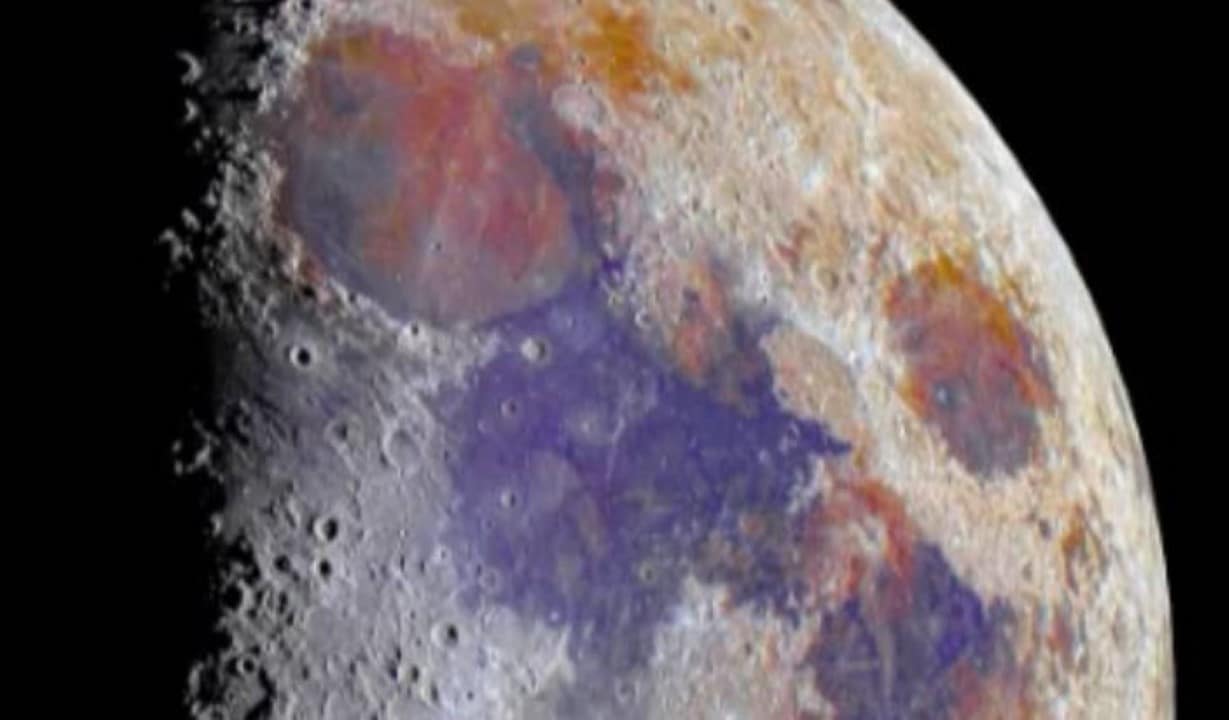
An image of Lua displaying vibrant shades of blue, pink and green has circulated heavily on social media in recent days. Muitos users associated the record with mission Artemis II of Nasa, suggesting that the space agency had released new captures of the natural satellite. In reality, the photographs were neither produced nor released by the North American agency. The author of the images is Ukrainian photographer Ibatullin Ildar, who captured the material in August 2025 and applied digital editing to highlight specific details.
The processing used intentionally increased the saturation of the original colors of the lunar surface. Essa technique makes it possible to highlight variations in the mineral composition of the soil, something that does not appear to the naked eye in common observation. Regiões with a higher concentration of titanium tend to appear in shades of blue, while areas rich in iron oxide are highlighted in orange and red. The result creates a striking but artificial look known among astronomers as a false-color map.
- The images were generated from real records from Lua.
- Editing took place with photo processing software.
- The main objective was to reveal chemical differences in the lunar crust.
- No link exists with current Nasa missions.
Origin of images and clarification of the author
Photographer Ibatullin Ildar published the photos on his profile at Instagram and explained the creation process. Ele captured several images throughout observation sessions and then adjusted the color channels to highlight the lunar mineralogy. Essa practice is common in amateur and professional astrophotography when seeking to study the surface without relying solely on raw spectral data.
Many recent shares mistakenly linked the material to Artemis II, a mission that has not yet carried out public captures with this profile. Nasa has used similar techniques in its own images since the 1990s, as in the case of probe Galileo, which produced colorful mosaics to map lava flows and highlands. However, the April 2026 viral releases do not correspond to any official release from the agency.
The confusion gained strength because the intense colors draw immediate attention and generate curiosity about the true appearance of Lua. Especialistas reinforce that the natural satellite reflects sunlight in a mostly gray way, with subtle variations imperceptible without digital amplification. The work of Ildar serves as an educational tool, but requires context to avoid misinterpretations.
How editing reveals the moon’s mineral composition
False-color techniques transform invisible data into visual patterns that are clear to the human observer. The predominant blue in certain craters and seas indicates a high presence of titanium, an important element for understanding the lunar volcanic history. Já The reddish and pinkish tones point to iron concentrations in different geological formations.
These maps help researchers identify regions with scientific potential or even resources for future exploration. Nasa and other space agencies employ similar methods in analyzing orbital missions, combining photos at multiple wavelengths. The result is never intended to represent the actual color seen from space or Terra.
- Titanium often appears dark blue.
- Iron and oxides generate variations from orange to pink.
- Green appears in areas of mineral transition.
- Processing does not alter the actual topography.
Difference between real colors and digital processing
Lua does not emit its own light and its surface reflects the solar spectrum uniformly most of the time. Pequenas differences in albedo and composition create slight hues, but nothing comparable to the vibrant tones of viral images. Digital editing amplifies these subtle signals for study purposes without modifying the original geometry or topographic details.
Amateur and professional astronomers have taken this approach for decades to explore lunar geology from ground-based telescopes. The Ukrainian photographer himself compiled hundreds of individual frames before applying the adjustments. Essa Detailed composition requires patience and technical knowledge to line up shots under favorable weather conditions.
Scientific use of false-color images
Space agencies turn to processed images to map resources and plan future missions. Dados about titanium, for example, is of interest because the mineral can serve as a raw material in lunar bases. Da Likewise, iron mapping helps understand the formation of the satellite billions of years ago.
These visual representations make it easier to communicate complex results to the general public. However, captions and technical explanations often accompany official records to clarify that colors are attributed and not natural. The absence of this information in many shares on networks contributed to viralization without context.
Saturation technique applied by the photographer
Ibatullin Ildar used Adobe Photoshop to selectively raise saturation levels on different channels. The procedure highlights contrasts between minerals without inventing non-existent elements on the surface. Trata is a standard tool for analyzing astronomical data, similar to what laboratories do with spectra collected by probes.
The final result combines visual beauty with scientific information, although it requires care in dissemination. Usuários who only saw the isolated image tended to interpret it as a direct capture of a recent mission. The author’s subsequent clarification helped correct some of the misinformation.
The practice of creating Mineral Moon, as it is called by some astrophotographers, allows any observer with suitable equipment to explore details of Lua. Ela demonstrates how accessible tools can bring the public closer to advanced geological concepts. Mesmo Thus, the distinction between raw record and processed version remains essential for accurate understanding.
The renewed interest in Lua reflects the current moment of preparations for human return to the satellite. Missões and Artemis seek exactly to map these mineral resources with greater precision. The edited images, despite their amateur origins, serve as a reminder that the lunar surface has chemical diversity hidden beneath a gray appearance.





