
Alcaraz and Sinner dominate opponents on clay and reach the semifinals of the Monte Carlo Masters

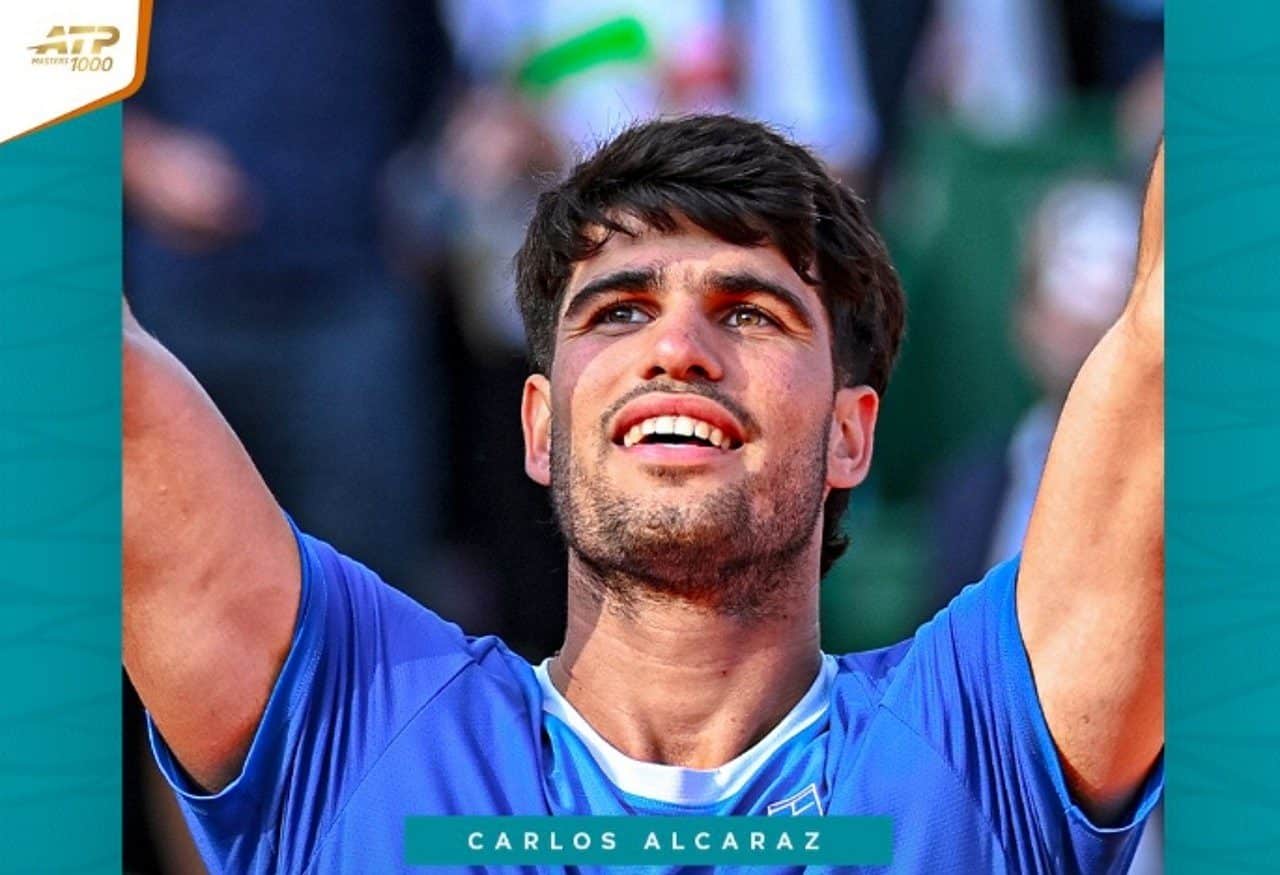
The main names of the men’s professional circuit confirmed expectations on the clay courts of the Principado of Mônaco. The Spanish Carlos Alcaraz and the Italian Jannik Sinner guaranteed passage to the semifinals stage of the Masters 1000 of Monte Carlo, event which marks the opening of the traditional European tour.
The decisive round highlighted the technical superiority of the current leaders of the international classification. Ambos The athletes demonstrated a quick transition from the fast North American courts to the slow surface, imposing an intense pace of play from the first games played.
Advancement in the Monegasque tournament represents a fundamental strategic movement in season planning. The competition distributes crucial points for the race to the top of the sport, in addition to attracting maximum capacity in the stands of the local sports complex.
Tactical adaptation and Spanish dominance on slow courts
The current leader of the world ranking needed little time on the court to completely dismantle Alexander Bublik’s strategy. With direct partials of 6/3 and 6/0, the Spanish tennis player used deep returns and extremely agile lateral movement to neutralize the strong serve of his Kazakh opponent, taking control of the ball exchanges at the back of the court. The offensive posture adopted from the first set prevented any attempt to react, consolidating the victory in a resounding way.
The aggressive tactics of the current tournament champion nullified Bublik’s traditional trick shots, which usually use underhand serves and unexpected drops to break the opponents’ rhythm. With this positive result, the Spaniard reinforces his status as a specialist on clay and remains firm in his search for a second consecutive title in Principado, demonstrating that the physical wear and tear of previous competitions did not affect his performance on clay.
Italian performance and breaking barriers on the surface
On the other side of the bracket, the vice-leader of the international classification showed a very high level of concentration to overcome the Canadian Felix Auger-Aliassime. The final score of 6/3 and 6/4 reflected the athlete’s patience in prolonged ball exchanges.
The Italian, widely recognized for his powerful strikes and flat trajectories, needed to adapt his hitting mechanics. Generating more topspin has become a natural requirement to keep the ball heavy on clay courts.
This specific tactical adaptation was the crucial factor in keeping the Canadian on the defensive for most of the match. The strategy considerably limited the opponent’s counterattack opportunities, forcing unforced errors.
The victory in the quarter-finals attests to the excellent moment the player has had in the current season. The challenge now is to prove that this level of excellence is maintained on clay, a surface where adaptation has historically been most difficult.
Direct confrontation against the consistency of German tennis
The next obstacle in the semifinals will be the German Alexander Zverev, currently third in the professional classification, in a duel that pits two of the most consistent players on the circuit face to face. The German tennis player arrives at the penultimate round of the tournament with high confidence, after demonstrating an extremely sharp serve and great mobility in previous matches, having a largely favorable record in competitions played on clay. Especialistas point out that the key to victory in this match will be taking advantage of the first serve and the ability to dictate the pace of the rallies from the return. The Italian will need to use all his travel speed to respond to Zverev’s deep attacks, while the German will seek to shorten the points whenever possible, going up to the net to volley and avoid excessive wear and tear in the backcourt exchanges.
Open path and surprises in the other bracket of the competition
At the other end of the tournament, the leader of the ranking awaits the definition of his next opponent, who will emerge from the clash between the Monegasque Valentin Vacherot and the Australian Alex De Minaur. The presence of the host athlete, current number 23 in the world, at this advanced stage is considered the main surprise of this edition of the event.
An eventual classification of De Minaur, currently sixth place, would offer a completely different tactical challenge, focused on tireless defense. Independentemente of the rival, the technical committee focuses on maintaining aggressiveness and rigorous control of physical exhaustion for the final stretch.
Tight dispute for leadership of the international ranking
The possible final between the two top seeds carries a weight that transcends the dispute for the Masters 1000 trophy. The direct confrontation will have an immediate impact on the world score, requiring the Spaniard to defend the points gained in the previous year to avoid getting closer to his rival.
For the Italian, the current European tour represents a valuable opportunity to score unprecedented points, given that his performance on this surface last season was modest. A good result at Principado serves as an injection of confidence before the start of the next commitments on clay.
Retrospect of titles and statistics of the circuit leaders
The rivalry between the two young talents has monopolized the sport’s attention throughout the year, with both sharing the main achievements of the calendar. The balance of forces creates a scenario of high expectations for European tournaments.
Their performance reflects the technical superiority they have over the rest of the competitors at this point in the season. The numbers show regularity in the decisive phases.
– The Italian has accumulated two titles at level Masters 1000 in the season, winning at Indian Wells and Miami.
– The Spaniard holds the achievements of Australian Open and the Doha tournament in the same period.
– Ambos suffered very few defeats before the start of the European clay tour.
Rise of Brazilian tennis with unprecedented campaign at the event
The tournament was also the stage for an important milestone for national sport, with the outstanding campaign of Brazilian João Fonseca, who reached the quarter-finals in an unprecedented way. The young man’s trajectory, interrupted only by Zverev, included significant victories and guarantees a significant rise in the next update of the professional list, consolidating his name as a real promise.
Physical requirement and economic impact on Principado of Mônaco
The transition to clay requires tennis players to make a complete adjustment to their training, recovery and sports nutrition routines. The surface makes the game considerably slower, requiring longer rallies and continuous effort on the lower joints. Multidisciplinary teams work intensely behind the scenes, using advanced physiotherapy techniques to ensure that athletes can withstand the load of daily games without the risk of serious muscle injuries that could compromise the rest of the calendar.
In addition to the sporting aspect, the event transcends the courts and consolidates itself as a vital engine for the local economy during the spring. The infrastructure set up attracts thousands of tourists and investors, generating significant financial activity in the hotel and luxury services sectors. The box office success of this edition reaffirms the commercial strength of the sport and the tournament’s ability to maintain its centuries-old tradition combined with the modernity required by high performance.





