
Artemis II astronauts record flashes of impacts on the far side of the Moon

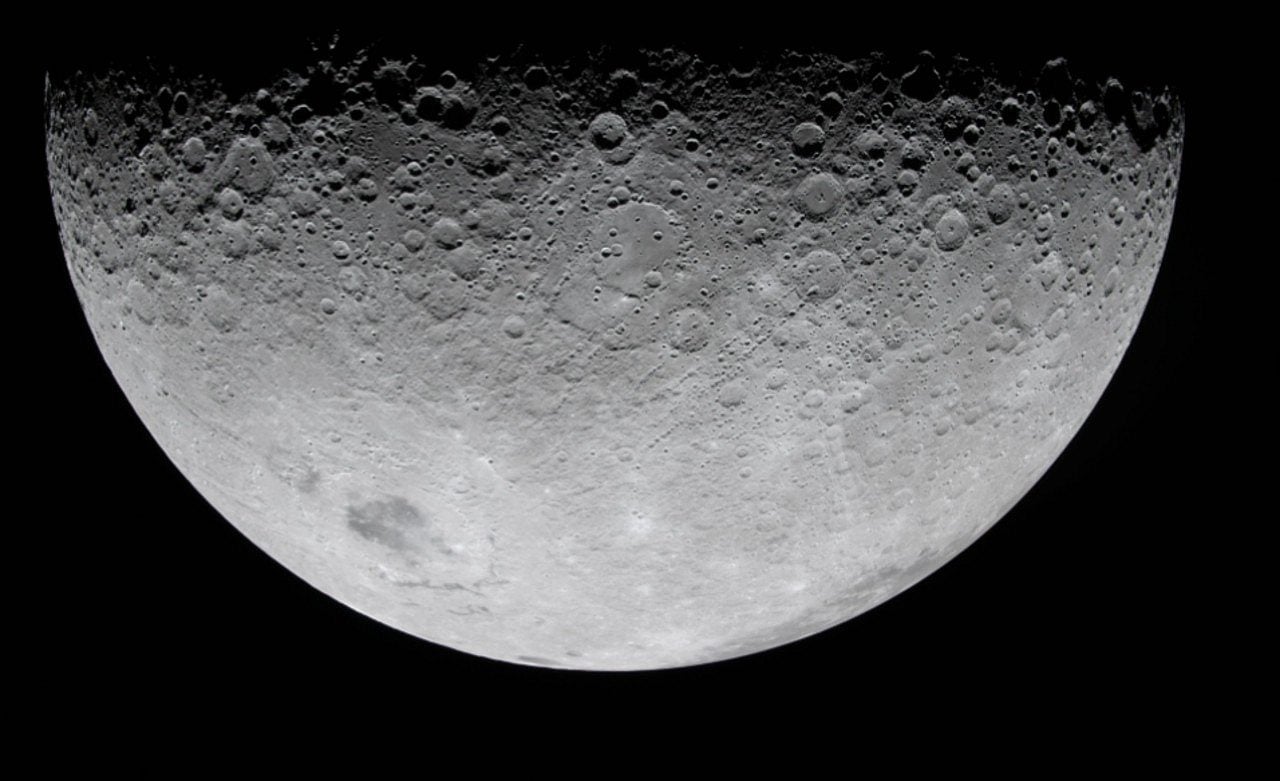
The crew of mission Artemis II of Nasa observed with their own eyes six micrometeorite impacts on the far side of Lua. The event occurred near the end of the closest approach of capsule Orion to Lua, on April 6, 2026, when the Sol was eclipsed by Lua for almost an hour. Essa direct observation took place in dark conditions that made it possible to visualize the flashes generated by direct collisions on the lunar surface, with no atmosphere to cause prior burning as occurs in Terra.
The astronauts recorded the flashes during the period in which the spacecraft passed through the region closest to the natural satellite. Imagens high-resolution images transmitted by laser communication also showed the lunar surface marked by craters from impacts accumulated over billions of years. Lua acts as a preserved record of collision events, including material from interstellar objects originating outside Sistema Solar.
- The impacts occurred on the hidden, invisible face of Terra.
- The absence of a lunar atmosphere allows direct collisions.
- The flashes were visible to the naked eye by the crew.
The formation of Lua dates back to a large impact with a proto-planet the size of Marte, called Theia, which ejected material from the Earth’s surface. Após the initial formation with a smooth surface, the satellite accumulated numerous craters visible in recent images. Esse accumulation transforms Lua into a kind of cosmic museum that preserves traces of impacts, some delivered by interstellar objects.
Direct observations expand understanding of lunar bombardment
Data collected during the flight of Artemis II provides new calibration for statistics on impacts by millimeter-sized micrometeorites. Essa calibration has implications for the long-term survival of astronauts and delicate infrastructure installed on the lunar surface. The observation confirms the constant flow of small bodies that reach the satellite without atmospheric barriers.
Scientists are now analyzing the images and descriptions provided by the crew. Essas information complements previous studies on the frequency and size of impactors in the lunar environment. The mission represents a breakthrough in human exploration beyond low Earth orbit, with a focus on preparing for future lunar bases.
Moon joy [noun]
— NASA (@NASA)April 10, 2026
the feeling of intense happiness and excitement that only comes from a mission to the Moon
The Artemis II crew bring us endless Moon joy.pic.twitter.com/7vrS1lLd0C
Calculation indicates relevant chance of interstellar impacts
The probability of an interstellar object like 3I/ATLAS having impacted Lua over 4.5 billion years of lunar history amounts to about 17%. Esse value arises from multiplying the numerical density of interstellar objects per unit volume, the typical speed of 60 kilometers per second, the cross-sectional area of Lua 9.5 million square kilometers, and the age of the satellite. The density was estimated to be 0.007 per cubic astronomical unit based on analysis of data from the Hubble space telescope.
This chance is equivalent to the probability of a six-sided die falling on a specific face. A single impact from an object with a mass of the order of a billion tons could cover the entire lunar surface with a thin layer of interstellar dust. Over time, this layer mixes with thicker dust generated by Sistema Solar asteroids, the type seen by Artemis II astronauts.
The surface of Terra, with an area 13.5 times larger than that of Lua, must have recorded some similar impacts throughout history. Esses events occurred separated by intervals of about a billion years, which allowed geological processes to bury their traces over time.
Previous proposal suggests telescope in lunar orbit for real-time detection
In 2019, astronomer Avi Loeb and graduate student Amir Siraj published a paper proposing to systematically search for interstellar impacts in Lua. The study recommends sending a new telescope into lunar orbit to monitor interstellar collisions in real time and serve as a laboratory for hypervelocity collisions. An instrument with a diameter greater than two meters could detect at least one interstellar object impact a few centimeters in diameter among hundreds of Sistema Solar meteoroids each year.
For each interstellar event detected, measurements of reflected light, shadow, optical glare and crater formation would allow the speed, mass, density and composition of the impactor to be determined. Essa capacity would expand knowledge about material originating from outside Sistema Solar.
The proposal could come to fruition in the coming years as part of the Artemis program, which aims to establish a human base with technological and scientific infrastructure at Lua. The comprehensive survey of meteor flashes would transform Lua into a capture network for interstellar material.
Search for interstellar material gains new tool with manned mission
The observation of the six impacts during Artemis II reinforces the potential of Lua as a platform for studying interstellar objects. Dentre the rocks that make up most lunar impactors, there may be collision sites for technological debris from extraterrestrial civilizations. Essa possibility adds a new tool to the set of methods used in the search for extraterrestrial technological civilizations over 66 years.
Mission data contributes to calibrating impact risk models in lunar environments. Cientistas continue to process the visual information and transmitted images to refine estimates about the flux of micrometeorites and larger objects. Artemis II marks an important step in the resumption of manned lunar exploration after more than five decades.
Implications for future lunar infrastructure
Direct detection of flares helps better assess risks for long-duration surface missions. Impactos frequent micrometeorites require specific protection planning for habitats and equipment. Crew logs provide valuable data that complements previous observations made by unmanned missions.
Combining visual observations with high-resolution images allows for more accurate analyzes of the distribution and size of recent craters. Esses elements fuel discussions about the history of lunar bombardment and its relationship with interstellar objects.
Mission Artemis II demonstrates the feasibility of scientific observations during manned flights around Lua. The results encourage the development of dedicated instruments for continuous monitoring in lunar orbit.





