
Brazilian João Fonseca is surpassed by Alexander Zverev in the quarterfinals of the Monte Carlo Masters

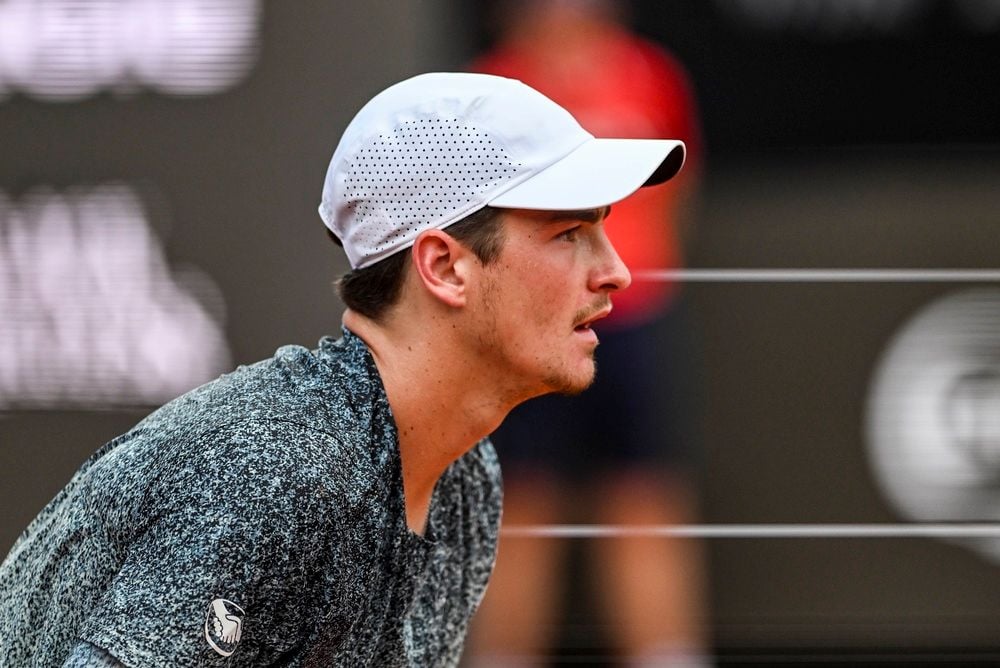
The tennis player from Rio ended his participation in the Mônaco tournament this Friday, April 10, 2026, after a high-level technical clash on the central court. The 19-year-old athlete, currently number 40 in the ranking of Associação of Tenistas Profissionais, faced the third-placed German in the world rankings and ended up being beaten by a score of 2 sets to 1. The match required great physical and mental endurance from both competitors, lasting exactly two hours and forty minutes of intense competition on clay.
The young athlete’s campaign represents a relevant statistical milestone for national sport, marking the first time that a representative of the country has reached the quarter-final stage in this specific event since the 2001 season. The result confirms the player’s ascendant phase, who has maintained a high level of competitiveness against the main names on the international circuit in recent weeks. The performance against the Olympic champion showed a clear evolution in the tactical construction of points.
Outrageous pass 😨@AlexZverev #RolexMonteCarloMasters pic.twitter.com/7g1fPHGTD0
— Tennis TV (@TennisTV)April 10, 2026
The central moments of the clash presented different dynamics throughout the more than two hours of play:
– Maintaining balance in the opening part until the final moments of the set.
– The Brazilian’s ability to recover by reversing a considerable disadvantage in the second stage.
– The dominance of the European tennis player in the decisive games of the third set using the first serve.
Game strategies and adaptation to center court conditions
The beginning of the confrontation was marked by an aggressive stance from the national representative, who sought to implement constant variations in rhythm to prevent the opponent from dictating the points from the back of the court. The use of short balls and strategic approaches to the net worked as an efficient mechanism to destabilize the positioning of the world number three during the first forty minutes of the game. The balance on the scoreboard remained unchanged until the draw in five games, at which point precision in return shots began to make a difference.
In the final stretch of the first half, the tennis player from Alemanha took advantage of a brief sequence of unforced errors to achieve the break of service necessary to take the lead. The consistency of the European first serve reached rates above seventy percent, limiting the Brazilian’s counterattack opportunities. The opening set ended in forty-seven minutes, requiring a quick mental reorganization from the national technical team for the remainder of the match.
Technical reaction and control of actions during the tiebreak
The second set presented a scenario of high tension and psychological demand, with both players alternating control of offensive actions. The European athlete managed an early break and opened up a lead of three games to one, indicating a possible quick end to the clash on the Monegasque court.
The world number 40’s response occurred immediately, adjusting the depth of his right blows and forcing his opponent to hit the ball in uncomfortable positions. The recovery in the score led to the decision of the partial to the tiebreaker game, raising the expectations of the public present in the stands.
During the tiebreak, the Brazilian’s dominance was evident from the first exchange of balls, executing aggressive returns and well-directed serves. The score of seven to three in the tiebreaker guaranteed victory in the partial and forced the third set to be played, confirming the young talent’s resilience.
Serving efficiency defines the result in the decisive partial
The experience accumulated in tournaments in the Masters 1000 series proved to be the imbalance factor during the third and final set. The German player increased the speed of his serves and drastically reduced the number of unforced errors, constantly putting pressure on his opponent’s service games.
The decisive break of service occurred in the sixth game, allowing the European to open four to two on the scoreboard and manage the advantage until the end of the match. The final point was defined after a long exchange of balls, culminating in a mistake at the net by the South American representative.
Sequence of clashes against the elite of world tennis
The Rio athlete’s recent calendar has been marked by direct clashes against the highest ranked players on the men’s professional circuit. Esta was the third consecutive competition in which the draw placed a member of the select group of the three best in the world in their path.
In previous weeks, the player faced the Italian Jannik Sinner in the round of 16 of the Indian Wells tournament, on a hard court. Posteriormente, met with Spanish Carlos Alcaraz during the second round of the event held in the city of Miami.
This sequence of matches against the sport’s elite acts as a catalyst for the nineteen-year-old’s technical and tactical development. Constant exposure to a maximum level of demand accelerates the maturation process necessary for consolidation at the top of the ATP table.
The results obtained, even in the case of defeat, demonstrate that the level of tennis presented is already compatible with the acute phases of the main events on the calendar. The technical committee assesses that the technical distance to the ranking leaders is progressively decreasing with each new tournament played.
Physical preparation and development of resistance in the circuit
The physical conditioning work carried out in recent months has shown evident practical results during the current European clay tour, demanding from the body a recovery capacity much greater than that required on fast courts. The multidisciplinary team that accompanies the player has implemented specific training protocols aimed at increasing muscular endurance and cardiovascular capacity, fundamental elements to support matches that often exceed the two and a half hour mark. Lateral movement, a vital characteristic for success on clay, proved to be fluid and efficient even in the most stressful moments in the third set, indicating that the athletic base built is solid enough to withstand the rigor of the professional calendar without compromising physical integrity or increasing the risk of joint injuries throughout the 2026 season.
Maintaining the ranking and planning for the coming weeks
The campaign carried out in the principality ensures that the tennis player will remain among the forty best players on the planet in the next update of the official list of the entity that governs the sport. The score acquired in the quarter-finals offers an important safety margin for defining the seedings in the next major events.
The team’s logistical planning foresees immediate travel to German territory, where the athlete is registered to compete in the Munique ATP 500. The competition, which is scheduled to start next Monday, will serve as another preparation stage for the second Grand Slam of the year, held in the French capital.
Opponent advancement in the main draw of the tournament
With victory assured, the tennis player from Alemanha advances to the semi-final stage and keeps alive the search for an unprecedented trophy in his gallery of achievements on Monegasque clay. The next challenge in the competition will come from the direct confrontation between the other seeded teams competing in the lower part of the main bracket, requiring the maintenance of the high level of concentration demonstrated this Friday.





